
Stanford’s New Lab Aims to Decode Emotions in Real-Time to Treat Severe Mental Illness
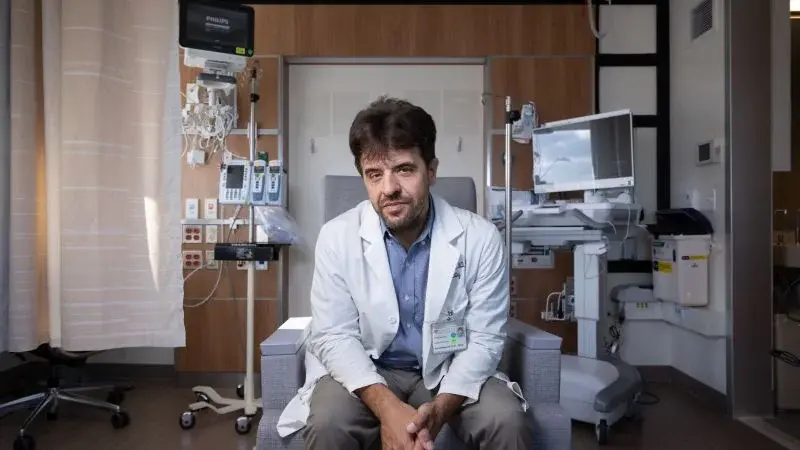
Dr. Karl Deisseroth at Stanford University has launched the Human Neural Circuitry program, a three-year-old initiative designed to map brain activity during emotional experiences with millisecond precision. By combining non-invasive and invasive electrode recordings in a hospital setting, the team aims to understand the neural origins of conditions like schizoaffective disorder and borderline personality disorder. The research seeks to bridge basic science and clinical psychiatry, potentially leading to treatments that respond to neural circuit dynamics as they occur.
Key points
- The Human Neural Circuitry program at Stanford Hospital uses both scalp electrodes and deep brain recordings to capture real-time brain activity with sub-millisecond resolution.
- Dr. Karl Deisseroth, a pioneer of optogenetics, is leading the effort to decode how brain cells generate emotions, aiming to treat disorders such as schizoaffective disorder, which affects 1 in 200 people, and borderline personality disorder, which affects 14 million in the US.
- A 2025 study in Science found that humans and mice share persistent brain-activity patterns in response to adverse sensory experiences, providing insight into the origination of negative emotions.
- The program studies a wide range of conditions including autism, cancer-induced depression, epilepsy, and chronic pain, using data streams that allow for closed-loop sensing and responding.
- Deisseroth’s career pivot from neurosurgery to psychiatry was triggered by a direct encounter with a patient experiencing a schizoaffective episode during his residency, motivating his current focus on understanding the 'inner world' of human beings.
Background
This development aligns with broader scientific shifts in understanding consciousness and emotion. Recent discussions, such as those involving neuroscientist Christof Koch, have challenged the traditional view that the brain solely produces consciousness, suggesting instead that reality and subjective experience are intertwined. Additionally, research into the gut-brain axis has shown that peripheral interventions can influence cognitive aging, highlighting the complex interplay between different bodily systems and neural function. While some theories propose that consciousness arises from deep-brain circuits rather than the cortex, Deisseroth’s work focuses on the precise, real-time mapping of neural circuits to address specific psychiatric disorders, offering a mechanistic approach to conditions that remain poorly understood compared to other organs.
Why it matters
Understanding the neural basis of emotions could revolutionize the treatment of severe mental health conditions that currently lack effective mechanistic models. By capturing brain activity with millisecond precision, researchers may develop interventions that respond to neural dynamics in real-time, potentially preventing or mitigating episodes of disorders like schizoaffective disorder and borderline personality disorder. This approach could reduce the societal and personal burden of these conditions, which affect millions of people and often involve intense suffering and instability. Furthermore, the integration of basic science with clinical settings could accelerate the translation of research into practical treatments, addressing the gap between understanding brain mechanisms and applying them to patient care.
What to watch
The Human Neural Circuitry program will continue to expand its research into additional disorders, including autism, obsessive-compulsive disorder, and dissociative disorders. As data collection progresses, researchers aim to identify specific neural circuit patterns that can be targeted for treatment, potentially leading to closed-loop interventions that respond to brain activity as it happens. The long-term goal is to develop treatments that address the dynamic nature of neural circuitry during symptom onset, offering a new paradigm for managing complex psychiatric conditions.
Want the full story? Read the original reporting
Read on CNN