Tag

Stanford University

All articles tagged with #stanford university

awards-and-honors1 day ago

Stanford's Robert Hall and Columbia's Michael Woodford Share 2026 Nobel for Economic Stabilization Models

Robert E. Hall and Michael Woodford have been awarded the 2026 Nobel Memorial Prize in Economic Sciences for developing microeconomic foundations that guide macroeconomic stabilization. Their work provides central banks with tools to manage economic volatility, particularly during crises like the 2008 financial downturn.

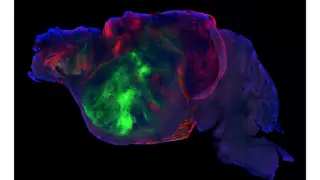
Stanford’s Karl Deisseroth Wins 2026 Nobel for Optogenetics, Sparking Global Praise
science-and-medicine6 days ago

Stanford’s Karl Deisseroth Wins 2026 Nobel for Optogenetics, Sparking Global Praise

Karl Deisseroth, a Stanford professor of bioengineering and psychiatry, has won the 2026 Nobel Prize in Physiology or Medicine for his pioneering work in optogenetics. The award, announced on October 5, 2026, recognizes his development of a technique that uses light to control specific nerve cells in living brains. Deisseroth shares the prize with Peter Hegemann and Georg Nagel, with the three laureates splitting a total of 12 million Swedish crowns. The announcement triggered widespread celebration among his family, former students, and colleagues, who highlighted his relentless work ethic and generosity in sharing scientific tools. Deisseroth stated he plans to return immediately to research, emphasizing the need to continue discovering new treatments for neuropsychiatric disorders.

Stanford Study Reveals Human Brain Evolved from Two Distinct Neural Systems
science18 days ago

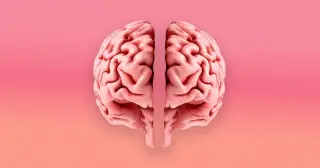
Stanford Study Reveals Human Brain Evolved from Two Distinct Neural Systems

A new study led by Stanford University researchers, published in Nature Neuroscience on September 18, 2026, challenges the traditional view that the human brain develops from a single progenitor cell. Instead, the research demonstrates that the forebrain and hindbrain originate from two distinct, parallel neural progenitor cells during embryonic gastrulation. This finding explains why scientists previously failed to grow hindbrain neurons in labs and opens new avenues for studying neurodegenerative diseases like ALS and spinal muscular atrophy (SMA). The dual-origin structure appears evolutionarily conserved, tracing back at least 550 million years to ancestors like acorn worms.

Stanford Team Captures First Real-Time Quantum Jumps of Sound
science20 days ago

Stanford Team Captures First Real-Time Quantum Jumps of Sound

Stanford researchers have achieved the first direct observation of quantum jumps in sound, watching individual phonons abruptly transition between energy states in real time. Published in Science, this breakthrough confirms that mechanical vibrations behave quantum mechanically, opening new pathways for quantum computing, error correction, and ultra-precise biological sensing.

Stanford Mice with Human Cortex Offer New Model for Brain Disease
science23 days ago

Stanford Mice with Human Cortex Offer New Model for Brain Disease

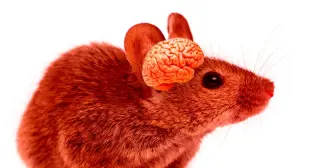
Stanford researchers have created mice with brains that are nearly half human by transplanting lab-grown human cortical organoids into genetically engineered rodents lacking a cerebral cortex. Published in Nature, the study shows these 'xenocortical' mice exhibit normal behavior but display human-like vulnerability to oxygen deprivation, offering a new platform for studying neurodevelopmental disorders like cerebral palsy and schizophrenia.

Stanford researchers grow human cortex in mice to model brain disorders
science23 days ago

Stanford researchers grow human cortex in mice to model brain disorders

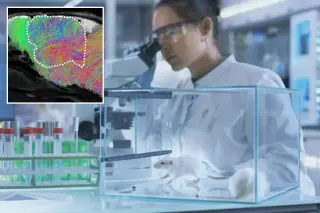
Stanford scientists have developed a new model for studying human brain development by transplanting lab-grown human cortical organoids into mice genetically engineered to lack most of their cerebral cortex. Published in Nature on September 16, 2026, the study shows that within three months, the human tissue expanded to occupy over 90% of the cortical space, forming functional connections with the mouse’s nervous system. This 'xenocortical' model allows researchers to observe human neuron maturation and test treatments for conditions like autism, epilepsy, and cerebral palsy in a living animal. Notably, the transplants produced rare von Economo neurons, previously only seen in post-mortem human brains, offering a new platform for studying neurodegenerative diseases.

Stanford Researchers Create Mice with Human Cortical Tissue to Model Brain Disorders
science24 days ago

Stanford Researchers Create Mice with Human Cortical Tissue to Model Brain Disorders

Stanford University researchers have successfully transplanted human brain tissue into mice genetically engineered to lack a cerebral cortex, creating 'xenocortical' animals that integrate human neurons with mouse nervous systems. Published in Nature, the study demonstrates that these hybrid mice can model human neurodevelopmental disorders like cerebral palsy and schizophrenia, offering a new platform for testing therapies that was previously impossible due to the inaccessibility of living human brain tissue.

Stanford Researchers Create 'Xenocortical' Mice to Model Human Brain Disorders
science24 days ago

Stanford Researchers Create 'Xenocortical' Mice to Model Human Brain Disorders

Stanford researchers have developed a new animal model featuring mice with brains partially composed of human cells. By genetically engineering mice to lack their cerebral cortex and transplanting human-derived organoids, scientists created 'xenocortical' mice that allow for the study of human-specific neurological disorders. This breakthrough aims to improve the success rate of clinical trials for conditions like schizophrenia and cerebral palsy, which are difficult to model in standard rodents.

Stanford's Paper2Agent Turns Static Research into Interactive AI Agents
technology25 days ago

Stanford's Paper2Agent Turns Static Research into Interactive AI Agents

Stanford researchers have released Paper2Agent, an open-source framework that converts scientific papers into interactive AI agents. Published in Nature, the system transforms static documents into active 'virtual authors' that can reproduce analyses, apply methods to new data, and collaborate with other agents. By using Model Context Protocol (MCP) servers, the tool allows researchers to query complex studies via natural language without needing to manually configure code or data environments. Initial tests show the system can create functional agents in approximately 45 minutes at a cost of $14, significantly lowering barriers to scientific reproducibility and discovery.

Stanford’s 37,000-Agent AI System Identifies Lung Cancer Target
biotechnology25 days ago

Stanford’s 37,000-Agent AI System Identifies Lung Cancer Target

A Stanford-led team has developed 'Virtual Biotech,' an AI system with up to 37,000 agents that mimics a pharmaceutical company’s structure. By analyzing over 55,000 clinical trials, the system identified CD276, a protein that dampens immune responses, as a promising target for lung cancer treatment. The AI proposed a strategy involving an antibody tethered to an anticancer drug, though the findings remain unvalidated in real-world experiments.

Stanford Team Creates Mice with Human Cortex to Model Brain Diseases
science26 days ago

Stanford Team Creates Mice with Human Cortex to Model Brain Diseases

Stanford researchers have developed a new model for studying human brain disorders by genetically removing the cortex of mice and replacing it with human brain organoids. Published in Nature, the study shows that these 'xenocortical' mice survive and exhibit behaviors intermediate between normal and cortex-free mice, offering a potential platform for testing therapies for conditions like epilepsy and autism.

Paper2Agent Converts Research Papers into Interactive AI Assistants
technology26 days ago

Paper2Agent Converts Research Papers into Interactive AI Assistants

A new AI system called Paper2Agent transforms static research papers into interactive agents that can answer questions and apply methods to new data. Developed by Stanford University researchers, the tool packages a paper’s text, code, and datasets onto a server, allowing scientists to query the work in plain language. In tests, the system created an agent for the AlphaGenome paper in 45 minutes for a cost of $14, outperforming other biomedical AI tools. The technology aims to make scientific knowledge more accessible and reproducible across disciplines.

California scientist uncovers pristine 10,000-year-old mastodon molar in San Mateo creek
science28 days ago

California scientist uncovers pristine 10,000-year-old mastodon molar in San Mateo creek

A geomorphologist discovered a remarkably preserved Pacific mastodon molar in a San Mateo County creek during a habitat survey. The 8.5-inch fossil, dating back over 10,000 years, was donated to Stanford University for carbon dating and 3D scanning. Experts describe it as the most complete mastodon molar found in the region, offering insights into Ice Age biodiversity and climate adaptation.

Rare Ice Age Mastodon Molar Discovered in San Mateo Creek
science28 days ago

Rare Ice Age Mastodon Molar Discovered in San Mateo Creek

A geomorphologist discovered a remarkably preserved Pacific mastodon molar in a San Mateo County creek while working on a frog habitat restoration project. The 9-inch fossil, estimated to be over 10,000 years old, has been donated to Stanford University for carbon dating and 3D scanning. Experts describe it as the most complete mastodon molar found in the Bay Area, highlighting the value of open space preservation.