Tag

Brain Research

All articles tagged with #brain research

Startup Tests Drugs on Fresh Brains Kept Alive on Life Support
science1 month ago

Startup Tests Drugs on Fresh Brains Kept Alive on Life Support

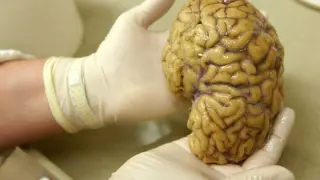
A biotech startup called Bexorg keeps recently donated human brains on its BrainEX life-support system, arguing the preserved brains offer a more realistic testbed for drugs (including Alzheimer’s candidates) than animal models. The brains hover between life and death, show no consciousness, and are dosed with anesthetic; after about 24 hours they’re sliced into hundreds of pieces for analysis. Bexorg aims to process up to 1,600 brains per year, while pharma firms like Biohaven have already used donor brains for drug testing, fueling ethical and philosophical debates over the use of near-living tissue in research.

AI chatbots may dull our thinking, MIT-led study suggests
technology2 months ago

AI chatbots may dull our thinking, MIT-led study suggests

New MIT Media Lab work shows heavy use of AI chatbots can dampen brain activity linked to creativity and memory, with evidence of poorer recall and a 'cognitive surrender' where users accept AI outputs without scrutiny. While AI can assist, overreliance may harm long-term cognition; experts advocate 'hybrid intelligence'—thinking first, using AI to challenge later—and strategies like nemesis prompts to keep minds engaged.

New Study Finds Feline Dementia Shares Key Features with Human Alzheimer’s
health11 months ago

New Study Finds Feline Dementia Shares Key Features with Human Alzheimer’s

Scientists in Edinburgh found that cats develop dementia similarly to humans with Alzheimer's, including amyloid-beta buildup in the brain, which could lead to better understanding and treatments for both feline and human dementia. The research highlights the potential of cats as natural models for studying Alzheimer's disease, offering hope for improved care and therapies for affected pets and people.

Neuroscientists uncover how the brain forgets unwanted memories
science1 year ago

Neuroscientists uncover how the brain forgets unwanted memories

Steve Ramirez, a neuroscientist at Boston University, is pioneering research on how memories can be artificially created, modified, or erased, with potential applications for treating PTSD and neurodegenerative diseases. His experiments with mice demonstrate the ability to implant false memories and manipulate existing ones, laying the groundwork for future human therapies and a deeper understanding of memory's malleability.

New Study Challenges Traditional Neuron Structure with 'Pearls on a String' Model
science1 year ago

New Study Challenges Traditional Neuron Structure with 'Pearls on a String' Model

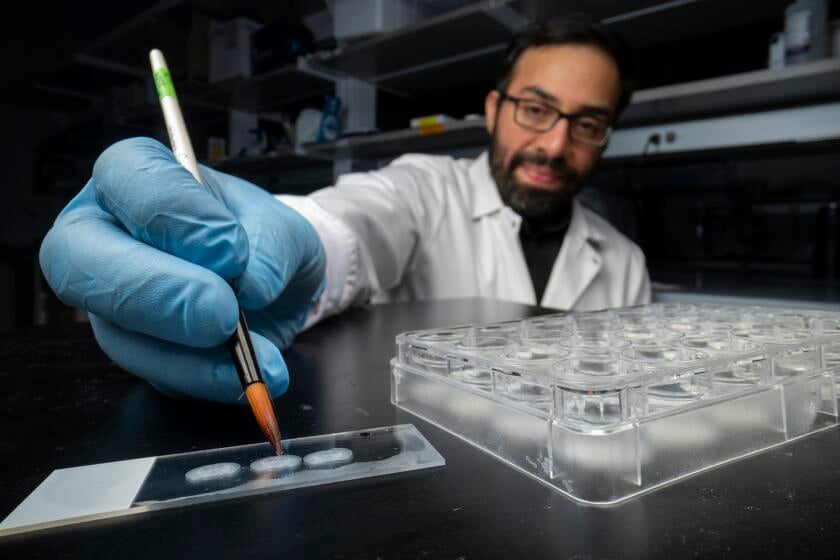
A controversial study from Johns Hopkins University suggests that axons, the main arms of neurons, are not smooth cylinders but have a 'pearling' structure, resembling a string of pearls. This challenges long-held views on neuron anatomy and could impact our understanding of brain signaling. Critics argue that these 'nanopearls' might be stress-induced artifacts from tissue culturing, but the study's authors found similar patterns in live cells. Further research is needed to confirm these findings, including studies on human neurons.

New Discoveries Blur the Line Between Life and Death
science1 year ago

New Discoveries Blur the Line Between Life and Death

Scientists have revived cellular functions in a severed pig's brain using a cocktail of preserving agents, challenging previous notions about brain death. This research, led by Yale neuroscientist Zvonimir Vrselja, could have significant implications for reanimating human brains, though it raises ethical concerns about the definition of death. The technique, which prevents brain damage from oxygen-rich blood post-mortem, is also being explored for treating neurodegenerative diseases and extending the viability of donor organs.