
3D-Printed Tungsten Tiles Survive Fusion Plasma Tests in San Diego
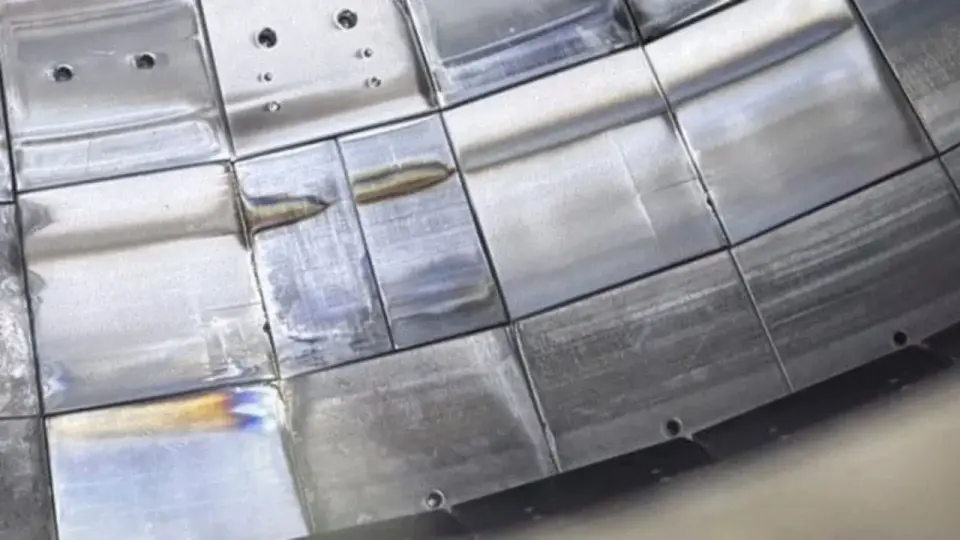
Full-scale 3D-printed tungsten tiles have successfully withstood extreme plasma conditions inside the DIII-D National Fusion Facility in San Diego. The components, produced using electron-beam powder bed fusion, endured 74 direct plasma discharges over three days without cracking or melting. This breakthrough validates large-format additive manufacturing as a viable method for producing critical heat-shield components for future fusion reactors, overcoming previous issues with porosity and brittleness in printed tungsten.
Key points
- Tungsten tiles printed at 2,552°F survived 74 plasma discharges in the DIII-D divertor.
- The tiles endured approximately four minutes of direct plasma exposure during high-power runs.
- Electron-beam powder bed fusion (EB-PBF) was used to prevent cracking by keeping the build environment hot.
- The tiles were manufactured by JEOL Ltd in Japan and tested in July 2026.
- The success removes a key bottleneck for commercial fusion energy by proving large-scale additive manufacturing viability.
Background
Recent advancements in fusion technology have focused on managing heat exhaust in divertors, as seen in Tokamak Energy's 2026 research on lithium impurities. Meanwhile, the nuclear industry continues to evolve with new fuel plants in Tennessee and decommissioning projects in Germany. This development adds to the growing body of evidence that advanced manufacturing techniques can support the next generation of clean energy infrastructure.
Why it matters
This validation demonstrates that 3D printing can produce robust, crack-free tungsten components at an industrial scale, a critical requirement for building commercial fusion reactors. By solving the long-standing problem of tungsten's brittleness during fabrication, this breakthrough accelerates the timeline for deploying fusion energy as a viable clean power source.
What to watch
Researchers will continue to analyze the erosion and survivability data generated from these tests to refine manufacturing processes. The success may lead to wider adoption of electron-beam powder bed fusion for other high-heat applications in nuclear and aerospace sectors.
Want the full story? Read the original reporting
Read on Interesting Engineering