
Fiber-Optic Cables Outperform Traditional Systems in Earthquake Early Warning
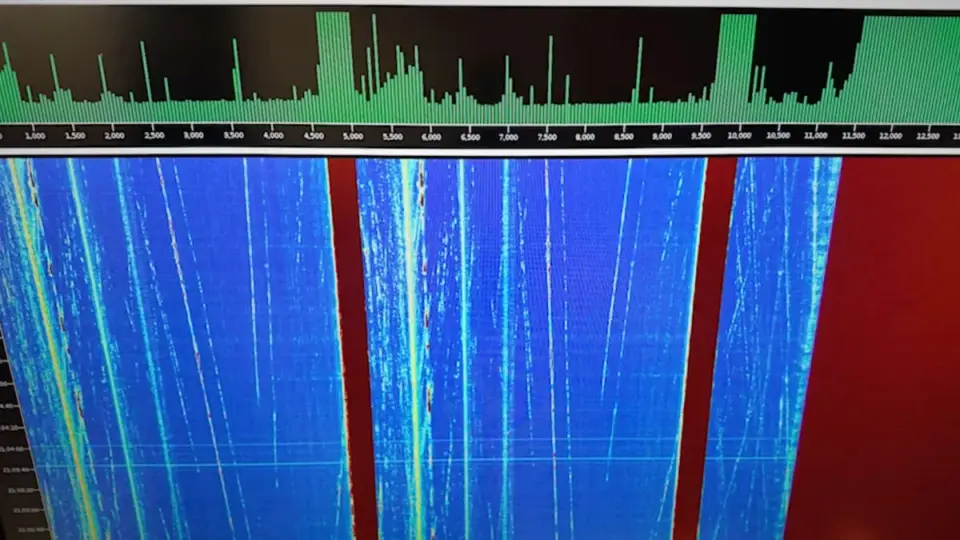
USGS and Cal Poly Humboldt researchers demonstrated that existing fiber-optic broadband cables can detect and estimate the magnitude of earthquakes significantly faster and more accurately than the current ShakeAlert system. By utilizing distributed acoustic sensing, the technology achieved a 79% success rate for magnitude 5.4+ quakes within four seconds, compared to ShakeAlert's 30% precision.
Key points
- USGS geophysicist Theresa Sawi and colleagues published a study in Nature Communications showing that fiber-optic cables can serve as effective seismometers.
- The distributed acoustic sensing (DAS) technique leverages minor imperfections in fiber-optic cables to detect ground vibrations, turning existing internet infrastructure into a dense sensor network.
- In tests using data from Arcata and Eureka, California, the DAS system correctly predicted magnitude 5.4 earthquakes or larger in 79% of cases within the first four seconds of seismic activity.
- This performance contrasts sharply with the USGS ShakeAlert system, which achieved only 30% precision for similar events, often suffering from false alarms or delayed warnings.
- The technology relies on machine learning trained on borehole strainmeter data to distinguish between high-frequency vibrations of smaller quakes and low-frequency waves of larger events.
- Researchers note that because fiber-optic cables already span the seafloor, this method could expand monitoring to offshore regions where traditional sensors are difficult to install, potentially improving tsunami warnings.
Background
The USGS operates ShakeAlert, the nation's only public earthquake early warning system, which has faced criticism for reliability issues, including a false alarm for a nonexistent magnitude 5.9 quake and a 3:19 a.m. test warning in 2023. While distributed acoustic sensing research is not new, its application to terrestrial broadband networks for early warning is a recent development, building on earlier uses in deep-sea monitoring for volcanic activity and oceanic earthquakes.
How outlets are covering it
Gizmodo emphasizes the superior accuracy of the new fiber-optic method compared to the existing ShakeAlert system, highlighting the 79% versus 30% success rate for magnitude 5.4+ events. Newswise focuses on the practical implications for emergency management, noting that faster magnitude estimation allows for quicker alerts to apps and emergency managers, enabling preventative actions like slowing trains. Both sources agree on the technical mechanism but differ in emphasis: Gizmodo frames the story as a solution to ShakeAlert's flaws, while Newswise positions it as a complementary tool that enhances existing warning capabilities by leveraging existing infrastructure.
Why it matters
This advancement offers a cost-effective way to improve earthquake early warning coverage by repurposing existing telecommunications infrastructure rather than installing new sensors. It could significantly reduce false alarms and provide critical seconds for public safety measures, particularly in seismically active regions like Northern California and offshore areas where traditional monitoring is logistically challenging.
What to watch
Researchers hope the findings will incentivize greater investment in rural broadband access, which would simultaneously improve internet connectivity and earthquake monitoring. Future applications may include expanding DAS networks to submarine cables to better monitor undersea earthquakes and provide earlier tsunami warnings for coastal communities.
Want the full story? Read the original reporting
Read on Gizmodo