Tag

Usgs

All articles tagged with #usgs

science5 days ago

Kīlauea Pauses as USGS Forecasts Lava Fountaining Episode 51 for July 9–13

Kīlauea's summit eruption remains paused while inflation continues; USGS expects lava fountaining episode 51 to occur between July 9 and July 13, though the date could shift with inflation/deflation, and observers report persistent glow from the vents, low tremor, rising tilt, and SO2 emissions around 1,000–5,000 tonnes per day.

Yellowstone Sprouts a New Boiling Pool After Ground Shifts in Biscuit Basin
science15 days ago

Yellowstone Sprouts a New Boiling Pool After Ground Shifts in Biscuit Basin

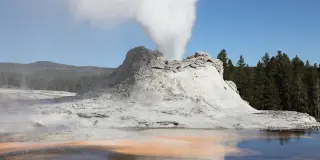
A new, actively boiling pool formed in Yellowstone's Biscuit Basin between June 14–16 after a hydrothermal explosion on June 13. The pool measures about 6.5 by 5.3 meters and sits above an 18.5-meter-long crack, with jets spouting up to 6–9 meters observed on June 18, indicating ongoing activity. Scientists captured video of the eruption and conclude the event likely resulted from ground collapse rather than a larger explosion, though it underscores the park's dynamic, hazardous hydrothermal system and is smaller than the 2024 eruption. No injuries were reported.

Yellowstone’s Biscuit Basin Sparks Fresh Steam Vents After Tiny Hydrothermal Burst
earth-science17 days ago

Yellowstone’s Biscuit Basin Sparks Fresh Steam Vents After Tiny Hydrothermal Burst

A small hydrothermal explosion at Biscuit Basin, Yellowstone, on June 13, 2026, created multiple new vents and steam-filled pools, with hot water reaching the Firehole River at about 194°F (90°C). By June 18 a new ground feature had become a vigorously boiling pool roughly 21 by 17 feet, and close-range monitoring captured this eruption on cameras about 100 meters away. The incident, following a larger 2024 blast, underscores the unpredictable, hazardous hydrothermal activity in the region and the ongoing need for monitoring to identify potential precursors.

Yellowstone's Biscuit Basin forms new boiling pool after latest hydrothermal blast
science17 days ago

Yellowstone's Biscuit Basin forms new boiling pool after latest hydrothermal blast

A small hydrothermal explosion on June 13, 2026, at Biscuit Basin near Old Faithful formed a new gray, silt-filled pool and vent pathways with water temperatures around 185–200°F. No injuries were reported, and Biscuit Basin has been closed since 2024. Temporary seismic stations are monitoring the evolving vents as scientists note ongoing instability in Yellowstone’s hydrothermal system, including changes observed in nearby waterways.

Northern California shaken by 5.6-magnitude quake near Redwood Valley
science17 days ago

Northern California shaken by 5.6-magnitude quake near Redwood Valley

A magnitude-5.6 earthquake struck northern California near Redwood Valley in Mendocino County, about 8.1 miles deep and felt across the Bay Area at 8:10 a.m. PT; a smaller 2.5 aftershock followed in the same area. There were no immediate reports of injuries or damage, and officials say a tsunami is not expected as Gov. Newsom’s office says he’s been briefed and monitoring ongoing.

Florida shaken by 6.1-magnitude offshore Cuba earthquake
world1 month ago

Florida shaken by 6.1-magnitude offshore Cuba earthquake

A 6.1-magnitude earthquake offshore Cuba—about 65 miles northwest of Mantua at a depth of 16 miles—was felt in Florida and parts of Mexico, described as the region’s strongest tremor in nearly 150 years; no injuries or major damage were reported, though Florida residents described strong shaking, and Mexican authorities evacuated Cancún and nearby areas (Playa del Carmen and Tulum) as a precaution, while the US Tsunami Warning Center said there is no tsunami danger.

Three-Foot Meteor Explodes Over Northeast, Triggering Wide-Spread Sonic Boom
science1 month ago

Three-Foot Meteor Explodes Over Northeast, Triggering Wide-Spread Sonic Boom

A three-foot meteoroid streaked over New England on May 30, 2026, punching through the atmosphere at about 75,000 mph and breaking apart around 40 miles up with an energy near 300 tons of TNT, unleashing a double sonic boom heard from Delaware to Montreal; NASA confirmed it was a natural object, not space debris or a satellite, and no injuries or ground impact were reported, with any fragments likely sinking into the ocean. USGS registered no seismic event, highlighting how atmospheric fireballs can be detected and documented without earthquakes. This event fits into a year with several large fireballs and underscores the growing role of coordinated observation networks in recording such phenomena.