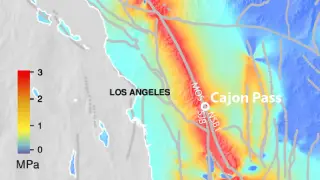
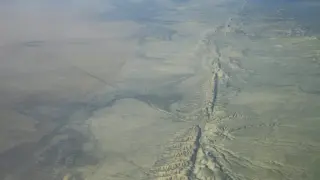
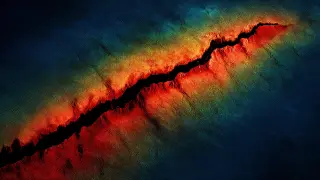
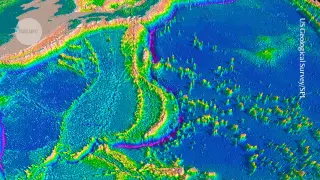
A new study indicates that tectonic stress along the San Andreas and San Jacinto faults has reached its highest level in 1,000 years. Researchers describe Cajon Pass as an 'earthquake gate' that may allow ruptures to cross between fault systems, potentially increasing the scale of future earthquakes in Southern California.
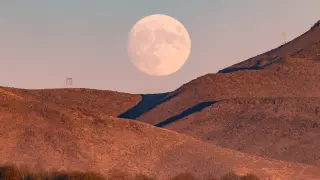
A new study in JGR Solid Earth suggests that gravitational tides from the Sun and Moon can trigger slow earthquakes through a resonance mechanism. Although these tidal stresses are minimal, comparable to a gentle hand press, they can nudge unstable fault lines into slipping when their timing matches the fault's natural response. This research provides a framework for understanding how minor forces can lead to significant seismic events, potentially aiding in the prediction of larger earthquakes.
New research published in JGR Solid Earth proposes that gravitational tides from the Sun and Moon trigger slow earthquakes through a resonance mechanism. Although tidal stresses are minimal, comparable to a gentle hand press, they can nudge unstable fault lines into slipping. The study suggests that when tidal perturbation periods match a fault's natural response timescale, the resulting resonance amplifies slip, potentially leading to both slow and fast seismic events. This framework helps explain observed tremors in regions like southwest Japan and Cascadia, which often peak at 12- or 24-hour intervals. While the model focuses on single fault patches, it offers a method to reverse-engineer fault properties from seismic data, aiding in the assessment of megathrust earthquake risks.
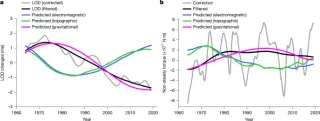
A new study in Nature identifies gravitational torque between Earth's inner core and mantle as the primary driver of multidecadal changes in the length of day (LOD). While electromagnetic and topographic forces at the core-mantle boundary act as resisting mechanisms, the gravitational influence dominates. This finding provides new constraints on the physical properties of Earth's deep interior, including the viscosity of the inner core and the conductivity of the lowermost mantle.
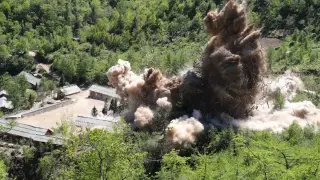
Scientists analyzing 2008–2025 seismic data found 1,399 small earthquakes linked to North Korea’s Punggye-ri underground tests (2006–2017), with activity increasing for years after the final blast as repeated detonations altered crustal stresses and triggered faults beneath Mount Mantap. They mapped two fault-like structures, suggesting the mountain’s geology created a long-lived framework for slip; a hypothetical single rupture could reach magnitude ~6.4, but causality isn’t proven and monitoring may need to extend far beyond the test period.
A new seismic analysis shows the Juan de Fuca slab beneath northern Oregon sits about 5 km closer to the surface than previously thought, potentially boosting peak ground shaking from a future Cascadia megathrust quake by roughly 9–17% along the coast, and a deep Tillamook sediment basin could further amplify motion by trapping seismic waves.
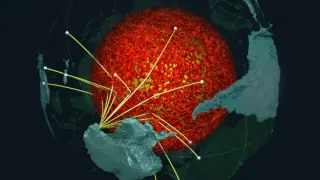
AI-assisted analysis of more than 2 million earthquake recordings (1990–2024) identified 174,929 high‑quality PKP precursor signals and unveiled six previously undocumented deep-mantle zones (B1–B6) near the core–mantle boundary. The expanded dataset shows that these small-scale structures may connect into larger belts, likely shaped by subduction and thermochemical processes, with broad implications for mantle convection, volcanic activity, and Earth's magnetic field. The researchers call for higher‑resolution, multi‑wave studies to refine deep-Earth models.
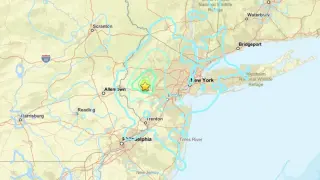
A magnitude-4.8 earthquake that surprised millions along the U.S. East Coast was traced to a previously unmapped fault in the New Jersey Highlands, now named the Mountainville Fault. The finding shows that hidden, immature faults can generate significant quakes away from major surface fault systems, underscoring the need to reassess regional seismic hazard near densely populated areas like New York City.
A Penn State–OSU team used distributed acoustic sensing on a 2‑mile telecom fiber to turn ordinary infrastructure into thousands of ground sensors and recorded 458 clear thunderquakes over two years. By analyzing how thunder-induced seismic waves disperse, they imaged the shallow subsurface down to about 100 meters, identifying four slow zones likely fractured or water-filled in a karst region near State College, PA. This work demonstrates that atmospheric energy from thunderstorms can yield an Earth‑wide “X‑ray” of the ground, with potential for monitoring groundwater, contamination, sinkholes and construction sites—and it could extend to other atmospheric sources and even planetary exploration (e.g., Titan).
Scientists buried telecom cables and used distributed acoustic sensing to turn atmospheric thunderquakes into a usable signal, creating high-resolution images of shallow underground structures up to about 100 meters deep and showing storms can help map the subsurface.
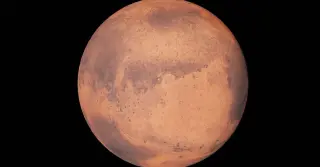
Mars was once wet, with rivers and possibly an ocean, but two fates explain its drying: much water vapour escaped to space after the magnetic shield faded, while a newer view suggests a deep, crustal reservoir could still hold vast amounts of water — possibly enough to flood the planet if released. MAVEN confirms ongoing atmospheric loss, but the deep-water interpretation remains debated and not yet proven; Perseverance’s Jezero samples could test past habitability, and future seismic or drilling missions would be needed to confirm buried stores.
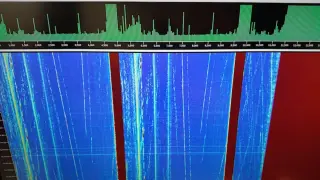
USGS researchers demonstrate that existing fiber‑optic networks can act as distributed acoustic sensing seismometers, predicting magnitude-5.4+ earthquakes about four seconds after initial waves with roughly 79% accuracy—significantly better than ShakeAlert’s ~30% precision. The study used cables between Arcata and Eureka, California (Cal Poly Humboldt collaboration) and suggests broadband infrastructure expansion could improve early warning, including for remote or coastal regions and tsunami monitoring.
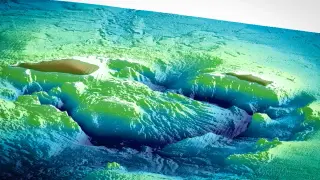
Underwater seismic surveys show a large, magma-rich reservoir beneath Japan’s Kikai caldera, with new magma entering the system over thousands of years and a lava dome forming about 3,900 years ago. This supports a model in which giant calderas gradually rebuild magma after major eruptions and could apply to other systems like Yellowstone and Toba, aiding efforts to monitor and anticipate future giant eruptions.
Seismic data from NASA’s InSight lander indicate a deep, interconnected magma system beneath Mars, formed by molten rock pooling and extending hundreds to thousands of miles. This challenges the idea of isolated magma chambers and implies a chemically active crust capable of recycling elements, potentially supporting atmosphere and ocean formation and offering a habitable window for rocky planets even without plate tectonics.
Scientists are unlocking the deep ocean with four key technologies: ocean-bottom seismometers mapping mantle convection; China’s Meng Xiang drilling ship to obtain pristine mantle samples; hydrophones enabling rapid, global tsunami prediction; and repurposed deep-sea cables transforming into a vast seismic surveillance network—together they aim to illuminate Earth’s mantle, plate tectonics and coastal hazards in a region still largely unmapped.