
Beijing Engineers Prototype Infrared-Seeing Glasses Using Quantum Dots
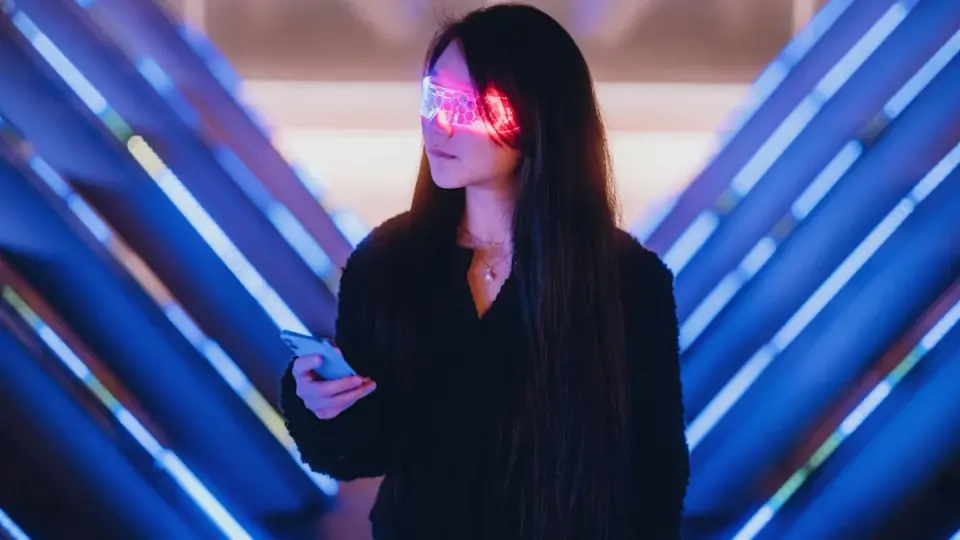
A team from the Beijing Institute of Technology has developed prototype eyewear that allows humans to perceive infrared light by converting it into visible colors. The device uses mercury telluride colloidal quantum dots to absorb infrared photons and an OLED layer to display them as red or cyan hues. Published in Science Advances, the 23-gram glasses represent a step toward overcoming human biological visual limitations, though they remain a lab-stage prototype with a single-eye display and basic plastic frame.
Key points
- The prototype converts infrared light into visible red and cyan colors using an OLED layer integrated into the lens.
- It utilizes mercury telluride colloidal quantum dots to absorb infrared photons, which humans cannot naturally detect.
- The device weighs 23 grams and currently displays infrared data on only one eye.
- The research was published in the journal Science Advances, describing the technology as a potential paradigm shift in visual perception.
- The glasses allow users to see infrared wavelengths alongside normal visible light, unlike previous methods that showed infrared as a single color.
Background
This development follows recent trends in smart glasses, such as Samsung’s Gemini-powered devices and Meta’s Ray-Ban collaborations, which focus on AI and audio rather than optical enhancement. While previous archive items covered commercial smart glasses and EU battery regulations for wearables, this story focuses on fundamental optical engineering to expand human sensory capabilities beyond evolutionary limits.
Why it matters
This technology could lead to advanced visual prosthetics, high-fidelity augmented reality, and improved navigation in low-visibility environments. It addresses the inherent biological limitation of human eyes, which can only perceive a tiny fraction of the electromagnetic spectrum, potentially offering humans capabilities similar to those of animals like rattlesnakes or vampire bats that naturally detect infrared.
What to watch
The technology remains in the laboratory testing phase. Researchers from this team and a parallel group at the University of Science and Technology of China, which is developing a similar contact lens, view these prototypes as stepping stones toward future 'super vision' devices. Practical applications for everyday consumers are not yet defined, and the current prototype's flimsy, single-eye design suggests significant engineering hurdles remain before commercialization.
Want the full story? Read the original reporting
Read on Currently.com