Tag

Quantum Dots

All articles tagged with #quantum dots

Infrared-vision glasses edge toward superhuman sight
science19 days ago

Infrared-vision glasses edge toward superhuman sight

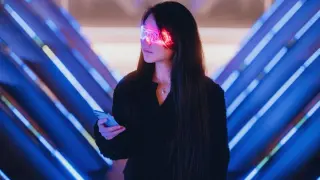
Beijing Institute of Technology researchers have built lightweight glasses that capture infrared light with mercury telluride quantum dots and convert it into visible colors via an OLED layer, overlaying IR hues onto a normal visible field. The 23-gram prototype renders weaker IR as red and stronger/shorter-wavelength IR as red-cyan, enabling simultaneous IR and visible perception. While a step toward visual prosthetics, high-fidelity AR, and navigation in degraded environments, practical devices remain years away; another group is pursuing infrared-detecting contact lenses as a parallel development.
Infrared to full-color vision: quantum-dot OLEDs redefine night sensing
technology24 days ago

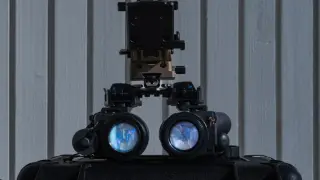
Infrared to full-color vision: quantum-dot OLEDs redefine night sensing

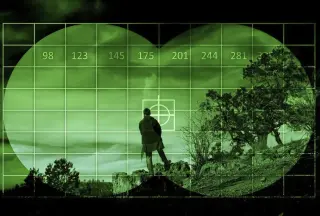
A Beijing Institute of Technology team developed a prototype that converts infrared light into full-color images using mercury telluride quantum dots and a two-layer OLED, mapping wavelength and intensity to distinct colors rather than grayscale. Demonstrated in a lightweight wearable eyeglass and explored for next-generation retinal prosthetics, the system can produce color-coded infrared images and even elicit brain/retinal responses in tests. While promising for richer infrared information, the approach faces real-world limitations: controlled-environment testing, a powered OLED layer, and safety concerns around mercury telluride, needing further research before practical deployment.

Full-Color Infrared Vision Achieved with Quantum-Dot OLED Stack
technology25 days ago

Full-Color Infrared Vision Achieved with Quantum-Dot OLED Stack

A Beijing Institute of Technology team developed a full-color infrared vision device by pairing mercury telluride quantum dots with a two-layer OLED, converting infrared wavelength and intensity into visible colors for more natural IR perception. The eyeglass prototype can produce color-coded IR images and even drive cellular/neuronal responses in tests, suggesting potential for advanced night-vision tech and future visual prosthetics, though real-world use faces safety, power, and biocompatibility hurdles.

Quantum-Dot TVs Demonstrate Color Precision Beat RGB LED Backlights
technology3 months ago

Quantum-Dot TVs Demonstrate Color Precision Beat RGB LED Backlights

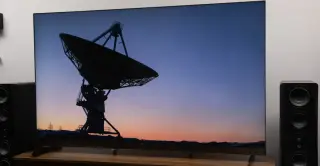
At Display Week, a TCL X11L SQD mini-LED TV and an RGB‑LED rival were shown side by side; the SQD model produced no color crosstalk and sharper contrast thanks to vastly more dimming zones (Nanosys cites up to 20,000; RTINGS measured 14,400 for the X11L) while the RGB LED backlight exhibited backlight color bleed into adjacent pixels and skin tones, reducing BT.2020 coverage, illustrating SQD’s current edge as RGB LED tech continues to evolve.

Moveable quantum dots offer flexible, scalable qubit networking
technology3 months ago

Moveable quantum dots offer flexible, scalable qubit networking

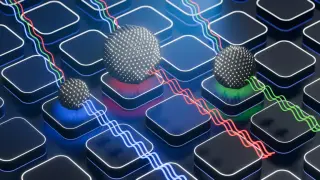
Researchers from Delft University of Technology and QuTech demonstrated a chip in which spin qubits hosted in a linear array of quantum dots can be moved along tracks to a shared interaction zone, enabling entangling two-qubit gates and teleportation. The device achieved over 99% fidelity for two-qubit gates and about 87% teleportation success on a six-dot setup, suggesting a path to mix bulk manufacturing with flexible qubit connectivity—though larger-scale hardware and higher performance are still needed before practical, error-corrected quantum computing is feasible.

TCL's QM8L Aims to redefine color and brightness for Micro RGB TVs at CES 2026
technology4 months ago

TCL's QM8L Aims to redefine color and brightness for Micro RGB TVs at CES 2026

TCL rolls out its 2026 TV lineup led by the QM8L, a premium Micro RGB/SQD‑MicroLED model promising extreme brightness and color with up to 6,000 nits peak, 4,000 local-dimming zones, Halo Control, and the CSOT WHVA 2.0 Ultra Panel with anti-reflective coating, claiming 100% BT.2020 coverage. Pricing starts at $2,500 for the 65-inch QM8L and goes up to about $6,000 for the 98-inch; the RM9L RGB Mini‑LED and the QM7L lower‑tier options are also on offer, with larger RM9L sizes priced to about $8,000 (85”) and $30,000 (115”), while the QM6K remains in the lineup.

Europe launches replication drive to test carbon quantum dot biosensors
science6 months ago

Europe launches replication drive to test carbon quantum dot biosensors

A Europe-backed NanoBubbles project is funding nanoscientists to replicate a 2012 study that carbon quantum dots can sense copper ions inside living cells, the first large-scale replication effort in the physical sciences aimed at the reproducibility crisis; initial attempts failed to reproduce the reported fluorescence change, illustrating how small impurities, incomplete protocols, and cross-lab variation can affect results, as the ERC-backed effort seeks self-correction in science.

Louis Brus, Quantum Dot Pioneer and Nobel Laureate, Dies at 82
science7 months ago

Louis Brus, Quantum Dot Pioneer and Nobel Laureate, Dies at 82

Louis E. Brus, a Bell Labs chemist who discovered quantum dots—nanocrystals whose color depends on size—died at 82 from myelodysplastic syndrome. His 1983 discovery revealed size-tunable optical properties, helping ignite nanoscience and earning him the 2023 Nobel Prize in Chemistry with Moungi Bawendi and Aleksey Yekimov. Quantum dots now enhance displays and medical imaging and may power future solar cells and encryption; Brus later taught at Columbia after leaving Bell Labs in 1996 and continued research on carbon nanotubes and graphene.

Physicists Harness 13,000 Nuclear Spins to Unlock 'Dark State' Power
science1 year ago

Physicists Harness 13,000 Nuclear Spins to Unlock 'Dark State' Power

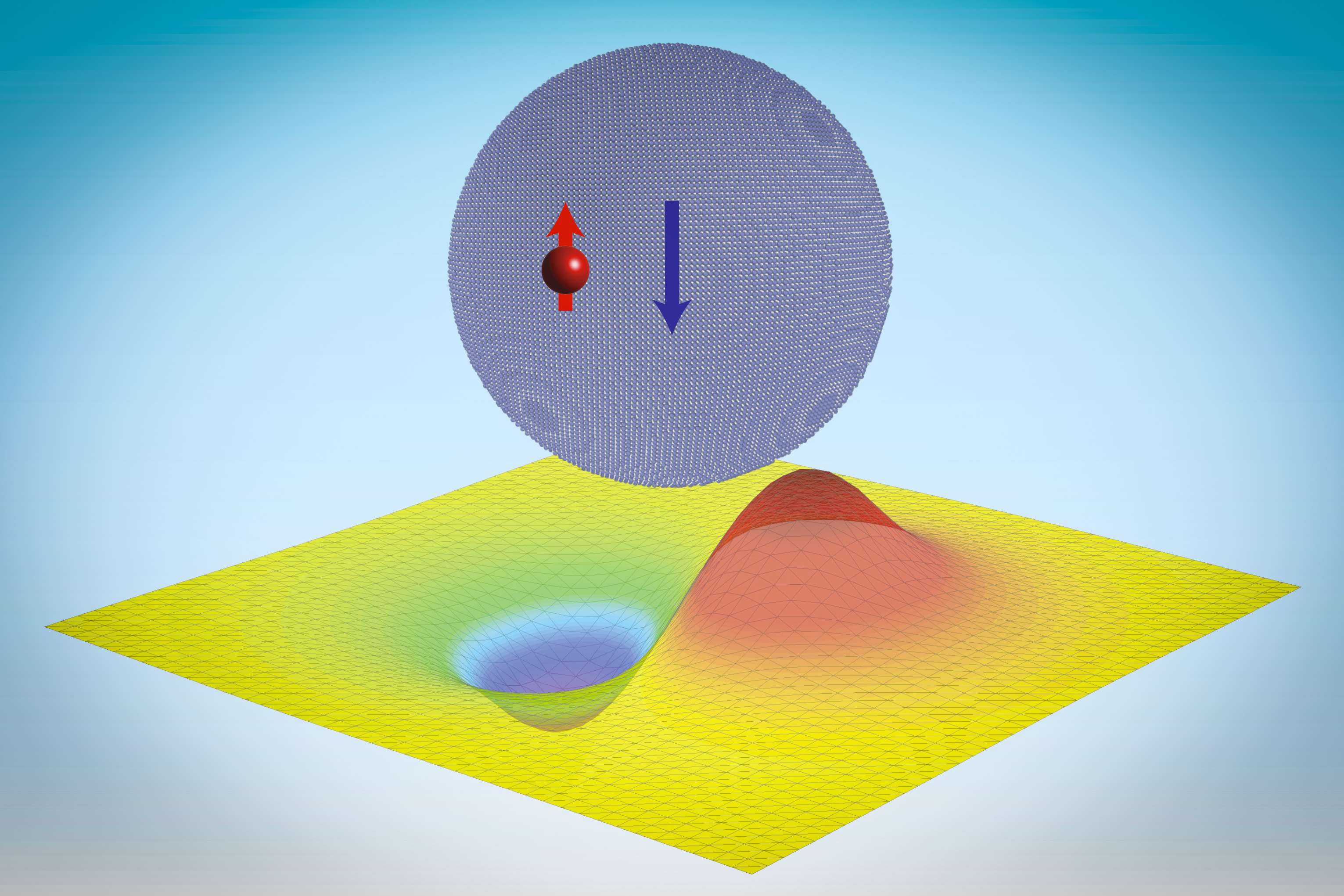
Physicists have entangled 13,000 nuclear spins in gallium arsenide quantum dots to create a stable 'dark state' for quantum information storage, advancing quantum network nodes and communication technology. This collective entanglement improves data retention and resistance to noise, paving the way for scalable quantum devices and long-distance quantum communication. The research highlights the potential of many-body physics in developing reliable quantum systems.

"MIT Researchers Uncover Neutrons Binding to Quantum Dots in Groundbreaking Discovery"
science2 years ago

"MIT Researchers Uncover Neutrons Binding to Quantum Dots in Groundbreaking Discovery"

MIT researchers have discovered that neutrons can be made to cling to quantum dots, forming artificial "neutronic molecules" held together by the strong force, which may lead to new tools for probing material properties at the quantum level and exploring quantum information processing devices. This unexpected finding could have applications in controlling individual neutrons for triggering reactions and developing quantum information systems, as well as in neutron imaging for materials analysis. The research was reported in the journal ACS Nano and was supported by the U.S. Office of Naval Research.

"Non-Toxic Quantum Dots Enable Advanced Shortwave Infrared Image Sensors"
science-and-technology2 years ago

"Non-Toxic Quantum Dots Enable Advanced Shortwave Infrared Image Sensors"

Scientists have developed non-toxic quantum dots for shortwave infrared (SWIR) image sensors, making them ideal for use in service robotics, automotive, and consumer electronics. These quantum dots, made from non-toxic materials, were successfully integrated into a lab-scale photodetector and used to construct a proof-of-concept SWIR image sensor. The sensors can capture images under adverse weather conditions, enable passive night vision, and peer inside opaque objects under SWIR light, with potential applications in machine vision, bioimaging, and environmental sensing.