
Nikon Disqualifies 2026 Small World Winner for AI-Generated Microscopy
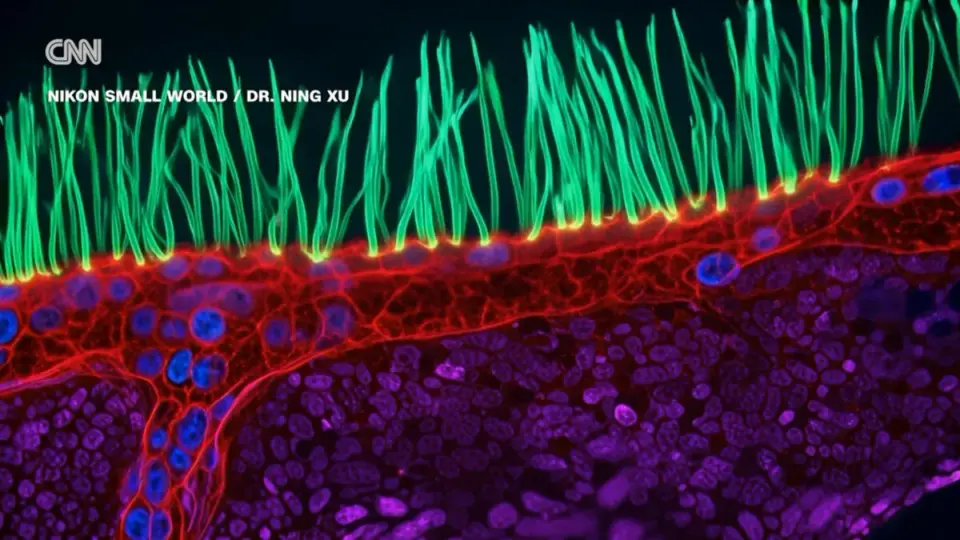
Nikon disqualified the 2026 Small World in Motion winner, Ning Xu, for using generative AI. The video, depicting cilia in a child with primary ciliary dyskinesia, was found to contain fabricated structures and SynthID watermarks. Nguyen Nam Nhat of Vietnam was named the new winner.
Key points
- Nikon disqualified Ning Xu’s winning entry after determining it violated rules against generative AI.
- Experts noted the video contained biologically impossible structures and AI watermarks.
- Nguyen Nam Nhat of Vietnam was promoted to first place for a video of a roundworm and Dileptus.
- Nikon stated the decision was based on eligibility, not a judgment of Xu’s professional reputation.
Background
The Nikon Small World in Motion competition, a spinoff of the older Small World Photomicrography Competition, has been running since 2011. It showcases high-quality microscopic imagery. This incident follows broader debates in 2026 regarding the use of AI in scientific and artistic imagery, including earlier controversies over AI-enhanced school portraits.
How outlets are covering it
Gizmodo and BBC reported that experts, including University of Leicester scientist Robert Hirst, identified the video as fabricated because the cilia did not match known biological structures. Ars Technica noted that Xu claimed AI was used only for 'postprocessing' to visualize features, not to generate the motion itself. ABC News highlighted that a microscopy community open letter called for external examination, arguing the misleading portrayal harmed public understanding of the rare disease PCD. All outlets agreed Nikon’s decision was strictly about rule compliance, not Xu’s scientific contributions.
Why it matters
The disqualification highlights the growing tension between AI capabilities and scientific integrity. It underscores the need for stricter evaluation procedures in scientific competitions and raises questions about how AI-generated pixels can mislead both experts and the public regarding rare medical conditions.
What to watch
Nikon plans to revisit its rules and evaluation procedures for future entries. The scientific community will likely continue to debate the boundaries of AI use in research imagery. Xu has not publicly responded to the disqualification.
- Contest-Winning Microscope Video Thrown Out for Using Generative AI Gizmodo
- Prize-winning image which sparked backlash was AI-generated, Nikon rules BBC
- Big Controversy Upends a Contest About Microscopic Videos The New York Times
- Winner of scientific imagery contest was AI generated ABC News & Headlines – Australian Broadcasting Corporation
- AI disqualification yields new Nikon Small World in Motion winner Ars Technica
Want the full story? Read the original reporting
Read on Gizmodo