
Typography Error on Space Shuttle Discovery Goes Unnoticed for Decades
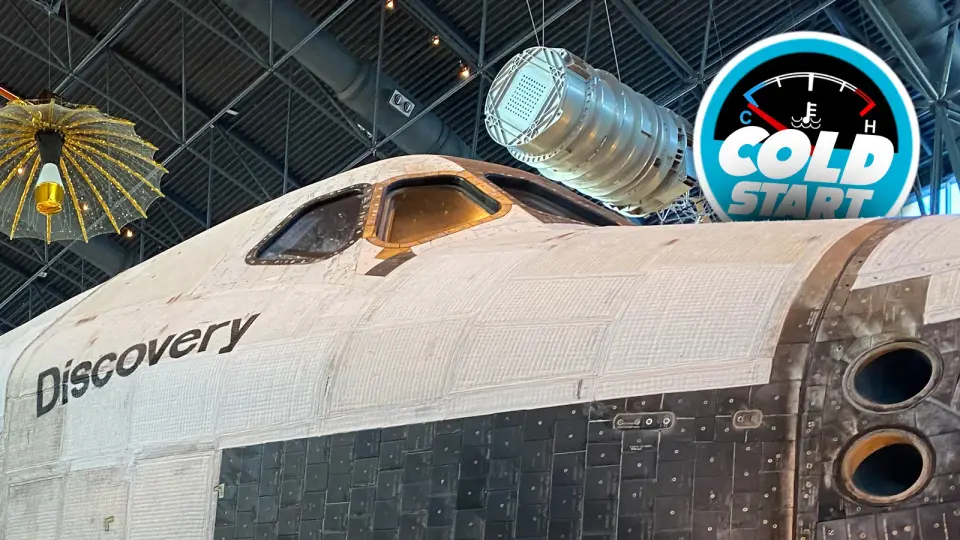
A social media post revealed that the letter 's' in the name 'Discovery' on the starboard side of the Space Shuttle orbiter is rotated 180 degrees. The error persisted for 27 years of service and remains visible at the Smithsonian's Udvar-Hazy Center, despite NASA's strict typographic guidelines.
Key points
- The Space Shuttle Discovery, considered the most reliable orbiter with 39 missions and 150 million miles traveled, features a typographical error on its starboard side.
- The letter 's' in the name 'Discovery' is upside down, a mistake that went unnoticed for 27 years of service from 1984 until its retirement.
- NASA uses Helvetica Medium for spacecraft typography, but the error likely occurred due to the use of large stencils and the complex curves of the fuselage during painting.
- The error remains visible on the orbiter now housed at the Udvar-Hazy Center outside Washington, DC, and has not been corrected.
- Some commenters suggest the error may have been present since the 1984 launch or occurred during a repaint, while others note the curve of the ship masks the mistake.
Background
The Space Shuttle program, which began with the rollout of the Enterprise orbiter in 1976, involved multiple orbiters including Discovery, which was celebrated for its reliability. Recent commemorations of the shuttle program's 50th anniversary have highlighted the cultural and scientific legacy of the shuttles, including their role in constructing the International Space Station and deploying the Hubble Space Telescope.
Why it matters
The discovery of a long-standing typographical error on a high-profile spacecraft highlights the challenges of applying graphics to complex surfaces and the difficulty of detecting subtle mistakes in high-visibility objects. It also underscores the enduring legacy of the Space Shuttle program and the public's continued interest in its details, even decades after its retirement.
What to watch
No immediate action is expected from NASA or the Smithsonian regarding the error, as the orbiter is now a museum exhibit. The story may prompt further scrutiny of other spacecraft or historical artifacts for similar unnoticed errors.
Want the full story? Read the original reporting
Read on The Autopian