
Physicists Teleport 100-Pixel Quantum Image Across Parallel Channels
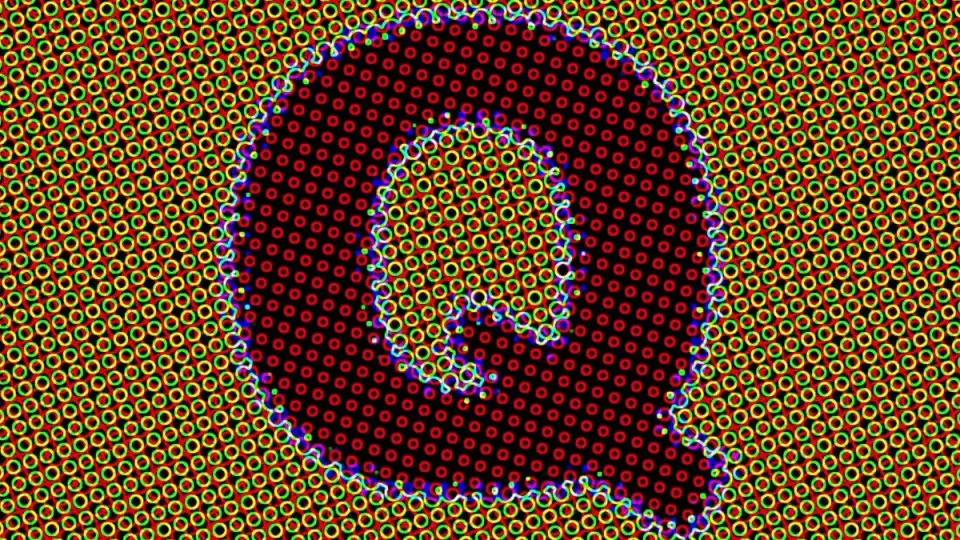
A team led by Jietai Jing at East China Normal University achieved quantum teleportation across 100 simultaneous channels by encoding the letter 'Q' into a 10-by-10 grid of optical modes. The all-optical system processed parallel channels without separate electronic feedforward, achieving an average fidelity of 0.60, which exceeds the classical limit of 0.52. This demonstrates a scalable architecture for high-capacity quantum communication networks, though current capacity is limited by laser power.
Key points
- Jietai Jing and colleagues at East China Normal University demonstrated quantum teleportation across 100 independent channels simultaneously, a record for independently addressable channels.
- The experiment encoded the quantum state of a 100-pixel image (the letter 'Q') into a 10-by-10 array of spatially separated optical modes.
- The system used an all-optical approach to process all 100 channels in parallel, avoiding the need for separate electronic detection and modulation for each channel.
- The achieved average fidelity of 0.60 surpassed the classical limit of 0.52 across all modes, confirming genuine quantum teleportation.
- Current scalability is constrained by laser power; the 10-by-10 array size was limited by approximately one watt of available laser power, suggesting higher power could increase channel count.
Background
Quantum teleportation, first proposed in 1993 and experimentally demonstrated shortly after, transfers quantum states using entanglement and classical communication rather than moving matter. Previous experiments have teleported states over distances exceeding 100 kilometers, including to satellites, but typically involved single or few multiplexed channels. Scaling capacity for large quantum networks requires managing many parallel quantum states, a challenge addressed by this new parallel architecture. This follows earlier breakthroughs in quantum imaging, such as the 2023 confirmation of superconducting lenses for high-resolution quantum images, which demonstrated new methods for imaging atoms with minimal perturbation.
Why it matters
This breakthrough provides a scalable, flexible interface for future quantum communication networks by demonstrating that high-capacity quantum teleportation can be achieved without exponentially increasing apparatus complexity. By processing multiple channels in parallel via an all-optical system, the approach addresses the bandwidth bottleneck in quantum networks, potentially enabling more efficient distribution of quantum information across large-scale infrastructure.
What to watch
Researchers plan to increase the number of spatial modes and channels by using more powerful lasers, as the current 10-by-10 array size was limited by available laser power. Further development of this architecture could lead to larger, more complex quantum networks capable of handling higher data volumes in parallel.
Want the full story? Read the original reporting
Read on ScienceAlert