Tag

Physical Review Letters

All articles tagged with #physical review letters

Kyushu Team Proposes Atomic Clock Method to Detect Quantum Time Superposition
science6 days ago

Kyushu Team Proposes Atomic Clock Method to Detect Quantum Time Superposition

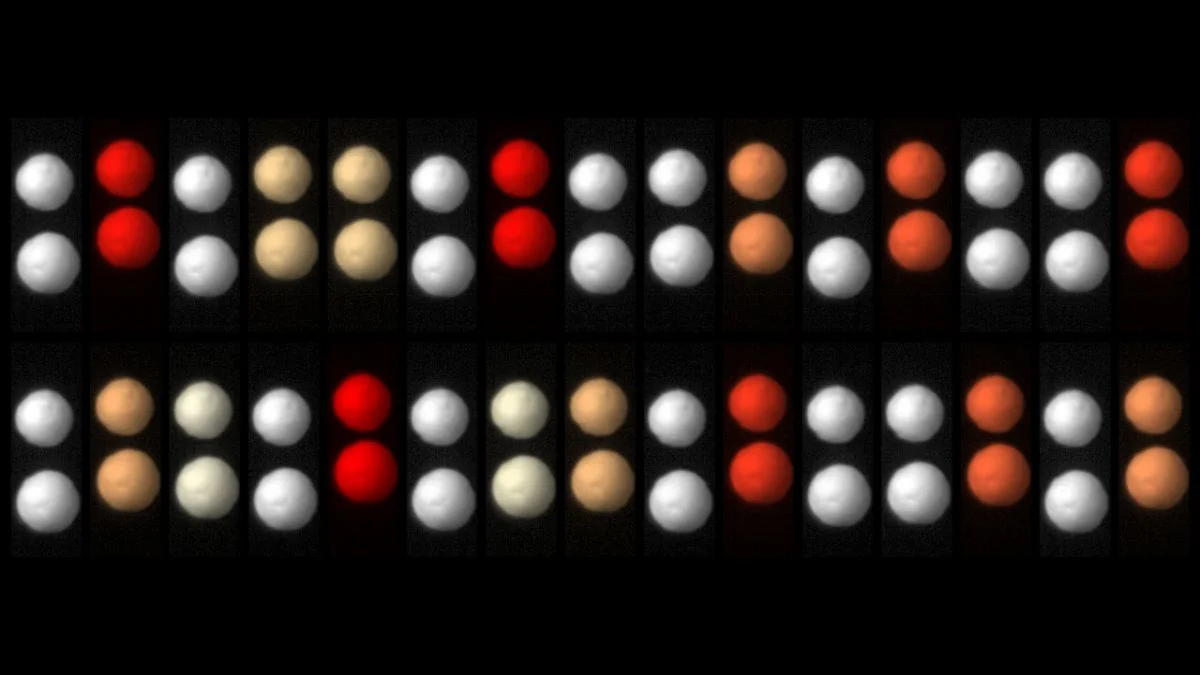
Researchers from Kyushu University and international partners have published a theoretical framework in Physical Review Letters for detecting 'quantum superposition of times' using advanced trapped-ion atomic clocks. The study suggests that by controlling clock motion, scientists can enhance sensitivity to quantum effects by up to 1,000 times, potentially revealing how time behaves when quantum mechanics and relativity intersect. While the method remains theoretical, it offers a pathway to test whether a single clock can experience multiple rates of time simultaneously, a phenomenon never directly observed before. If successful, this could bridge gaps between quantum theory and gravity, though experimental validation is still required.

Physicists Teleport 100-Pixel Quantum Image Across Parallel Channels
science2 months ago

Physicists Teleport 100-Pixel Quantum Image Across Parallel Channels

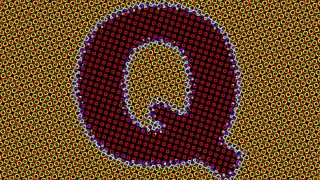
A team led by Jietai Jing at East China Normal University achieved quantum teleportation across 100 simultaneous channels by encoding the letter 'Q' into a 10-by-10 grid of optical modes. The all-optical system processed parallel channels without separate electronic feedforward, achieving an average fidelity of 0.60, which exceeds the classical limit of 0.52. This demonstrates a scalable architecture for high-capacity quantum communication networks, though current capacity is limited by laser power.

Monash Team Predicts Stable Bose-Fermi Quantum Droplets in Physical Review Letters
science3 months ago

Monash Team Predicts Stable Bose-Fermi Quantum Droplets in Physical Review Letters

Physicists at Monash University have published a theoretical model predicting the existence of stable 'quantum droplets' formed by mixing bosons and fermions. Published in Physical Review Letters, the study challenges previous assumptions that such mixtures would be unstable. If confirmed experimentally, these droplets could advance quantum computing and precision sensing technologies.

Radio Data Suggests Solar System Moves 3.7 Times Faster Than Standard Models Predict
space3 months ago

Radio Data Suggests Solar System Moves 3.7 Times Faster Than Standard Models Predict

A study in Physical Review Letters indicates the solar system’s velocity through space may be approximately 828,000 kilometers per hour, nearly four times the 230 kilometers per second estimated by standard cosmic microwave background models. Researchers at Bielefeld University analyzed radio galaxy distributions to find a directional dipole signal 3.7 times stronger than predicted. This discrepancy suggests either a significant velocity anomaly or a non-uniform distribution of matter in the universe, with the Square Kilometre Array expected to resolve the issue by 2027.

Chinese Physicists Achieve 420km Quantum Entanglement via Fiber Optics
science3 months ago

Chinese Physicists Achieve 420km Quantum Entanglement via Fiber Optics

A team at the University of Science and Technology of China has established a new record for matter-to-matter quantum entanglement over 420 kilometers of optical fiber. By using laser-cooled rubidium atoms as quantum memories and converting photon wavelengths to reduce loss, the researchers surpassed previous limits by more than four times. This achievement demonstrates that memory-based networks can outperform direct transmission limits, providing a critical building block for future quantum internet infrastructure.

Penn State Study Reveals How Physical Materials Compete and Overwrite Structural Memories
science4 months ago

Penn State Study Reveals How Physical Materials Compete and Overwrite Structural Memories

Researchers at Penn State have demonstrated that non-Brownian suspensions can simultaneously retain two distinct types of structural memory: directional memory from stirring and amplitude memory from rocking. The study shows that these memories coexist until mechanical intensity reaches a threshold, where increased rocking erases the directional memory and overwrites it with a new configuration. This physical phenomenon mirrors the competitive dynamics of biological memory, offering a tangible model for understanding how short-term and long-term memories interact, compete, and reshape one another in the brain.

Listening for Darkness: Could Gravitational Waves Reveal Dark Matter's Signature
space6 months ago

Listening for Darkness: Could Gravitational Waves Reveal Dark Matter's Signature

A new study proposes that dense dark-matter clouds around spinning black holes could imprint a detectable signal on gravitational waves produced by merging black holes. Researchers analyzed 28 LIGO/Virgo/KAGRA events and found one—GW190728—whose waveform may carry such an imprint, though not a definitive detection. If true, this could provide a new way to probe dark matter using upcoming gravitational-wave observations and detector improvements, with the results published in Physical Review Letters.

Two Beads, One Standing Wave: A Lab-Scale Time Crystal
science9 months ago

Two Beads, One Standing Wave: A Lab-Scale Time Crystal

NYU researchers demonstrate a classical time crystal using an acoustic standing-wave field to levitate and couple tiny polystyrene beads; through non-reciprocal scattering of sound, the beads self-sustain a temporal oscillation without external driving, making it the simplest possible time-crystal system and offering a macroscopic platform to study non-reciprocity. The findings are reported in Physical Review Letters.

"Discovery of a Novel Subatomic Particle Confirmed"
physics2 years ago

"Discovery of a Novel Subatomic Particle Confirmed"

The BESIII collaboration has observed an anomalous line shape around the ppbar mass threshold in the J/ψ→γ3(π+π-) decay, indicating the existence of a ppbar bound state, with a new resonance X(1880) discovered near the ppbar mass threshold. The mass and width of X(1880) were determined to be 1882.1±1.7±0.7 MeV/c2 and 30.7±5.5±2.4 MeV/c, respectively, supporting the existence of a ppbar bound state. This result was published in Physical Review Letters and selected as "Featured in Physics."