
AI-designed proteases cleave disease-linked proteins with high precision
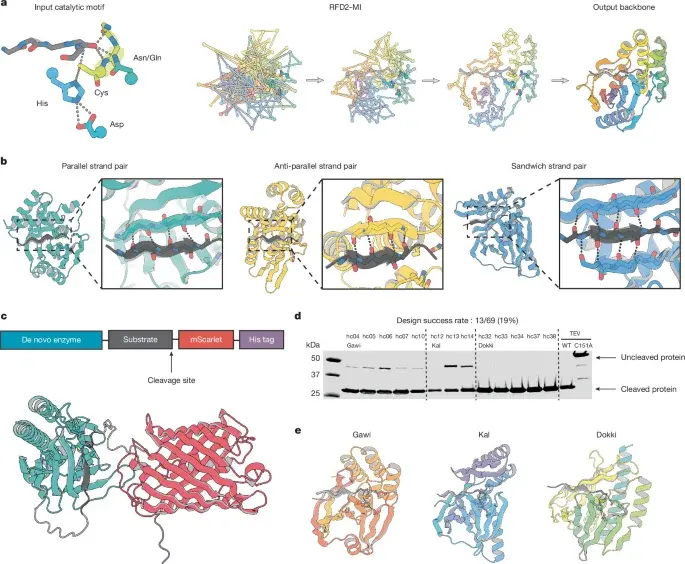
Researchers at the University of Washington have successfully used AI to design novel proteases from scratch that can cleave specific peptide bonds in proteins linked to neurological diseases. The study, published in Nature, demonstrates that computational tools can create enzymes with high catalytic activity and specificity, offering potential therapeutic applications for conditions like Alzheimer's and frontotemporal dementia.
Key points
- Two papers in Nature report the de novo design of cysteine and zinc-based proteases using AI tools like RFdiffusion2 and ProteinMPNN.
- The designed proteases achieved rate enhancements of up to 10^10-fold over uncatalyzed reactions, with success rates of 19% for cysteine proteases and 36% for zinc proteases.
- The proteases were tested in mammalian cells and shown to cleave disease-associated proteins such as TDP-43, amyloid-β, and serum amyloid A.
- The designs adopt folds very different from natural proteases, with crystal structures matching computational models to within 1.2 Å.
- The work highlights the potential for AI to design enzymes with specific catalytic activities, but also notes limitations in achieving the full activity of natural enzymes.
Background
This follows earlier coverage of AI-designed proteases that cut disease-linked proteins with high precision, as reported in our archive on October 14, 2026. The current study expands on that by detailing the specific computational methods and experimental validation of the designed enzymes.
How outlets are covering it
Nature emphasizes the technical achievement of designing proteases with high catalytic activity and specificity, highlighting the success rates and rate enhancements. Ars Technica focuses on the broader implications for therapeutic applications, noting the challenges in delivering proteases to target sites and the potential for treating genetic diseases. Unite.AI provides a detailed breakdown of the computational pipeline and the specific disease-associated proteins targeted, emphasizing the potential for bioorthogonal control of cell state. All sources agree on the significance of the work but differ in their emphasis on technical details versus therapeutic potential.
Why it matters
This research demonstrates the potential for AI to design enzymes with specific catalytic activities, which could lead to new therapeutic approaches for neurological diseases. The ability to cleave disease-associated proteins with high precision could help modulate protein behavior and oligomerization, potentially slowing the progression of diseases like Alzheimer's and frontotemporal dementia. However, the work also highlights the challenges in achieving the full activity of natural enzymes and the need for further optimization.
What to watch
The researchers plan to further optimize the designed proteases by introducing random mutations to improve catalytic activity. They also aim to explore the therapeutic potential of these proteases by developing methods for delivering them to target sites in the body. Additionally, the work may lead to the development of new biotechnological applications, such as bioorthogonal control of cell state and bioremediation.
- De novo design of cysteine proteases Nature
- Researchers use AI to design proteins that cut up other proteins Ars Technica
- Institute led by UW Nobel winner uses AI to build molecular scissors targeting disease proteins GeekWire
- Molecular ‘scissors’ open path to new therapies UW Medicine | Newsroom
- Baker Lab Designs AI Proteases That Cleave Disease-Linked Proteins Unite.AI
Want the full story? Read the original reporting
Read on Nature