
Designing life from first principles: the coming era of de novo protein engineering
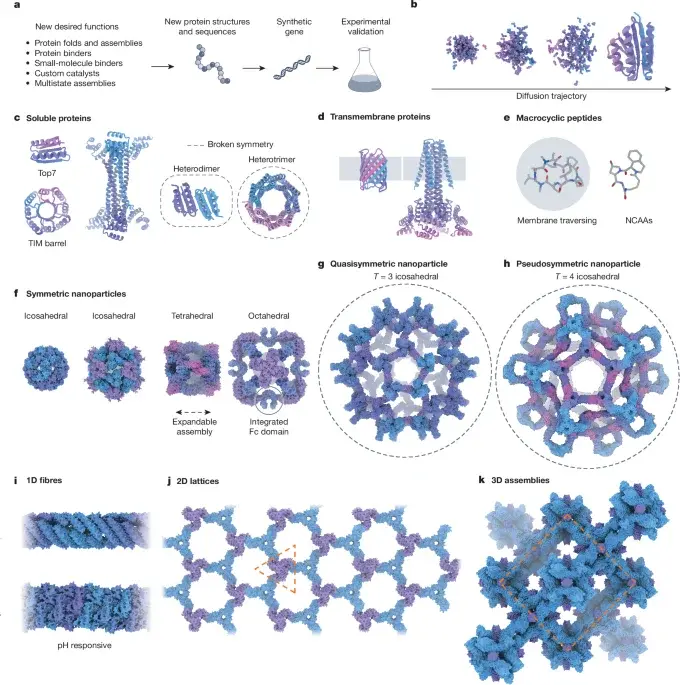
Nature’s review surveys the state of de novo protein design, outlining a shift from random screening to intentional computational design powered by deep-learning tools (RFdiffusion) and robust structure prediction (AlphaFold), with progress in novel folds, symmetric assemblies, and high-affinity binders as well as enzymes and small-molecule binders. It also notes ongoing challenges in catalysis, switches, and nanomachines, emphasizing that open-source methods like RFdiffusion and ProteinMPNN, together with accurate predictors, now enable broad exploration of design space. The outlook is optimistic: over the next five to ten years we may see sophisticated protein nanomachines and materials with wide applications in medicine, technology and sustainability, driven by where to design rather than how to design.
- The past, present and future of de novo protein design Nature
- AI keeps tackling harder targets in protein design, latest Adaptyv contest shows Endpoints News
- After mapping more than 200 million proteins, artificial intelligence enters the race to accelerate drugs, vaccines, and enzymes against plastic and CO₂, opening an era in which molecules can be designed on demand. CPG Click Petróleo e Gás
- How AI and Automation Are Reshaping Protein Design Technology Networks
- AI Protein Design Market 2026: The $6.9B Opportunity Transforming Drug Discovery with Generative AI openPR.com
Want the full story? Read the original reporting
Read on Nature