
Designing life from first principles: the coming era of de novo protein engineering
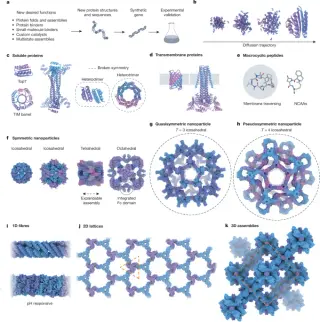
Nature’s review surveys the state of de novo protein design, outlining a shift from random screening to intentional computational design powered by deep-learning tools (RFdiffusion) and robust structure prediction (AlphaFold), with progress in novel folds, symmetric assemblies, and high-affinity binders as well as enzymes and small-molecule binders. It also notes ongoing challenges in catalysis, switches, and nanomachines, emphasizing that open-source methods like RFdiffusion and ProteinMPNN, together with accurate predictors, now enable broad exploration of design space. The outlook is optimistic: over the next five to ten years we may see sophisticated protein nanomachines and materials with wide applications in medicine, technology and sustainability, driven by where to design rather than how to design.