Tag

Diffusion Models

All articles tagged with #diffusion models

Designing life from first principles: the coming era of de novo protein engineering
science27 days ago

Designing life from first principles: the coming era of de novo protein engineering

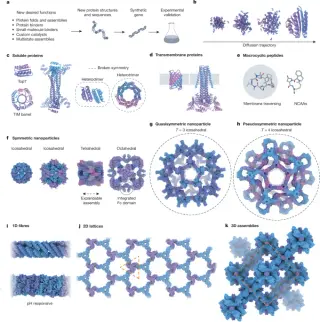
Nature’s review surveys the state of de novo protein design, outlining a shift from random screening to intentional computational design powered by deep-learning tools (RFdiffusion) and robust structure prediction (AlphaFold), with progress in novel folds, symmetric assemblies, and high-affinity binders as well as enzymes and small-molecule binders. It also notes ongoing challenges in catalysis, switches, and nanomachines, emphasizing that open-source methods like RFdiffusion and ProteinMPNN, together with accurate predictors, now enable broad exploration of design space. The outlook is optimistic: over the next five to ten years we may see sophisticated protein nanomachines and materials with wide applications in medicine, technology and sustainability, driven by where to design rather than how to design.

Thermodynamic Brainpower: Tiny-Energy Image Generation with Noise-Driven Computing
technology3 months ago

Thermodynamic Brainpower: Tiny-Energy Image Generation with Noise-Driven Computing

Scientists report a generative thermodynamic computer that uses thermal noise to produce images from random data, mimicking AI neural networks but with energy use orders of magnitude lower. By leveraging probabilistic computing and diffusion-like dynamics (via Langevin-based calculations) and tuning coupling strengths in a network, the system retrieves or creates images from noise, offering a physics-based path to energy-efficient AI-like tasks and new insights into learning.

AI diffusion model maps multiple synthesis routes to speed up materials discovery
technology3 months ago

AI diffusion model maps multiple synthesis routes to speed up materials discovery

MIT researchers trained a diffusion-based AI, DiffSyn, on 23,000 material-synthesis recipes to map a target structure to multiple viable synthesis routes, enabling rapid exploration of temperatures, times, and precursor ratios. In tests with zeolites, DiffSyn suggested promising pathways and helped synthesize a new zeolite with improved thermal stability, reducing trial‑and‑error to a rapid initial search. This one‑to‑many approach better matches experimental reality and could extend to other materials, though high‑quality data remain a bottleneck; future work includes autonomous experiments and broader material classes.

Researchers Reveal Secrets of AI Creativity
technology11 months ago

Researchers Reveal Secrets of AI Creativity

Researchers have discovered that the apparent creativity of diffusion models in AI image generation stems from deterministic imperfections in their denoising process, revealing that their 'creativity' is an inevitable outcome of their architecture, similar to biological morphogenesis processes. This insight could impact future AI development and our understanding of human creativity.

"New AI Techniques for Image Compression and Visual Question Answering"
ai-research2 years ago

"New AI Techniques for Image Compression and Visual Question Answering"

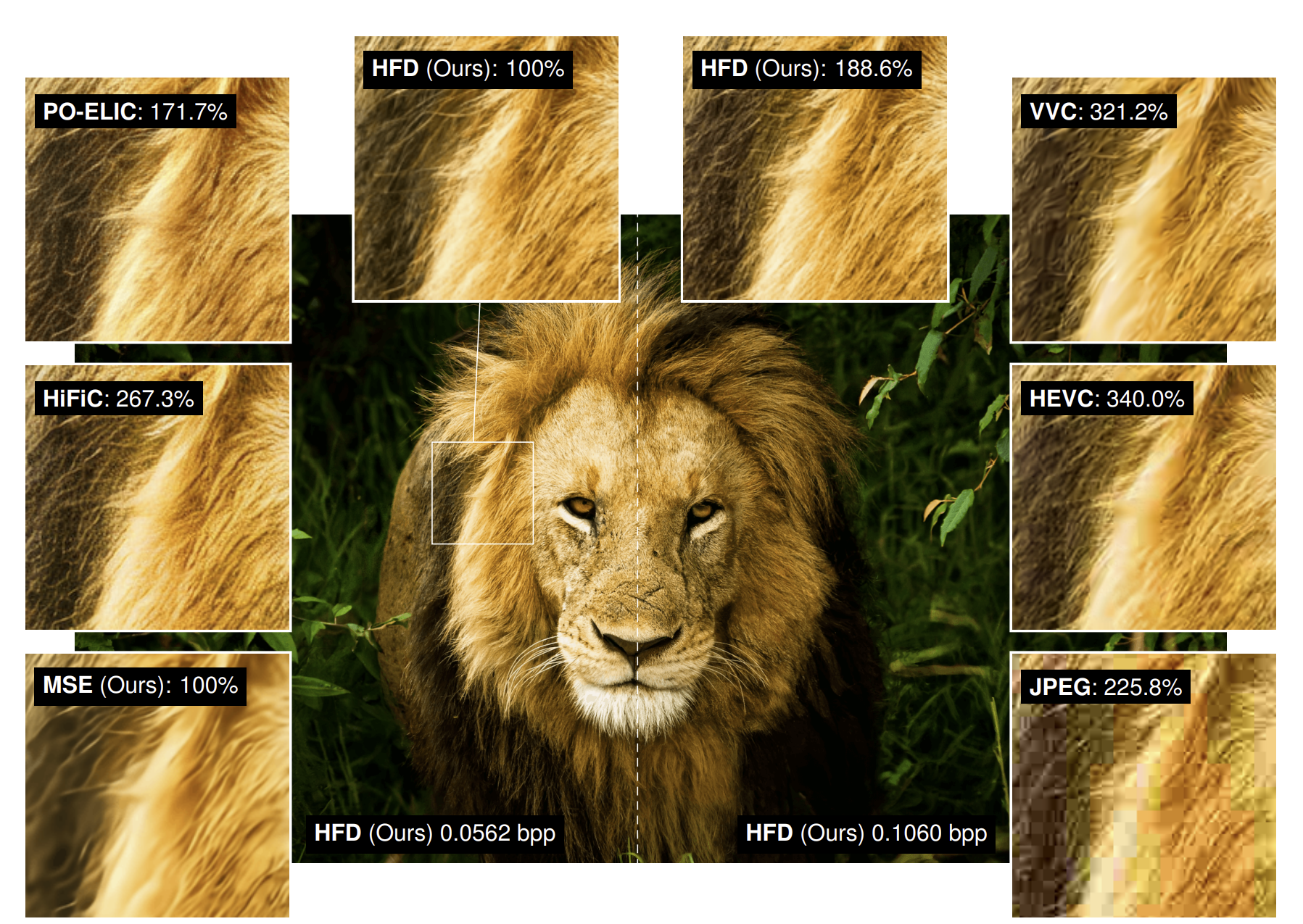
Google researchers proposed a method that combines a standard autoencoder with a diffusion process to efficiently compress high-quality images using score-based generative models. The proposed method outperforms several recent generative approaches in terms of image quality and preserves details much better compared to state-of-the-art approaches. The study revealed specific details that can be useful for future research in this domain, such as the impact of noise schedule and the amount of noise injected during image generation.