
MIT tests magnetic modem to bypass Arctic ice for data transmission
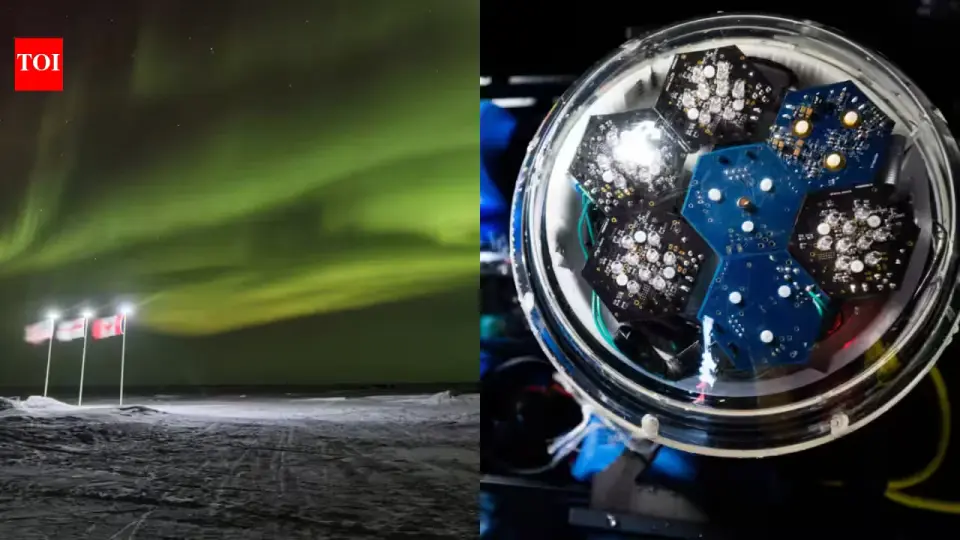
MIT Lincoln Laboratory researchers successfully tested a prototype communication system during the U.S. Navy's Operation Ice Camp 2026. The team drilled a 2-by-3-foot hole through 3.6 feet of sea ice near Utqiaġvik, Alaska, and lowered a remotely operated vehicle carrying a modem developed by Norwegian firm Havguard. The device transmitted data through the ice using magnetic fields at a rate of 1.2 kilobytes per second. This technology aims to reduce the need for human presence on dangerous, unstable ice by enabling remote data retrieval from underwater sensors.
Key points
- Researchers achieved through-ice data transmission at 1.2 kilobytes per second using a magneto-inductive modem.
- The test took place near Utqiaġvik, Alaska, during Operation Ice Camp 2026.
- Severe weather, including blizzards and winds up to 40 mph, delayed the team and limited sensor deployment to one-quarter of the plan.
- The project seeks to monitor Arctic acoustic changes, such as icequakes and marine mammal calls, without risking human safety.
- Future plans include air-droppable sensors and improved modem integration before Operation Ice Camp 2028.
Background
This development follows a broader trend of Arctic monitoring efforts. Recent satellite data from August 2026 showed open water as close as 37 miles to the North Pole, highlighting the fragility of sea ice. Additionally, geopolitical shifts, such as China's testing of the 'Ice Silk Road' route, have increased interest in Arctic navigation and environmental stability. Previous deployments in 2024 by the same MIT team successfully captured marine mammal vocalizations, establishing a baseline for the current acoustic monitoring initiatives.
How outlets are covering it
The Times of India emphasizes the engineering challenges of the deployment, highlighting the severe weather that forced the team to abandon most of their sensor package. It frames the 1.2 kilobytes per second transmission rate as a promising but modest step toward remote monitoring. Interesting Engineering focuses more on the scientific application, specifically how these sensors could distinguish 'icequakes' from marine mammal sounds using machine learning. Both sources agree that the primary goal is to minimize human exposure to hazardous conditions, but Interesting Engineering places greater weight on the potential for automated environmental early-warning systems, while The Times of India stresses the logistical difficulties of fieldwork in the Arctic.
Why it matters
As Arctic ice retreats, the region becomes more accessible to commercial and military activity, increasing the need for reliable environmental monitoring. Traditional methods require dangerous human presence on unstable ice. This magnetic communication technology offers a safer, more sustainable way to gather critical data on ice dynamics and marine life, potentially supporting coastal community safety and infrastructure planning in a rapidly changing climate.
What to watch
The MIT team plans to refine the modem's packaging and develop air-droppable versions of their sensors. They intend to test these improvements in the lead-up to Operation Ice Camp 2028. The researchers also aim to integrate machine learning algorithms to better distinguish between different acoustic signatures, such as ice fractures and animal vocalizations, to create a more automated monitoring network.
- MIT researchers drilled a 2-by-3-foot hole through 3.6 feet of Arctic sea ice and sent a robot below; the The Times of India
- Researchers tune into Arctic under-ice sounds and test through-ice communication Phys.org
- Air-dropped acoustic sensors could provide early warning of dangerous Arctic ice changes interestingengineering.com
Want the full story? Read the original reporting
Read on The Times of India