
Blue Origin Unveils 20-Meter 'Power Tower' for Lunar South Pole Base
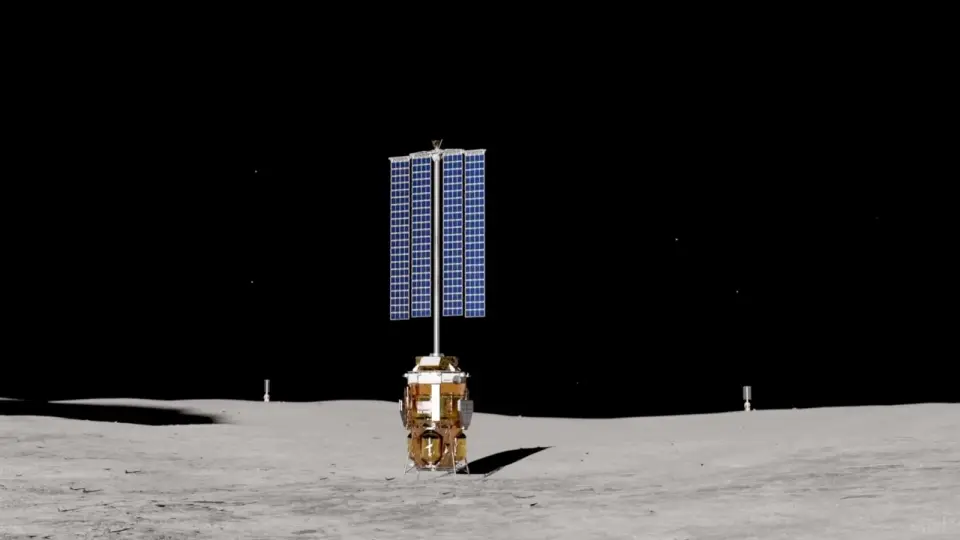
Blue Origin has revealed a new 'Power Tower' designed to generate over 10 kilowatts of solar electricity for a future base at the Moon's south pole. The 20-meter-tall structure features a vertically deployed solar array system that unfolds after landing. The company shared an animation of the deployment on X on September 25, alongside footage of a successful Earth-based test conducted on July 22, 2026. This technology evolves from the earlier Lunar Array Mast and Power System (LAMPS) developed by Blue Origin subsidiary Honeybee Robotics. The modular design aims to support future surface networks by extending power to various assets beyond the lander itself.
Key points
- Blue Origin unveiled a 20-meter-tall 'Power Tower' intended to provide more than 10 kilowatts of power for lunar base operations.
- The system features a vertically deployed solar array that unfolds after landing, as shown in a September 25 X post and a July 22, 2026 Earth-based test video.
- The technology is an evolution of the Lunar Array Mast and Power System (LAMPS), previously tested by Honeybee Robotics at NASA's Johnson Space Center in 2024.
- The modular architecture is designed to support future surface networks, extending power from the lander to other necessary assets.
- The power tower is specifically targeted for use at the lunar south pole, aligning with broader efforts to establish a sustained presence on the Moon.
Background
This development follows Blue Origin's recent $700 million contract with NASA to build a Mars communications orbiter, indicating a broader expansion of the company's role in deep space infrastructure. The Power Tower concept builds upon the Vertical Solar Array Technology (VSAT) project, which aims to create reliable power sources for sustained lunar presence. While previous lunar missions, such as Apollo 11, focused on scientific experiments like solar wind composition, current efforts prioritize robust energy generation for permanent bases.
Why it matters
Reliable power generation is a critical bottleneck for establishing permanent human presence on the Moon. The Power Tower's ability to deliver over 10 kilowatts of power could enable more complex operations, from scientific research to potential in-situ resource utilization. Its modular design suggests scalability, potentially allowing for larger power networks as lunar infrastructure expands. This advancement supports NASA's Artemis program goals and Blue Origin's vision for a sustained lunar economy.
What to watch
Blue Origin will likely continue testing the Power Tower's deployment mechanisms and power output in Earth-based simulations. The company may seek further integration of this technology into NASA's Artemis base plans. Future updates may reveal specific timelines for the first lunar deployment of the Power Tower, potentially coinciding with early Artemis missions to the lunar south pole.
Want the full story? Read the original reporting
Read on Space