Tag

Moon Base

All articles tagged with #moon base

space18 days ago

HALO Drives NASA's Lunar Infrastructure Demos for Moon Base Trials

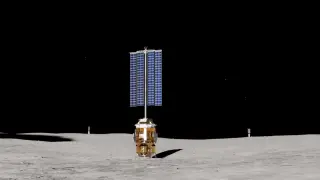
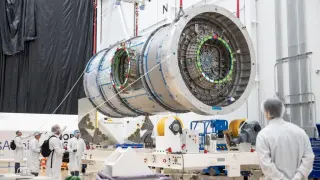
NASA and Northrop Grumman will repurpose the HALO module from Gateway into three Lunar Infrastructure Demos (LID-1 to LID-3) to mature lunar surface power, thermal management, autonomy, communications and hosted-payload services capable of surviving the Moon’s night near the South Pole, with Moon Base Phase One development running through 2029; the move follows Gateway delays and corrosion issues and aims to accelerate a sustainable Moon Base architecture.

technology1 month ago

Blue Origin maps hybrid return-to-flight plan for New Glenn, targeting late-2026 launch

Blue Origin outlines a return-to-flight plan for its New Glenn rocket after an anomaly destroyed a pad vehicle, with early analysis pointing to the aft first stage. The company will implement a hybrid horizontal-vertical integration flow at LC-36A, reuse existing infrastructure, and coordinate with NASA on Moon Base timelines as Blue Moon landers advance toward VIPER and Artemis-era missions; the late-2026 return remains the goal, though some milestones may push into 2027.

NASA funds quartet of robotic lunar landers to advance Moon Base ambitions
space1 month ago

NASA funds quartet of robotic lunar landers to advance Moon Base ambitions

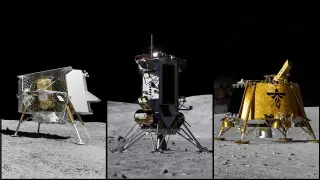
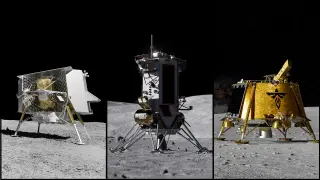
NASA awarded about $590 million to Astrobotic Technology, Firefly Aerospace and Intuitive Machines to fly four robotic lunar lander missions in 2028, each carrying the same three payloads (SCALPSS, LETS and the Laser Retroreflector Array); Astrobotic will fly two Peregrine landers to the Gruithuisen Domes region, Firefly one Blue Ghost, and Intuitive Machines one Nova-C, with a potential later addition of PROMISE, a Mars rover–derived, RTG-powered lunar rover; the agency is also weighing logistics for Moon Base launches and has not ruled out Blue Origin’s launch options as Plan A remains to use New Glenn.

NASA advances plan to build a $30 billion moon base with private partners
space1 month ago

NASA advances plan to build a $30 billion moon base with private partners

NASA outlined Phase 1 of a $30 billion plan to establish a permanent lunar base, awarding about $590 million to Astrobotic, Firefly and Intuitive Machines for four lunar missions and signaling possible use of a Mars rover on the Moon. The effort aims to lay groundwork for future habitats and power infrastructure by the late 2020s, relying on private partners like SpaceX and Blue Origin amid funding and technical hurdles and competing with China’s space program.

NASA Expands Moon Base with Four More Lander Missions and New Rover Plans
space1 month ago

NASA Expands Moon Base with Four More Lander Missions and New Rover Plans

NASA awards nearly $600 million to Astrobotic, Intuitive Machines, and Firefly Aerospace to land four additional Moon Base missions by late 2028 under CLPS, delivering three NASA science payloads (SCALPSS, LRA, LETS) to study lunar dust, navigation, and radiation as part of building sustained lunar operations. The agency also previews new opportunities, including the PROMISE rover concept for surface characterization, plus potential demos and a lunar relay constellation to enable broader exploration and future crewed missions.

NASA pauses HALO lunar habitat work as Moon-base plans take precedence
space2 months ago

NASA pauses HALO lunar habitat work as Moon-base plans take precedence

NASA has paused work on Northrop Grumman’s Habitation and Logistics Outpost (HALO) as the agency shifts lunar plans from an orbital gateway to a surface-based Moon base; NG says most affected staff will be reassigned and HALO could be repurposed, while a separate HALO life-support contract with Paragon Space Development Corp. was told to stop, signaling a likely wind-down of the Lunar Gateway effort.

Lunar Rovers Jumpstart Artemis: NASA Bets on Fast, Modular Moon Transportation
space2 months ago

Lunar Rovers Jumpstart Artemis: NASA Bets on Fast, Modular Moon Transportation

NASA revealed two next‑gen lunar rovers—CLV‑1 by Astrolab and Pegasus by Lunar Outpost—designed for human piloting, teleoperation, or autonomous use, about a ton in weight, roughly 6 mph, and costing ~$220 million each with a 20‑degree incline capability and a ~1‑year lifespan; the agency aims to have them on the Moon by 2028 as part of an iterative Moon Base plan funded largely through private contractors (Blue Origin, Astrobotic, Intuitive Machines) delivering landers and equipment, while MoonFall drones map sites and potentially mark a base perimeter under the Outer Space Treaty; the broader goal is frequent, affordable launches to rapidly build a lasting lunar outpost.

NASA maps Moon Base plan with three uncrewed missions and phased timeline
space-exploration2 months ago

NASA maps Moon Base plan with three uncrewed missions and phased timeline

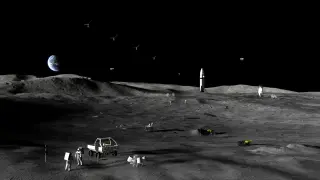
NASA unveiled a phased Moon Base plan to establish a permanent lunar outpost near the South Pole, starting with three uncrewed missions—Moon Base I (instruments testing thruster interactions and surface tracking), Moon Base II (rovers), and Moon Base III (NASA and international payloads)—to lay the groundwork for a semi-permanent infrastructure by 2029–2032 and a sustained presence thereafter. The effort, part of a roughly $20 billion program, includes Blue Origin’s contract to conduct the first mission using its Blue Moon Endurance lander. While NASA touts the initiative as the next era of lunar exploration and a stepping stone to Mars, experts caution that timelines are ambitious amid Artemis challenges and geopolitical competition, particularly from China.

Artemis Moon Base Aims to Span Hundreds of Square Miles With Drones and Rovers
space3 months ago

Artemis Moon Base Aims to Span Hundreds of Square Miles With Drones and Rovers

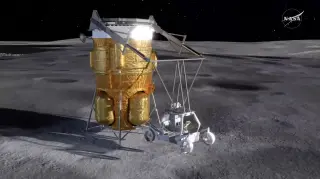
NASA’s Artemis program envisions a multi‑phase Moon Base near the south pole that could cover hundreds of square miles, with hopping MoonFall drones scouting and marking the site’s borders and autonomous lunar rovers from Astrolab and Lunar Outpost; Firefly Aerospace will deliver the first MoonFall landers in 2028 to kick off perimeter mapping, while Artemis 3/4 missions will preposition rovers as the base advances toward a semi‑permanent crew presence by 2032.

NASA taps rover teams and drone scouts to seed the Moon Base program
space3 months ago

NASA taps rover teams and drone scouts to seed the Moon Base program

NASA selected Astrolab and Lunar Outpost to design rovers to support a planned Moon Base, to be delivered to the lunar surface by Blue Origin’s Blue Moon Mark 1 lander under the Commercial Lunar Payload Services (CLPS) program; the rovers, intended for scouting and science and operable autonomously or via teleoperation, are expected to help Artemis astronauts by 2028. The awards total roughly $219–220 million for the rover contracts, with the first Moon Base mission renamed Moon Base 1 and related missions (Astrobotic Griffin-1 and Intuitive Machines IM-3) renamed Moon Base 2 and Moon Base 3. Separately, Firefly Aerospace will deliver MoonFall drones, launched from lunar orbit by a Firefly Elytra Dark spacecraft, to scout terrain, with a planned 2028 launch. Intuitive Machines was not selected in this initial round, though NASA says it may win later task orders. The program updates reflect NASA’s shift toward a more streamlined, affordable Moon Base rollout and the use of CLPS 2.0 for cargo deliveries.

NASA taps Blue Origin for first private lunar lander on path to Moon base
technology3 months ago

NASA taps Blue Origin for first private lunar lander on path to Moon base

NASA picked Blue Origin to fly the first of three uncrewed lunar missions, funding roughly $230 million toward the initial two lander missions to test payloads and tech for a future Moon base, with SpaceX as a competing option for crew landers and Artemis missions; the plan pursues an iterative, privately supported path to a sustained lunar presence by the 2030s.

Lunar Strike: A sober, near-future vision of humanity's Moon base
technology3 months ago

Lunar Strike: A sober, near-future vision of humanity's Moon base

Lunar Strike imagines a near-future Moon base where climate-change, geopolitical strain, and dwindling funding have shifted space ambition from exploration to survival. You play as a junior archivist for the in-universe ARCK project, documenting humanity’s lunar settlement while fending off a terrorist faction; the story emphasizes a lived-in base at the Moon’s south pole and AI that supports people rather than runs the colony. Set against Artemis-era context and ongoing Earth-space tensions, the game offers a pessimistic but grounded look at how we might live and preserve history on the Moon. Release is planned for PC with no fixed date beyond 2026.

NASA Unveils Sweeping Reboot to Accelerate Artemis and Moon Base Plans
space3 months ago

NASA Unveils Sweeping Reboot to Accelerate Artemis and Moon Base Plans

A lengthy memo from NASA Administrator Jared Isaacman outlines a broad reorganization to make NASA more mission-centric, consolidate centers, create new directorates (including a combined Human Spaceflight Mission Directorate and a unified Space Technology/Nuclear Power directorate), and accelerate Artemis missions with a Moon Base program. The plan also centralizes authority for lunar and nuclear initiatives, establishes a Lower Earth Orbit program, pushes a faster transition toward commercial partnerships and private space stations, and includes a series of directives on governance, funding, communications, workforce conversion from contractors to civil service, HQ relocation planning, and oversight to deliver more science and missions on a tighter timeline.

NASA Raises CLPS Ceiling to Accelerate Moon Base Lander Cadence
space-policy3 months ago

NASA Raises CLPS Ceiling to Accelerate Moon Base Lander Cadence

NASA plans to raise the maximum value of its Commercial Lunar Payload Services contract from $2.6 billion to $4.2 billion to support a projected surge in robotic lunar landings for Moon Base, with 13 eligible contractors and a goal of ramping up to a monthly landing cadence; the agency expects to award more missions and/or higher-value missions through 2028 and beyond as companies scale production and move toward standardized, build-to-print landers.