
Fermi Explorer Mission targets 2029 launch for 80,000-year trip to Alpha Centauri
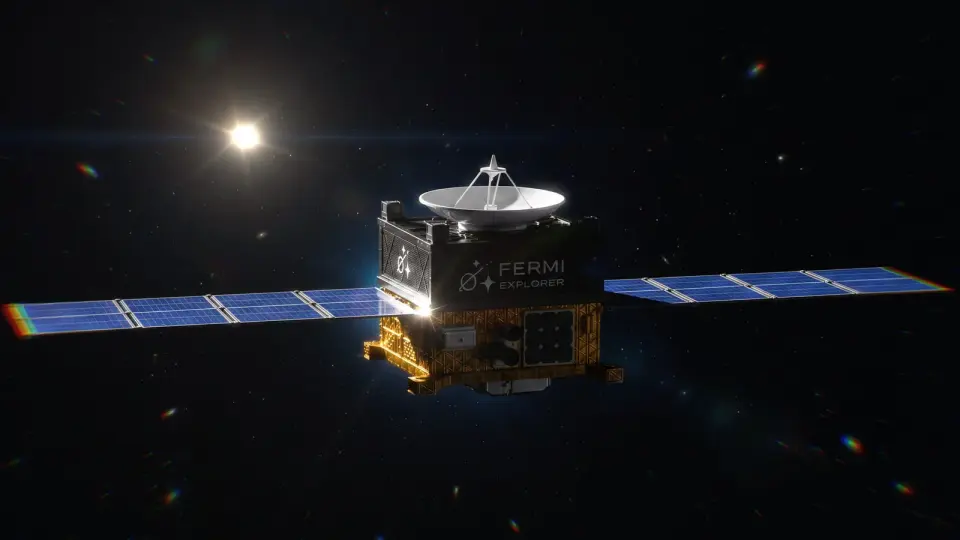
A Seattle-based nonprofit, the Fermi Explorer Mission, has announced plans to launch a small probe toward Alpha Centauri by the end of 2029. The mission aims to reach the nearest star system in approximately 80,000 years using existing solar electric propulsion technology. The project seeks to raise $15 million to build and launch the spacecraft, which will carry a 1 kg payload. The initiative is designed to address the Fermi Paradox by demonstrating that humanity can send objects beyond the solar system, potentially ruling out certain 'Great Filters' in the search for extraterrestrial life.
Key points
- The Fermi Explorer Mission, a nonprofit co-founded by Philip Johnston, Ezra Feilden, and Adi Oldean, plans to launch a probe to Alpha Centauri by 2029.
- The mission aims to cost less than $15 million and uses solar electric propulsion to achieve an escape velocity of approximately 25 km/s after 12 years of maneuvering.
- The probe will carry a 1 kg payload, potentially including a copy of the Voyager Golden Record and messages from children, and will travel for about 77,000 to 80,000 years.
- The project is motivated by the Fermi Paradox, seeking to rule out the possibility that species are unable or unwilling to send spacecraft beyond their home star.
- Advisors include former Blue Origin president Rob Meyerson and AstroForge CEO Matt Gialich, with former U.S. Air Force officer Garrett Jamison leading day-to-day operations.
Background
Previous efforts to reach Alpha Centauri, such as Breakthrough Starshot, have focused on laser-sail nanoprobes but have faced significant engineering hurdles and remain largely conceptual. Recent observations by the James Webb Space Telescope have hinted at a possible Saturn-mass planet in the Alpha Centauri system, though this remains unconfirmed. The Fermi Explorer Mission represents a shift toward using existing technology for a 'minimum viable' interstellar mission, contrasting with the high-cost, high-tech approaches of earlier proposals.
How outlets are covering it
Space.com emphasizes the symbolic nature of the mission, highlighting the quote that 'none of us will be here when this journey ends, and that is the point.' Ars Technica focuses on the technical feasibility and the 'cheapest possible' approach, noting the use of AI to determine the mission profile and the potential implications for the Fermi Paradox. GeekWire provides detailed information on the funding, the advisory board, and the specific mission parameters, including the payload and the potential for future interception of the probe. All sources agree on the 2029 launch target and the 80,000-year travel time, but differ in their emphasis on the technical challenges versus the philosophical implications.
Why it matters
The Fermi Explorer Mission represents a significant step in the quest for interstellar travel, using existing technology to achieve a historic first. It addresses the Fermi Paradox by demonstrating that humanity can send objects beyond the solar system, potentially ruling out certain 'Great Filters' in the search for extraterrestrial life. The mission also highlights the potential for private sector involvement in space exploration and the use of AI in mission planning.
What to watch
The Fermi Explorer Mission will begin a three-month solicitation period for payloads and is seeking to raise the remaining funds needed to reach the $15 million target. The launch is targeted for the end of 2029, with the probe expected to reach Alpha Centauri around the year 82,026. The mission will also involve ongoing communication with NASA and other space agencies, although the project is designed to proceed independently if necessary.
- Nonprofit wants to launch 80,000-year mission to Alpha Centauri in 2029 (video) Space
- If space data centers feel far-fetched, why not interstellar travel? TechCrunch
- Private group wants to launch "cheapest possible" mission to Alpha Centauri Ars Technica
- Fermi Explorer team plans to launch a probe that will reach the star system next door … in 80,000 years GeekWire
- Seattle-area nonprofit plans an 80,000-year space mission — yes, you read that right LinkedIn
Want the full story? Read the original reporting
Read on Space