
Starship's 407-Foot Frame and 18.1 Million Pounds of Thrust Define Its Lunar Ambitions
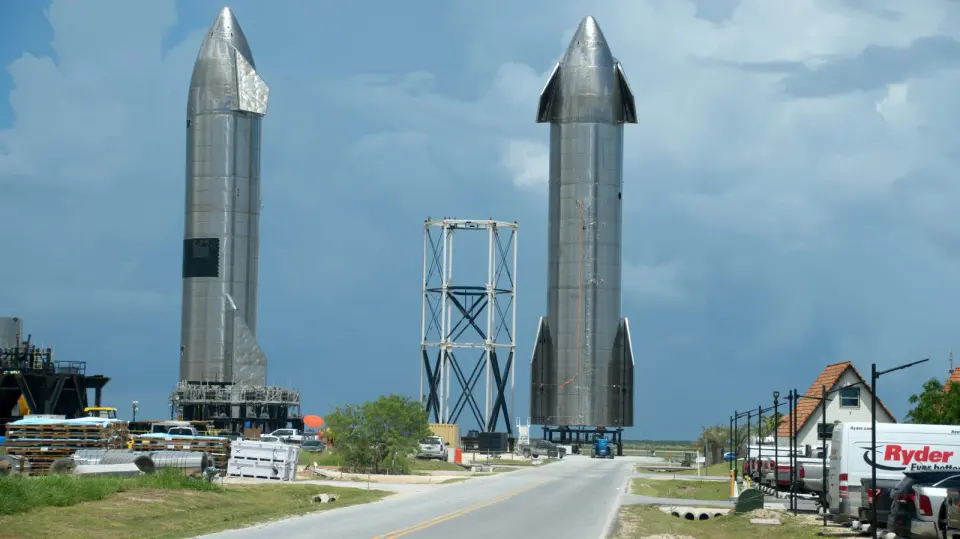
SpaceX’s Starship is the tallest and most powerful rocket ever flown, standing 407 feet tall with 18.1 million pounds of liftoff thrust. The vehicle consists of a 236-foot Super Heavy booster and a 171-foot upper stage, designed for heavy payloads and eventual human spaceflight. Despite its immense power, the rocket requires orbital refueling for lunar missions, involving a complex sequence of propellant depots and tankers before crewed flights.
Key points
- The complete two-stage Starship vehicle measures 407 feet in height, exceeding the height of the Statue of Liberty and the world's tallest living tree, Hyperion.
- The Super Heavy booster generates 18.1 million pounds of thrust using 33 Raptor engines burning liquid methane and oxygen, significantly outperforming NASA's SLS.
- The upper stage utilizes three standard Raptor engines and three vacuum-optimized Raptor engines, providing approximately 3.5 million pounds of thrust in space.
- The system carries a total propellant capacity of 5,250 metric tons, with 3,650 metric tons in the booster and 1,600 metric tons in the upper stage.
- Lunar missions require the Starship lander to refuel in Earth orbit, necessitating a multi-launch sequence involving propellant depots and tankers before crewed flights.
Background
Recent developments have focused on the operational readiness of Starship, including the completion of static fire tests for Flight 15 and the adoption of a catch-tower design for rapid reuse. SpaceX is also expanding its launch capabilities by preparing Pad 39A at Kennedy Space Center, aiming to increase launch frequency and support future missions to the Moon and Mars.
Why it matters
Starship’s scale and power are critical for enabling heavy-lift capabilities and the ambitious goal of full reusability, which could drastically reduce the cost of space access and facilitate complex lunar and Mars missions.
What to watch
SpaceX is targeting Flight 15 in November, which aims to achieve the first simultaneous recovery of both stages using mechanical arms. Successful recovery would mark a significant milestone for reusable orbital launch vehicles and support future lunar logistics.
Want the full story? Read the original reporting
Read on Engadget