
DuckDuckGo Launches $35 'Anti-AI' Sunglasses to Protest Smart Eyewear Surveillance
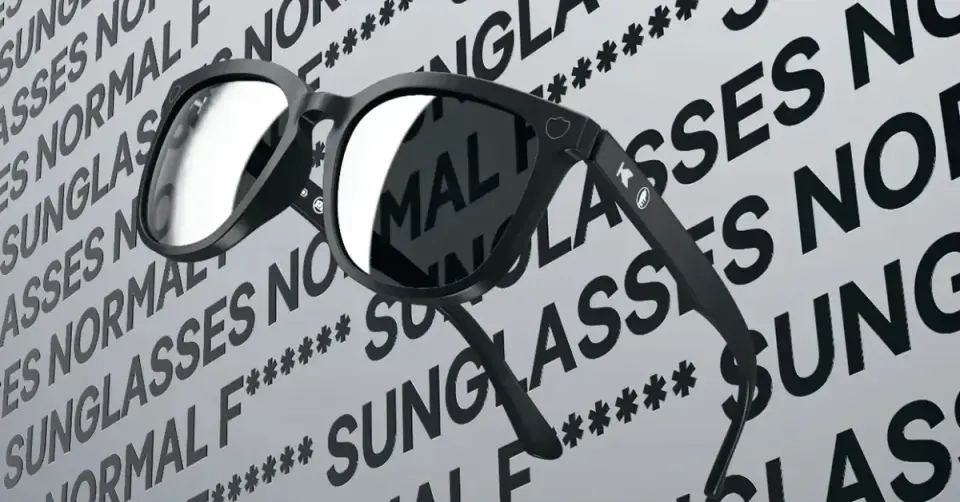
DuckDuckGo has partnered with eyewear brand Knockaround to release the 'Paso Robles,' a pair of matte black sunglasses priced at $35 that explicitly lack cameras, microphones, batteries, and AI capabilities. Launched on July 30, 2026, the product is marketed as a satirical response to the rise of surveillance-enabled smart glasses from major tech companies. The glasses feature polarized lenses, UV400 protection, and impact-resistant frames, with the temple arm displaying crossed-out icons for battery, camera, Wi-Fi, and microphone to emphasize their analog nature. While the product is a genuine commercial item, its primary purpose is to highlight privacy concerns regarding wearable technology that records users without consent. The campaign has generated significant attention, with early sales data indicating strong initial demand despite the product offering no functional technological advantages over standard eyewear.
Key points
- DuckDuckGo and Knockaround released the 'Paso Robles' sunglasses on July 30, 2026, for $35.
- The glasses feature zero cameras, microphones, batteries, or AI, serving as a satirical protest against smart eyewear.
- The product includes polarized lenses, UV400 protection, and impact-resistant frames in a matte black design.
- The temple arm displays crossed-out icons for battery, camera, Wi-Fi, and microphone to signal the absence of surveillance tech.
- The launch coincides with growing public concern over 'pervert glasses' and unauthorized recording by competitors like Meta.
Background
This release follows a trend of privacy-focused initiatives by DuckDuckGo, including the launch of a no-AI search engine subdomain in June 2026. The broader tech landscape has seen increased scrutiny of smart glasses, with recent reports from Swedish media alleging that Meta Ray-Ban glasses uploaded intimate recordings for AI training. Additionally, competitors like Samsung and Apple have been developing or debating camera-enabled eyewear, prompting consumer backlash and the emergence of third-party apps designed to detect nearby smart glasses.
How outlets are covering it
9to5Mac frames the launch as a clever PR stunt that leverages satire to make a serious privacy point, noting that the glasses are real and purchasable. CNET emphasizes the product as a direct protest against Big Tech, quoting DuckDuckGo’s representative on the need to ban AI surveillance. Digital Trends highlights the cultural impact, referencing the term 'pervert glasses' and the Swedish investigation into Meta’s data practices. In contrast, vr.org offers a more critical technical perspective, arguing that while the glasses are a valid slogan, they do not solve the core problem of proving the absence of surveillance in others, as there is no standard indicator for 'safe' eyewear. All outlets agree that the product is a marketing success, with CNET noting that a significant percentage of inventory has already sold.
Why it matters
The launch underscores a growing consumer backlash against the integration of surveillance technology into everyday accessories. By commercializing a 'do-nothing' product, DuckDuckGo has turned privacy advocacy into a tangible market signal, forcing the tech industry to confront the ethical implications of wearable recording devices. The strong initial sales suggest that a segment of the market is willing to pay a premium for the assurance of privacy, challenging the assumption that all smart glasses are desirable. This move may influence future regulatory discussions regarding the mandatory inclusion of visible indicators on recording devices.
What to watch
DuckDuckGo plans to integrate similar privacy controls into its existing Privacy Essentials extensions, following the success of its no-AI search engine. The company may expand its satirical product line if the Paso Robles continues to sell well. Meanwhile, competitors in the smart glasses space may face increased pressure to address privacy concerns and improve transparency regarding data collection and recording capabilities. The success of this campaign could also spur other privacy-focused brands to develop analogous products that explicitly reject surveillance features.
- DuckDuckGo anti-AI glasses offer zero cameras and notifications 9to5Mac
- DuckDuckGo's $35 Sunglasses Have No Battery, No Camera, and No Chip vr.org
- DuckDuckGo’s Anti-AI Sunglasses Won’t Spy On Anyone CNET
- DuckDuckGo built the anti-Meta glasses, and they’re gloriously dumb PiunikaWeb
- DuckDuckGo’s new smart glasses come with zero AI and 100% shade Digital Trends
Want the full story? Read the original reporting
Read on 9to5Mac