
Xreal Aura Sets $1,279 Price Tag, Enters Direct Clash with Meta’s VR Glasses
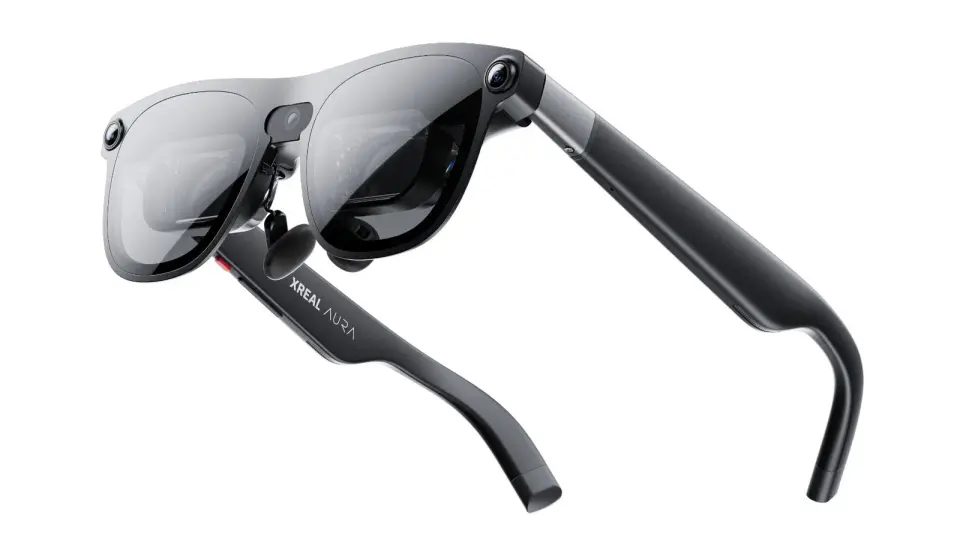
Xreal has officially launched its Aura mixed-reality smart glasses, setting a starting price of $1,279 for pre-order. The device, which weighs under 95 grams, features transparent lenses, a 70-degree field of view, and runs on the Android XR platform via a tethered compute puck. It is positioned as a direct competitor to Meta’s recently announced VR Glasses, which cost $1,299 but are not expected to ship until spring 2027. While Xreal’s glasses offer superior real-world visibility through transparent lenses, Meta’s device provides higher immersion with video passthrough and eye tracking. Initial shipments are limited to the US, Canada, Japan, and South Korea, with broader global availability planned for 2027.
Key points
- Xreal Aura pre-orders have opened for those who paid a reservation deposit, with general availability expected in the coming weeks.
- The base model costs $1,279 (12GB RAM, 256GB storage), while a higher-spec version with 16GB RAM and 512GB storage costs $1,499.
- The glasses use a tethered design with a separate compute puck that includes a trackpad, fingerprint sensor, and runs Android XR with Gemini AI support.
- Xreal’s Aura features transparent lenses for clear real-world visibility, whereas Meta’s VR Glasses use video passthrough for greater immersion but potentially fuzzier visuals.
- Both devices utilize the Qualcomm Snapdragon Reality Elite chip, but Xreal’s Aura is available now, while Meta’s VR Glasses are slated for spring 2027.
Background
Xreal introduced the Aura concept earlier this year at Google I/O, signaling a partnership with Google to bring Android XR to lightweight form factors. The device builds on Xreal’s history of virtual-display glasses, now integrating mixed-reality capabilities. This launch occurs amidst a broader trend of 'face computers' moving away from bulky headsets toward lighter, tethered designs, as noted by WIRED. The Android XR platform, previously seen in the Galaxy XR, aims to standardize app compatibility across mixed-reality devices, though adaptation remains a challenge.
How outlets are covering it
Engadget highlights the technical specifications, noting the 70-degree field of view and Bose-engineered audio, while emphasizing the sharpness of visuals in outdoor conditions. WIRED provides a comparative analysis, stating that while Meta’s VR Glasses offer smoother interactive experiences and better typing precision, Xreal’s Aura is superior for walking around due to its transparent lenses. The Verge points out that while the devices are direct competitors with similar hardware foundations, the lack of extensive reviews for Android XR makes a definitive verdict premature. Gizmodo emphasizes the pricing parity, noting that Xreal’s $1,279 price is $20 less than Meta’s, and highlights Xreal’s advantage in shipping sooner than Meta’s spring 2027 release.
Why it matters
The launch of Xreal’s Aura marks a significant shift in the mixed-reality market, moving from niche headsets to consumer-friendly, lightweight glasses. The direct competition with Meta signals a maturing industry where price and availability are becoming key differentiators. The success of Android XR in this form factor could determine whether mixed reality becomes a mainstream productivity and entertainment tool, challenging the dominance of traditional VR headsets and setting new standards for wearable computing.
What to watch
General public pre-orders for Xreal Aura are expected to open in the coming weeks, with initial shipments in the US, Canada, Japan, and South Korea. Broader global expansion is planned for 2027. Meta’s VR Glasses are expected to launch in spring 2027, allowing for a direct head-to-head comparison in the market. Xreal CEO Chi Xu has indicated that the first 2,000 'Founder’s Edition' pairs will ship soon, potentially before the end of the year.
- Xreal's Aura Android XR Smartglasses Will Cost You At Least $1,279 Engadget
- I Put on Meta and Xreal’s XR Glasses. Face Computers Are Finally Getting Good WIRED
- At $1,279, Google’s Xreal Aura will go head-to-head with Meta’s VR Glasses The Verge
- Xreal’s Aura Glasses and Meta’s VR Glasses Are Set for a Slugfest Gizmodo
- XREAL Aura with Android XR start at $1,279 9to5Google
Want the full story? Read the original reporting
Read on Engadget