
Reflect Orbital's Unannounced Desert Test Sparks Outrage Over 'Sunlight-as-a-Service'
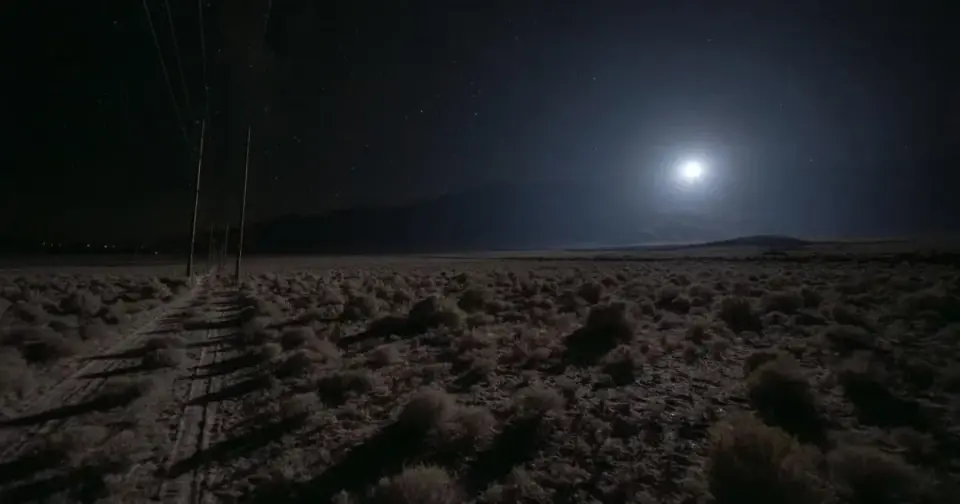
A US startup conducted a surprise nighttime lighting test in California to simulate its planned orbital mirror satellites, drawing sharp criticism from astronomers and local officials who were not notified.
Key points
- Reflect Orbital tested high-wattage spotlights near Lone Pine, California, on October 10 to simulate the brightness of its future space-based mirrors.
- The company plans to launch 50,000 satellites by 2035, each carrying a 60-foot mirror to reflect sunlight onto Earth at night for a fee of approximately $5,000 per hour.
- Local residents and search-and-rescue teams participated in the test, which was described as brighter than a full moon, but astronomers and environmental groups were not informed.
- Critics argue the project will destroy ground-based astronomy, harm wildlife, and disrupt circadian rhythms, while the company claims it will aid solar power and emergency response.
Background
In July 2026, the US Federal Communications Commission (FCC) approved Reflect Orbital’s proposal for a demonstration satellite, despite protests from the astronomy community. In August, environmental groups requested the FCC reverse this approval. The current incident follows these regulatory battles, marking the first physical ground test of the technology.
How outlets are covering it
Metro and The Guardian reported that the test was a legitimate simulation for search-and-rescue teams, with Reflect Orbital coordinating with local rescue groups and authorities. However, Futurism and Sky & Telescope emphasized that the test was unannounced to the public and scientific community, with the Bureau of Land Management stating they were not consulted. Astronomers, including Princeton’s Gaspar Bakos, condemned the project as 'the end of ground-based astronomy,' while climate scientists like David Ho warned against increasing solar energy input to Earth. Reflect Orbital maintains that the technology is 'dimmable' and avoids sensitive areas, but critics argue the light scatters far beyond the intended target.
Why it matters
The test highlights a regulatory gap in governing visible light from space. If approved, the project could fundamentally alter the night sky, impacting scientific research, wildlife, and public health, while raising questions about who has authority over orbital resources.
What to watch
Reflect Orbital has purchased two launches from India’s Skyroot Aerospace to test its Earendil-1 satellite. DarkSky International is launching a grassroots campaign in November to urge local governments to adopt dark sky ordinances that include light from space.
- Mysterious 'blinding lights' are leaving a small town absolutely baffled Metro.co.uk
- Sunlight at night: US startup’s demonstration of lighting Earth from space draws criticism The Guardian
- Unannounced Test by Controversial “Sunlight-as-a-Service” Space Startup Shocks Astronomers Futurism
- A Satellite Company Tests “Sunlight As A Service” — Without Astronomers’ Knowledge Sky & Telescope
- US-Based Startup Faces Backlash For Testing Nighttime Sunlight: "Idiotic Project" NDTV
Want the full story? Read the original reporting
Read on Metro.co.uk