
JWST Uncovers Surprising Structures in Ancient Galaxies
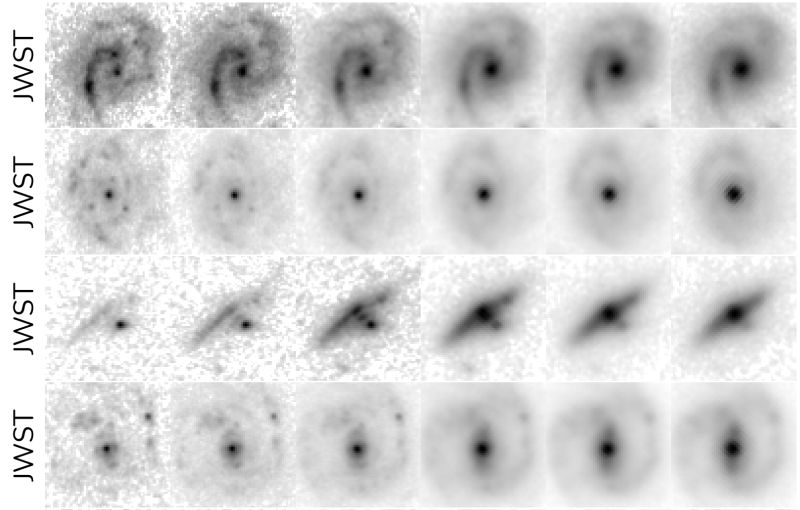
The James Webb Space Telescope (JWST) has revealed that galaxies in the early universe had well-defined structures, similar to our Milky Way, much earlier than previously thought. Previous understanding was that these structures formed at least six billion years after the Big Bang, but the new study suggests they could have manifested as early as 3.7 billion years after the Big Bang. The findings challenge previous assumptions about the formation and evolution of galaxies and highlight the power of the JWST in providing higher resolution data compared to the Hubble Space Telescope. The study analyzed a sample of nearly 4,000 galaxies and suggests the need for new ideas to explain galaxy evolution over the past 10 billion years.
- James Webb Space Telescope reveals ancient galaxies were more structured than scientists thought Space.com
- James Webb telescope spots thousands of Milky Way lookalikes that 'shouldn't exist' swarming across the early universe Livescience.com
- Webb Suggests Ancient Galaxies Were Metal-Poor and Full of Gas Gizmodo
- James Webb Space Telescope sees early galaxies defying 'cosmic rulebook' of star formation Space.com
- Finally! Astronomers are Starting to See the First Galaxies Coming Together With JWST Universe Today
Reading Insights
0
13
2 min
vs 4 min read
80%
604 → 118 words
Want the full story? Read the original article
Read on Space.com