
Bank of Japan hikes rates to 1.25%, highest since 1995, amid global inflation pressure
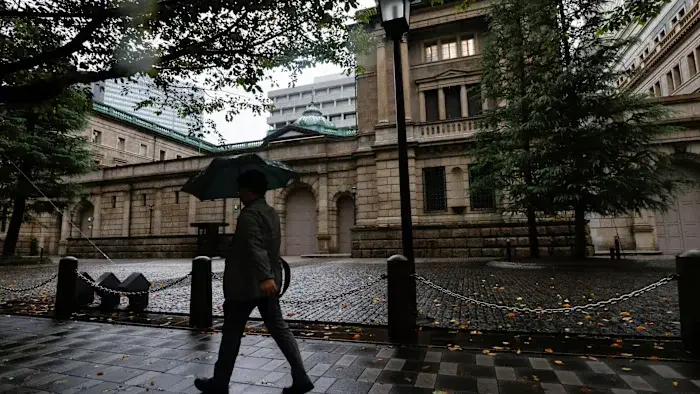
The Bank of Japan raised its benchmark interest rate by 25 basis points to 1.25%, the highest level since 1995, in a 7-2 vote. The move accelerates monetary normalization to combat inflation risks and a weak yen, though the currency initially fell against the dollar. The decision follows similar hikes by the US Federal Reserve and European Central Bank.
Key points
- The Bank of Japan increased its policy rate to 1.25%, a 31-year high, with a 7-2 vote.
- Two dissenting board members, appointed by Prime Minister Sanae Takaichi, opposed the hike, citing core inflation below the 2% target.
- The yen weakened to 156.64 per dollar after the announcement, despite the rate increase.
- The move follows a coordinated $96bn currency intervention by Japan and the US in July and August to support the yen.
- The Federal Reserve and European Central Bank recently raised rates, creating a global tightening environment.
Background
Japan began normalizing monetary policy in March 2024, raising rates from -0.1%. Prior to this, the Bank of Japan had indicated a six-month interval between hikes, but the current move occurred just three months after the previous increase. The yen had hit a 40-year low earlier in 2026, prompting significant market intervention.
How outlets are covering it
Financial Times and CNBC emphasize the acceleration of the rate-hike cycle and the influence of US Treasury Secretary Scott Bessent, who urged the Bank of Japan to act decisively. BBC highlights the broader global context, noting that the Iran war and energy price spikes are driving inflation worldwide. All sources agree on the 7-2 vote and the 1.25% rate, but note that the yen weakened immediately after the announcement, contrary to typical expectations. Dissenters argued that core inflation at 1.7% did not justify the hike.
Why it matters
The rate hike signals a shift away from decades of ultra-low borrowing costs, impacting global 'yen carry trades' and potentially increasing costs for imported energy and goods in Japan. It also reflects growing pressure from the US to strengthen the yen and stabilize global financial markets.
What to watch
Analysts expect the Bank of Japan to consider at least one more rate increase by December, though the October meeting may not see a hike. The composition of the board may become more dovish in July 2027 as two hawkish members depart. The yen's reaction will be closely watched to assess the effectiveness of the policy.
- Bank of Japan raises rates to 1.25% Financial Times
- Bank of Japan raises interest rates to 31-year high, flags concerns over inflation CNBC
- BOJ decision live: Japan's policy interest rate set to rise to 31-year high Reuters
- Japan raises interest rate to new 31-year high to curb rising prices BBC
- Japan’s Central Bank Picks Up Pace of Tightening With Rate Hike WSJ
Want the full story? Read the original reporting
Read on Financial Times