
Iran Supreme Leader Vows Unrestricted Retaliation as US Midterms Loom
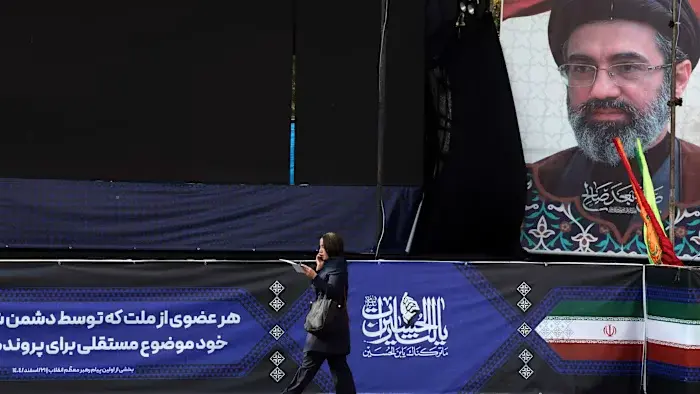
Iran’s Supreme Leader Mojtaba Khamenei has ordered military commanders to prepare for an immediate, geographically unrestricted response to any renewed US or Israeli attacks. This warning coincides with stalled diplomatic talks in Doha and rising fears that Washington may launch a major bombing campaign after the US midterm elections. While Tehran claims it has updated its target database to include global financial assets, US officials state no decision has been made to resume strikes, though they emphasize military readiness.
Key points
- Mojtaba Khamenei, who has remained in hiding since his father’s death in February, met with top military commanders to order an 'immediate, effective' response without geographical limits.
- Iranian officials claim they have updated their 'data bank of targets' to include financial and non-financial assets of the US and Israel, signaling a shift from regional to global retaliation.
- Diplomatic efforts are ongoing in Doha with Qatari mediators, but Iranian Foreign Minister Abbas Araghchi stated there are no plans for direct talks with the US until Washington meets Tehran’s conditions.
- US Secretary of State Marco Rubio confirmed that President Trump has not decided whether to restart military strikes, though he affirmed the US has the capability to achieve its objectives if necessary.
- The US naval blockade of the Strait of Hormuz has redirected 144 vessels, while Iran claims multiple tankers have struck mines in the waterway, with the UK reporting record-high strikes in October.
Background
This escalation follows a period of intense conflict that began in February 2026, during which US and Israeli strikes killed former Supreme Leader Ali Khamenei and other senior Iranian officials. Previous coverage noted that Senator Chris Murphy criticized the Trump administration’s post-midterm strike plans as 'insane,' while Vice President JD Vance attempted to revive diplomatic talks, creating mixed signals from Washington. The current situation reflects a fragile ceasefire that is under strain due to ongoing maritime disputes and unresolved nuclear issues.
How outlets are covering it
The Financial Times highlights the regime’s internal consolidation, noting that Khamenei’s meetings with military chiefs suggest a determination to act despite the risk of further assassinations. CBS News emphasizes the diplomatic deadlock, reporting that Iran’s foreign minister rejects direct talks while the US maintains a naval blockade. Iran International focuses on the hardline rhetoric from security officials, including threats to exit the Nuclear Non-Proliferation Treaty and use new weapons. Axios, though largely obscured by technical text, frames the situation as a directive for a 'maximum' response, aligning with the broader narrative of escalating brinkmanship.
Why it matters
The threat of unrestricted retaliation raises the risk of a wider regional war that could disrupt global energy supplies through the Strait of Hormuz. The timing of these threats, just before US midterm elections, suggests that military action may be used as a political tool by the Trump administration, potentially destabilizing the Middle East and affecting global oil markets.
What to watch
Watch for any direct communication between Washington and Tehran, as well as developments in the Doha mediation talks. Monitor the Strait of Hormuz for further incidents involving tankers or military vessels, and observe whether the US announces a decision on resuming strikes after the midterm elections.
- Iran warns it will retaliate without ‘geographical limitations’ if attacked Financial Times
- Iran's supreme leader orders "maximum" response to any U.S. attack Axios
- Live Updates: Iran's supreme leader warns U.S., Israel against new attacks CBS News
- Live - Iran hails positive shift in US tone amid renewed Doha diplomacy Iran International
- Iran warns of unfettered retaliation if attacked as mediators try for peace Al Jazeera
Want the full story? Read the original reporting
Read on Financial Times