
Curiosity Rover Captures Dawn Panorama of Mysterious Martian Yardangs
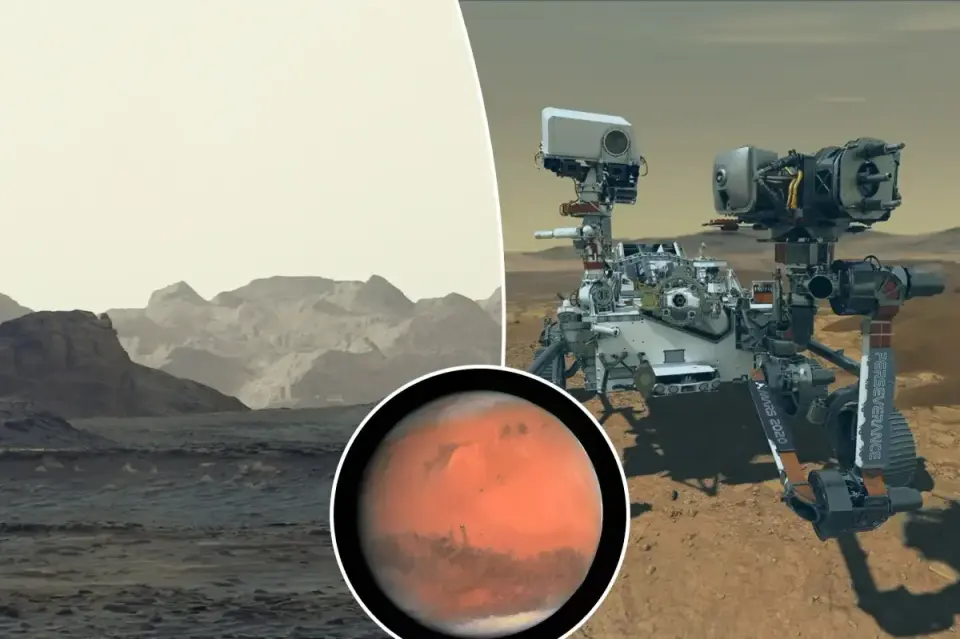
NASA’s Curiosity rover has released a new panoramic image of Mars taken at dawn on August 11, 2026. The photo, captured by the Mastcam instrument, reveals wind-carved rock formations known as yardangs on Mount Sharp. These structures, estimated to be three billion years old, are part of a geological layer that scientists find puzzling because it appears distinct from the mountain’s primary stratigraphy. The rover, which has climbed over one kilometer in elevation since landing in 2012, aims to reach these cliffs by 2027 or 2028 to analyze their origin.
Key points
- The image was captured on August 11, 2026, at 8:30 a.m. Martian time, showing sunlight illuminating distant cliffs with blue tones in the foreground.
- The yardang layer stretches approximately 10 miles across the northwestern portion of Mount Sharp and is believed to have formed from wind-eroded sediment or volcanic ash.
- Curiosity project scientist Ashwin Vasavada noted that the layer appears 'plastered on' and sits above an unconformity, indicating a gap in geological time where previous layers eroded before new deposits were added.
- The rover is projected to reach the yardangs in 2027-2028, where it will use its instruments to sample and analyze the sediment to determine its provenance.
- This is the most detailed depiction of the yardangs to date, offering unprecedented insight into a geological feature that has long baffled researchers.
Background
Curiosity has been climbing Mount Sharp since 2014, reaching an elevation gain of 1 kilometer, the highest ever achieved by a rover on Mars. Previous studies of the mountain’s layers have provided insights into ancient lakes and streams that once covered the planet’s surface when Mars was warmer and wetter. In 2025, Curiosity discovered carbon-rich minerals suggesting the possibility of past life. The recent 5,000-sol milestone was marked with a panorama of a sandy ridge known as 'Chocolatal,' highlighting the rover’s long-term progress.
How outlets are covering it
The New York Post emphasizes the aesthetic quality of the image, comparing it to an 1800s sublime landscape painting and noting the 'wildness' of the scene. PetaPixel highlights the technical aspect of the image processing, noting that the panorama was processed without white balancing to preserve the early morning appearance. NASA Science focuses on the geological significance, noting that the yardang layer is distinct from the continuous stack of layers that make up Mount Sharp. All sources agree on the importance of the image for understanding the geological history of Mars, but they differ in their emphasis on the visual, technical, and scientific aspects of the image.
Why it matters
The image provides a new perspective on the geological history of Mars, offering insights into the processes that shaped the planet’s surface over billions of years. The yardang layer, which is distinct from the primary stratigraphy of Mount Sharp, may provide clues about ancient volcanic activity and wind erosion. The upcoming analysis of the sediment by Curiosity could help scientists understand the origin of the layer and its implications for the planet’s past climate and potential habitability.
What to watch
Curiosity is projected to reach the yardangs in 2027-2028, where it will use its instruments to sample and analyze the sediment. This analysis is expected to provide a clearer picture of the layer’s provenance and its relationship to the rest of Mount Sharp. The rover’s continued climb up the mountain will also provide further insights into the geological history of Mars and the conditions that once supported life.
- See sunrise on Mars in breathtaking new NASA images — as mysterious, billion-year-old crags come into view New York Post
- APOD: 2026 October 3 – Selfie at Vera Rubin Ridge NASA Science (.gov)
- NASA rover takes striking image of dawn's early light on Mars Reuters
- Curiosity Rover Snaps Another Banger Photo: A Martian Mountain at Dawn PetaPixel
- Curiosity reaches one kilometer The Planetary Society
Want the full story? Read the original reporting
Read on New York Post