Tag

Curiosity Rover

All articles tagged with #curiosity rover

Loeb presses NASA on Martian cone; is it just a rock or could it be something else?
science11 days ago

Loeb presses NASA on Martian cone; is it just a rock or could it be something else?

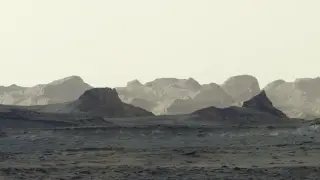
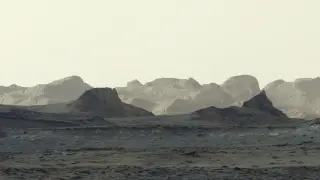
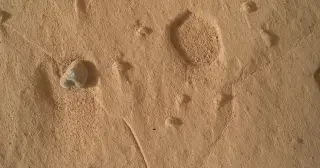
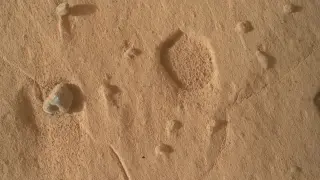
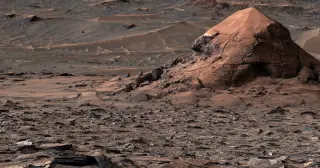
Harvard astrophysicist Avi Loeb challenges NASA’s claim that a cone-shaped feature photographed by the Curiosity rover in Gale Crater is merely a rock, arguing the object could be about 20 cm and may be debris, while NASA says it’s a small (about 1 cm) wind-sculpted formation and suggests pareidolia; Loeb has urged NASA to show another similar rock in Curiosity images to back its interpretation.

NASA Dismisses ‘Party Hat’ Mars Rock as Wind-Sculpted, Not Debris
science12 days ago

NASA Dismisses ‘Party Hat’ Mars Rock as Wind-Sculpted, Not Debris

NASA says the cone-shaped “party hat” rock photographed by the Curiosity rover in Gale Crater in August 2022 is a wind-sculpted rock, not debris; the resemblance may be due to pareidolia, despite Avi Loeb’s suggestion that it could be human-made debris. The object measured about 1 cm and was photographed from roughly 13 feet away, with NASA noting Mars winds continue to shape rocks and citing other unusual Martian rocks captured by rovers.

NASA: Mars 'Party Hat' Rock Is Wind-formed, Not Debris
science13 days ago

NASA: Mars 'Party Hat' Rock Is Wind-formed, Not Debris

NASA has identified the cone-shaped object photographed by the Curiosity rover in Gale Crater in August 2022 as likely a wind-shaped rock rather than human-made debris. NASA staff explained that Mars’ high-speed winds can sculpt rocks into unusual forms, and observers may have read a familiar shape (a phenomenon called pareidolia) into the rock, which measured about 1 centimeter and was photographed from roughly 13 feet away. The initial skepticism about a possible Man-made origin was amplified by Avi Loeb’s post, but NASA clarified the natural rock interpretation remains the most plausible.

Curiosity Discovers Hidden Boxwork Terrain on Mars
science14 days ago

Curiosity Discovers Hidden Boxwork Terrain on Mars

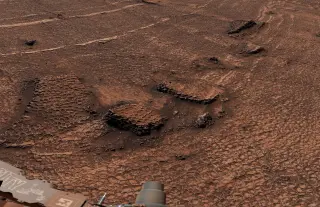
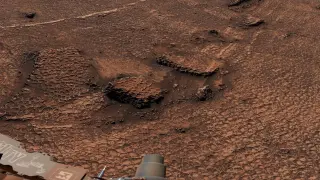
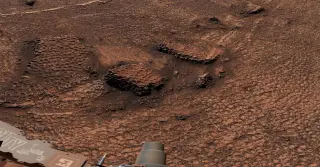
NASA's Curiosity rover completes a detailed study of the untouched boxwork terrain on Mount Sharp, using Mastcam, ChemCam and APXS to map rock compositions and atmospheric conditions. The region's intricate rock formations offer new insights into Mars' ancient climate and sedimentary history, including evidence of past water, helping to refine the planet’s habitability story and informing future missions.

Curiosity’s Worn Mars Wheels Keep Turning Despite Severe Damage
science16 days ago

Curiosity’s Worn Mars Wheels Keep Turning Despite Severe Damage

New photos show Curiosity’s wheels with deeper damage and collapsed sidewalls, yet the rover continues to operate on Mars after 13 years. NASA’s Wheel Wear Team has implemented measures like real-time traction control, steering to softer terrain, and occasional reverse driving to reduce wear, and engineers reportedly plan to remove damaged inner wheel sections with a rock once enough tread is shed.

Mars boxwork ridges reveal mysterious nodules, hinting at ancient water
science1 month ago

Mars boxwork ridges reveal mysterious nodules, hinting at ancient water

NASA's Curiosity rover photos show giant boxwork ridges on Mount Sharp in Gale Crater now covered with hundreds of tiny egg-like nodules. Scientists are unsure how the nodules formed—possible mineral cementation followed by groundwater activity—though there’s no evidence of life. The findings shed light on Mars’ watery past and how ancient groundwater shaped the landscape.

Curiosity Uncovers Crunchy Nodules Among Martian Boxwork
space-and-spaceflight1 month ago

Curiosity Uncovers Crunchy Nodules Among Martian Boxwork

NASA’s Curiosity rover examined boxwork formations on Mount Sharp and found mineral nodules along ridge walls and hollows, formed by ancient groundwater as water flowed through rock cracks. The nodules, plus the height of the groundwater that cemented the ridges, suggest groundwater persisted longer than expected, potentially extending the window for past habitability and microbial life on Mars.

Mars organics on Curiosity rock spark biosignature debate, not proof of life
science1 month ago

Mars organics on Curiosity rock spark biosignature debate, not proof of life

NASA’s Curiosity rover detected organic compounds in a Martian rock sample, raising the possibility that past life could have contributed to these molecules. A Feb. 2026 Astrobiology study argues non-biological processes can’t fully explain the abundance of organics, keeping the door open for life’s past on Mars but stopping short of definitive proof and calling for further study.

Mars Organic Clue Deepens Astrobiology Debate as Abiotic Explanations Falter
science1 month ago

Mars Organic Clue Deepens Astrobiology Debate as Abiotic Explanations Falter

NASA's Curiosity rover found long-chain organic molecules on ancient Martian rocks; after evaluating non-biological sources, researchers say those processes can’t easily account for the observed abundances, keeping the possibility of past life on Mars in play but stopping short of a definitive life detection and calling for further Mars-analog research to understand the findings.

Mars's Lost Giant Moon: Evidence for an 18× Phobos-Sized Satellite
science2 months ago

Mars's Lost Giant Moon: Evidence for an 18× Phobos-Sized Satellite

Sedimentary rhythmites in Gale Crater's Jura outcrop, analyzed by NASA's Curiosity rover, point to Mars once hosting a much larger moon capable of driving tides in an ancient lake. The proposed moon would have been about 18 times the mass of Phobos and may have been tidally destroyed into rings that later formed Phobos and Deimos. While promising, the evidence isn’t definitive and researchers will inspect additional sites to test the idea.

Curiosity Performs Rare Mars Chemistry Test to Hunt for Ancient Organics
science2 months ago

Curiosity Performs Rare Mars Chemistry Test to Hunt for Ancient Organics

NASA’s Curiosity rover is carrying out a rare, redesigned three‑stage test using tetramethylammonium hydroxide (TMAH) on Nevado Sajama rock to hunt for carbon‑based molecules that could hint at past life on Mars; after two phases, scientists expect months to interpret the results, building on earlier TMAH work (including a Mary Anning site) and the presence of clay minerals that may help preserve organics.