
Abric Romaní Wood Finds Rewrite Neanderthal Tech History
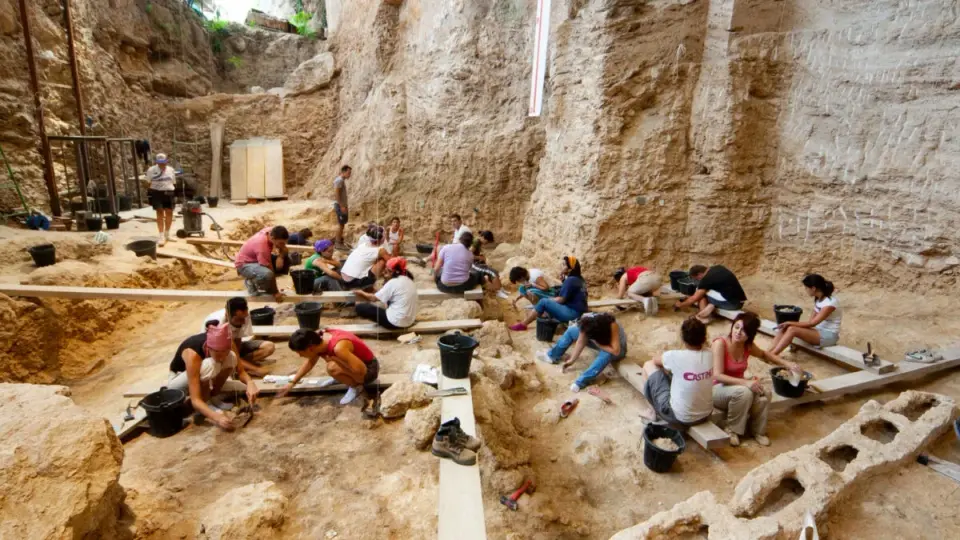
A new study in Science Advances reveals that Neanderthals relied heavily on wood, not just stone. Researchers analyzed 597 wooden remains and imprints from the Abric Romaní site in Spain, identifying 13 distinct tools, including spears and a unique club-like object. These findings, preserved in travertine rock, span 62,000 to 40,000 years ago, suggesting woodworking was a central, everyday part of Neanderthal life rather than an occasional skill.
Key points
- The study is the first comprehensive analysis of wooden artifacts from Abric Romaní, a rock shelter near Barcelona, Spain.
- Researchers identified 13 distinct Neanderthal-made objects among 597 total wooden remains and imprints.
- The artifacts include two spears, a club-like object, bark containers, and structural elements.
- The finds span approximately 62,000 to 40,000 years ago, covering 16 archaeological levels.
- Wood preservation occurred through calcium carbonate deposits in travertine rock, which preserved the shape of rotted wood.
- The discovery challenges the long-held view that Neanderthal technology was defined primarily by stone tools.
Background
Previous archaeological understanding of Neanderthals was heavily biased toward stone tools because wood rarely survives in the archaeological record. While isolated wooden artifacts had been found at other sites like Schöningen and Lehringen in Germany, this is the first time a comprehensive assemblage from a single site has been analyzed to show the breadth of Neanderthal woodworking. The Abric Romaní site has been excavated since the 1980s, but this new study, led by Palmira Saladié and colleagues at IPHES-CERCA, is the first to synthesize decades of data into a holistic view of Neanderthal material culture.
How outlets are covering it
Gizmodo emphasizes the 'invisible' nature of Neanderthal life, highlighting how wood's perishability has skewed our understanding of their capabilities. Archaeology News Online focuses on the technical details of preservation, noting that calcium carbonate in travertine rock created natural molds that preserved the wood's shape with high precision, including internal tissue structure. New Scientist highlights the sophistication of the tools, with researcher Maria Gema Chacón comparing Neanderthal woodworking skills to those of Homo sapiens. Chris Stringer of the Natural History Museum in London cautions that while the findings are significant, they represent only one site and one time span, suggesting the full extent of Neanderthal woodworking remains largely unknown. All sources agree that the findings fundamentally challenge the 'Stone Age' narrative by revealing a complex, wood-based technological repertoire.
Why it matters
This discovery reshapes our understanding of Neanderthal intelligence and daily life. It demonstrates that they possessed advanced planning, skill, and material knowledge, comparable to modern humans. By revealing a 'missing half' of their toolkit, these findings correct a major bias in the archaeological record and suggest that Neanderthals were far more technologically versatile than previously assumed. This has implications for how we interpret other prehistoric cultures and the role of organic materials in human evolution.
What to watch
Researchers plan to continue excavating at Abric Romaní to uncover more wooden imprints. They also intend to investigate the labor involved in creating and maintaining these tools and how they relate to other activities observed at the site. Further analysis may reveal more about Neanderthal social structures, resource management, and daily routines.
- A Wooden Club and Other Rare Finds Reveal ‘Invisible’ Side of Neanderthal Life Gizmodo
- Neanderthals’ Expert Woodworking Skills Revealed By Traces Of “Hidden” Technologies IFLScience
- Neanderthal woodworking was far more advanced than we thought, new study shows Archaeology News Online Magazine
- Neanderthal Europe was as much a wooden age as a stone age New Scientist
- A Broken Neanderthal Spear Survives as a 40,000-Year-Old Imprint Discover Magazine
Want the full story? Read the original reporting
Read on Gizmodo