
Ancient DNA Folding and Ribosome Mutations May Explain Octopus Intelligence
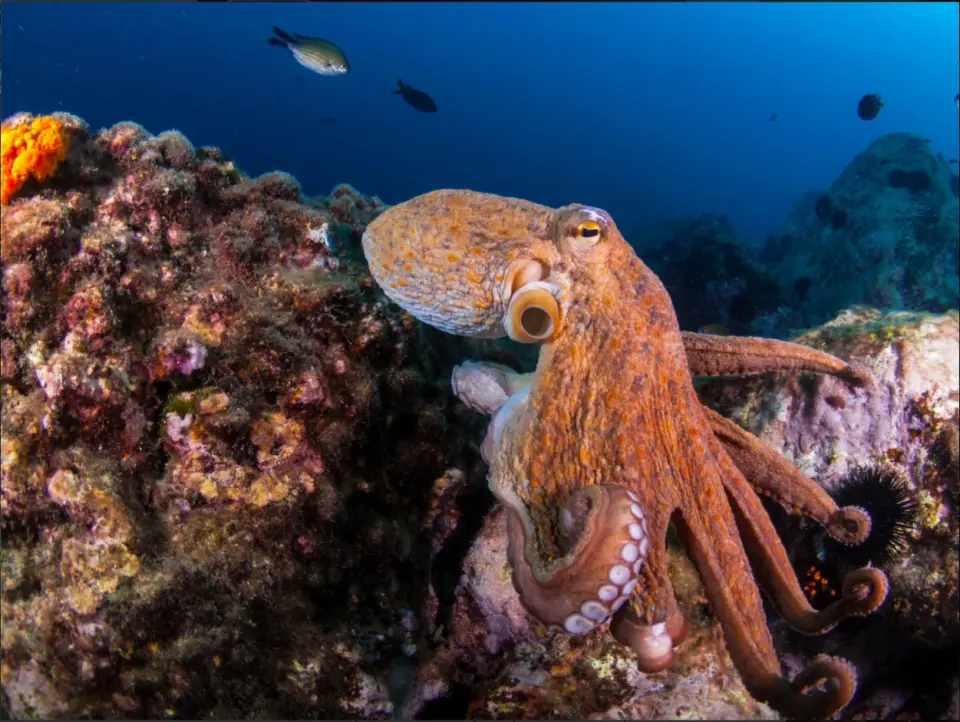
Two new studies suggest that octopus intelligence stems from unique evolutionary changes in genome structure and protein synthesis. Researchers found that a massive reshuffling of DNA in the common ancestor of coleoid cephalopods created new regulatory connections, while a specific ribosomal RNA mutation in shallow-water octopuses improved protein accuracy, potentially supporting their complex nervous systems.
Key points
- A study in Nature Communications found that ancient DNA reorganization in coleoid cephalopods created 'regulatory entanglement,' linking distant genes and influencing nervous system development.
- Octopuses show higher levels of chromosomal fusion and translocation than squid or cuttlefish, leading to more complex 3D genome architecture.
- A separate study in Current Biology identified a unique ribosomal RNA mutation in octopuses that reduces misfolded proteins, which may protect long-lived neurons from toxic aggregates.
- Shallow-water octopuses diverged from deep-water ancestors roughly 100 million years ago, coinciding with the evolution of their advanced cognitive abilities.
- The findings suggest that the physical arrangement of DNA, not just the sequence of genes, plays a critical role in the evolution of complex traits.
Background
Previous research, including a 2022 study on cephalopod genomes, established that coleoid cephalopods possess the largest invertebrate brains and have undergone significant genomic changes. The current findings build on this by detailing how 3D genome structure and ribosomal efficiency specifically contribute to neural complexity.
How outlets are covering it
Daily Kos and Science Daily emphasize the role of 3D genome folding and 'regulatory entanglement' in driving intelligence, citing University of Vienna research. Daily Kos also highlights a separate Current Biology study on ribosomal RNA mutations, which Science Daily does not mention. Yahoo News coverage was inaccessible due to technical errors, but its title suggests a focus on the DNA reshuffling clue. The Nature Communications abstract provides the technical basis for the 3D genome findings, noting that chromatin loops vary significantly across species and tissues, particularly near nervous system genes.
Why it matters
Understanding how genome architecture influences intelligence could offer insights into human neurological diseases like Alzheimer's and Parkinson's, which are linked to misfolded proteins. It also challenges traditional views of evolution by highlighting the importance of 3D DNA structure in the development of complex biological traits.
What to watch
Researchers may explore how the ribosomal RNA mutation can be applied to treat human neurological conditions involving protein aggregation. Further studies may investigate the specific regulatory networks formed by 'regulatory entanglement' in cephalopods to understand how they drive neural complexity.
- Top Comments: On Possible Explanations for Octopus Intelligence Daily Kos
- Scientists may have found a clue to why octopuses are so smart Yahoo
- Genome reorganisation and expansion shape 3D genome architecture and define a distinct regulatory landscape in coleoid cephalopods Nature
- 3D genome 'entanglement' may explain how cephalopods evolved complex brains Phys.org
- Scientists find a surprising genetic twist behind octopus intelligence Science Daily
Want the full story? Read the original reporting
Read on Daily Kos