Tag

Evolution

All articles tagged with #evolution

Oldest fossil egg confirms mammal ancestors laid eggs about 250 million years ago
science1 day ago

Oldest fossil egg confirms mammal ancestors laid eggs about 250 million years ago

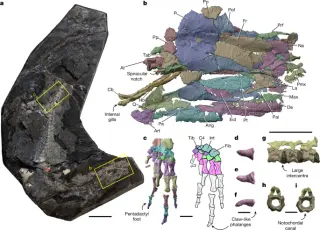
Researchers analyzed a 252–250 million-year-old Lystrosaurus fossil egg found in South Africa and, using synchrotron imaging at the ESRF, revealed a curled embryo whose jaw bones suggest it was still in an egg. This proves therapsids (the precursor to mammals) laid eggs (oviparous) rather than giving live birth, offering clues about embryo development, egg size, and survival strategies after the Great Dying. The large, leathery eggs likely reduced desiccation and supported precocial hatchlings, informing our understanding of early mammalian reproduction and the evolution of lactation.

Nature's Deadliest Arsenal: Lightning Punches, Lethal Venoms, and Harpoon-kissed Predators
science11 days ago

Nature's Deadliest Arsenal: Lightning Punches, Lethal Venoms, and Harpoon-kissed Predators

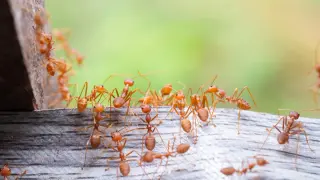
A science feature surveys nature’s deadliest weapons—from the mantis shrimp’s 31 m/s punch that cavitates water and can crack shells, to the Dracula ant’s ultra-fast mandibles, the great white shark’s fearsome bite, and cone snail venoms—explaining how different delivery systems work, how venom potency is assessed by LD50, and how evolution shapes these weapons across animals and even plants and human culture.

Weng’an Fossils Redraw the Timeline of Animal Origins
science11 days ago

Weng’an Fossils Redraw the Timeline of Animal Origins

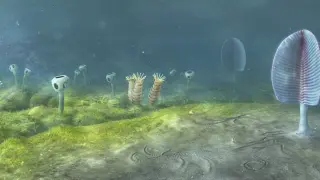
A new study using advanced imaging of Weng’an Biota fossils from Southern China shows embryo-like specimens are not early animal embryos but belong to a different multicellular group, prompting a reevaluation of when animal life began and suggesting animal diversification occurred after these fossils were deposited; findings, published in Biology Letters, rely on synchrotron tomography to map internal structures and cell counts, and researchers plan further comparisons with accepted animal embryos to refine the timeline.

Genome in Parliament: how organisms curb selfish genes
science11 days ago

Genome in Parliament: how organisms curb selfish genes

Nature’s book review on The Paradox of the Organism argues that internal genetic conflict is a central feature of biology: a germline–somatic separation, meiotic reshuffling, and genome-wide ‘parliament’ mechanisms suppress selfish elements, allowing organisms to function while balancing disruptive elements, with implications for development, evolution, and disease.

Avocados: An Ice-Age Gift From Megafauna
science12 days ago

Avocados: An Ice-Age Gift From Megafauna

Evolutionary biologists describe avocados as an anachronistic fruit shaped by extinct Ice Age megafauna, notably giant ground sloths, which could swallow and disperse its huge seeds. When those giants vanished, seed dispersal for such bulky fruits dwindled, leaving a niche that modern animals can’t fill. Humans later cultivated and globally distributed avocados, preserving the fruit even as the original ecological partnership faded.

New African Mushroom Rewrites the Evolutionary Tale of Psychedelic Fungi
science13 days ago

New African Mushroom Rewrites the Evolutionary Tale of Psychedelic Fungi

Researchers identify Psilocybe ochraceocentrata in southern Africa as a distinct species from the cultivated P. cubensis, dating their last common ancestor to about 1.5 million years ago and challenging the idea that cubensis spread to the Americas with 16th‑century cattle. Using multi-locus phylogenetics, molecular clocks, and ecological niche modeling, the team shows the two mushrooms diverged long ago, and that popular NSS/Transkei strains belong to the new species. The work highlights Africa’s under-sampling of fungal diversity and reshapes the origin story of magic mushrooms.

Sharks May Not Form a True Family, New Genomic Study Suggests
science15 days ago

Sharks May Not Form a True Family, New Genomic Study Suggests

A Yale-led study analyzed whole genomes from 48 shark-relatives and found conflicting signals: some DNA segments point to all sharks sharing a common ancestor, while others suggest species like frilled and cow sharks are closer to rays, implying sharks may not constitute a natural, exclusive group. The researchers estimate sharks emerged around 300 million years ago, offering new insights into early jawed vertebrate evolution; the study is awaiting publication.

Egypt's Masripithecus suggests Afro-Arabian roots for early apes
science15 days ago

Egypt's Masripithecus suggests Afro-Arabian roots for early apes

Researchers in Egypt have identified Masripithecus, a 17–18 million-year-old ape relative found in the Wadi Moghra region, implying that modern apes and possibly the human lineage may have originated in Afro-Arabia rather than exclusively in East Africa; the find expands the geographic scope of early hominoid evolution, though experts caution that more fossils are needed to pinpoint the crown ancestor.

Insect giants escape oxygen-diffusion limits in flight muscles
science16 days ago

Insect giants escape oxygen-diffusion limits in flight muscles

A cross-species analysis of 44 insect species across 10 orders (plus the 100 g Meganeuropsis permiana) shows the tracheolar space in flight muscles rises only about 1.8-fold over a 10,000‑fold range in body mass and is typically 1% or less. This argues that diffusion of oxygen through the tracheolar–muscle system does not constrain maximum insect size, including gigantism. The study highlights that even a threefold increase in tracheolar space would markedly affect oxygen delivery but have only modest effects on flight, challenging the long-held view that atmospheric oxygen limits insect gigantism and pointing to other factors shaping their evolution.

Tiny Archaeopteryx with preserved soft tissue reshapes view of bird flight origins
science17 days ago

Tiny Archaeopteryx with preserved soft tissue reshapes view of bird flight origins

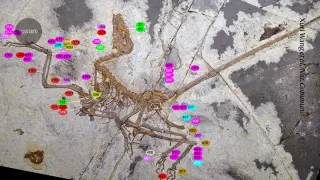
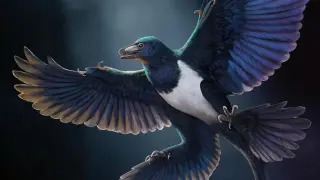
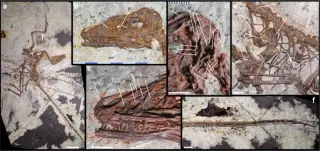
Chicago’s Archaeopteryx fossil, unusually well-preserved with soft tissues, was CT-scanned and examined under UV light, revealing detailed anatomy from snout to tail and long tertial feathers. The findings suggest this bird could fly and imply that flight evolved more than once among dinosaurs, lending fresh support to Darwin’s theory of evolution.

Global study backs Darwin: humans and animals share taste in sounds
evolutionary-psychology17 days ago

Global study backs Darwin: humans and animals share taste in sounds

A global online experiment with 4,000+ participants tested whether humans' sound preferences align with those of other animals when judging mating calls from 16 species. Using audio recordings manipulated to isolate traits, the study found a broad overlap: humans tended to pick calls that animals also prefer, and when they did, choices were about 50 milliseconds faster. Both groups favored acoustic adornments and ancestral sounds, though humans showed a stronger preference for lower pitches; factors like training or occupation did not predict alignment. The authors conclude the results broadly support Darwin's idea that a common sensory basis underlies aesthetic taste across species, while noting limits and proposing future research.

Soft-tissue Archaeopteryx hints at how birds learned to fly
science20 days ago

Soft-tissue Archaeopteryx hints at how birds learned to fly

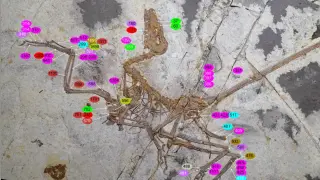
A well-preserved Chicago Archaeopteryx fossil from the Field Museum, examined with CT scans and UV light, reveals preserved soft tissues and long tertial feathers, offering new details on its anatomy and flight capabilities. The findings suggest Archaeopteryx could fly and support the idea that dinosaur flight evolved more than once, reinforcing Darwin’s theory of evolution.

Cacti Evolve at Lightning Pace: Flower Shape Shifts Drive Speciation
science21 days ago

Cacti Evolve at Lightning Pace: Flower Shape Shifts Drive Speciation

New research analyzing flower traits across more than 750 cactus species finds that the speed of flower shape change, not flower size or pollinator specialization, best predicts the formation of new species. Cacti with rapidly evolving flowers are more likely to diversify, challenging Darwin's idea that specialized flowers drive speciation, and highlighting deserts as dynamic engines of evolution. The work accompanies the Open Access CactEcoDB database and underscores incorporating evolutionary pace into conservation planning as climates shift.