
Genome and fossil data place bat origins in Europe 65 million years ago
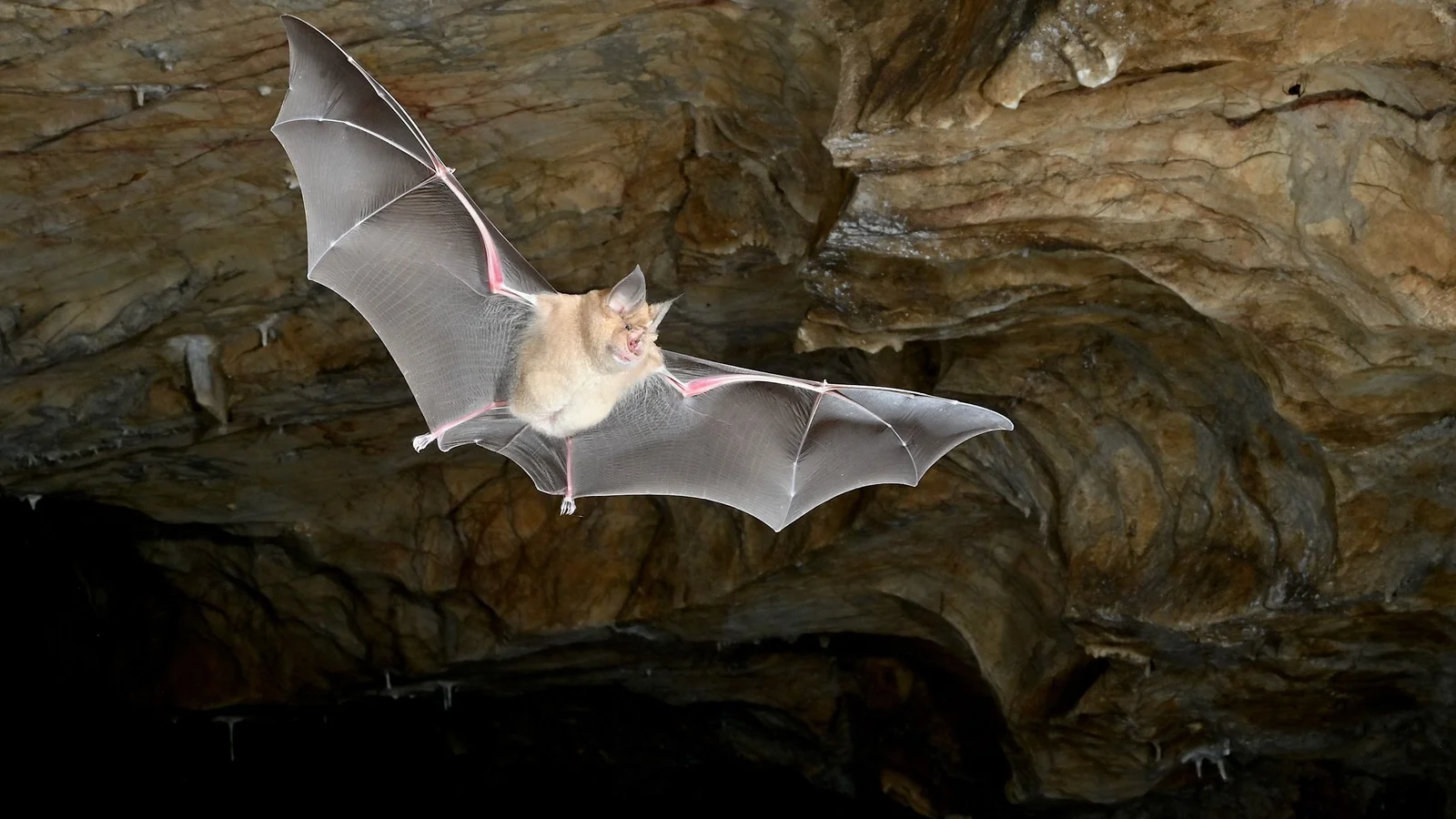
A massive international study has rewritten the evolutionary history of bats, concluding that they originated in Europe approximately 65 million years ago, not in Asia, Africa, or North America as previously hypothesized. Published in Nature, the research analyzed 103 bat genomes and 44 fossils to resolve long-standing debates about the timing of flight and echolocation. The findings suggest these key traits evolved early in bat history, around 50 million years ago, rather than appearing multiple times as bats diversified. This new phylogenetic tree provides a foundation for understanding bat disease resistance and longevity, which could inform human medical research.
Key points
- Researchers analyzed 103 bat genomes, including 41 new high-quality assemblies, and 44 fossils to create the most comprehensive bat family tree to date.
- The study places the origin of bats in Europe during the late Paleocene, roughly 65 million years ago, contradicting earlier theories of Asian, African, or North American origins.
- Echolocation and powered flight evolved early in bat history, approximately 50 million years ago, predating the diversification of modern bat families.
- The research, part of the Bat1K project, includes data from all 21 recognized bat families, ranging from the tiny bumblebee bat to the sucker-footed bat.
- The new phylogeny helps explain bat traits like disease resistance and longevity, which are of interest for human medical and aging research.
Background
This study builds on earlier genomic work, such as a 2025 study that linked early bat immune gene adaptations to viral tolerance. It also follows recent research into bat longevity and cancer resistance, which identified unique cellular mechanisms in little brown bats. The current study provides the evolutionary framework necessary to interpret these physiological traits across the entire order.
How outlets are covering it
Live Science and The Guardian emphasize the study's role in settling decades of debate over bat origins and the early evolution of flight and echolocation. The Washington Post highlights the medical implications, noting that understanding bat disease resistance could aid human therapeutics. The Guardian also stresses conservation concerns, noting that 18% of bat species are threatened and that bats play a crucial role in controlling insect populations. All sources agree on the European origin and the 65-million-year timeline, but differ in emphasis: Live Science focuses on the phylogenetic resolution, while The Guardian and Washington Post focus on the practical applications for human health and conservation.
Why it matters
Resolving the bat family tree provides a critical baseline for studying the evolution of unique mammalian traits like flight, echolocation, and disease resistance. This knowledge can inform human medical research, particularly in understanding viral tolerance and aging, and is essential for conservation efforts as many bat species face threats from climate change and habitat loss.
What to watch
Researchers will use the new genomic data to investigate the specific genes driving bat longevity and disease resistance. This could lead to new insights for human cancer and aging research. Additionally, the study will help conservationists understand the susceptibility of different bat species to threats like white-nose syndrome and climate change.
- Earth's first bats didn't come from where we thought, landmark genetic study reveals Live Science
- Reference genomes and fossils revise bat family phylogeny and biogeography Nature
- New Study Illuminates Bats’ Murky Origins The New York Times
- Bats originated in Europe, rewriting mammals’ family tree, study reveals theguardian.com
- What a landmark new study reveals about the origin of bats washingtonpost.com
Want the full story? Read the original reporting
Read on Live Science