
JWST uncovers a distant naked black-hole-star, offering clues to the little red dots
TL;DR
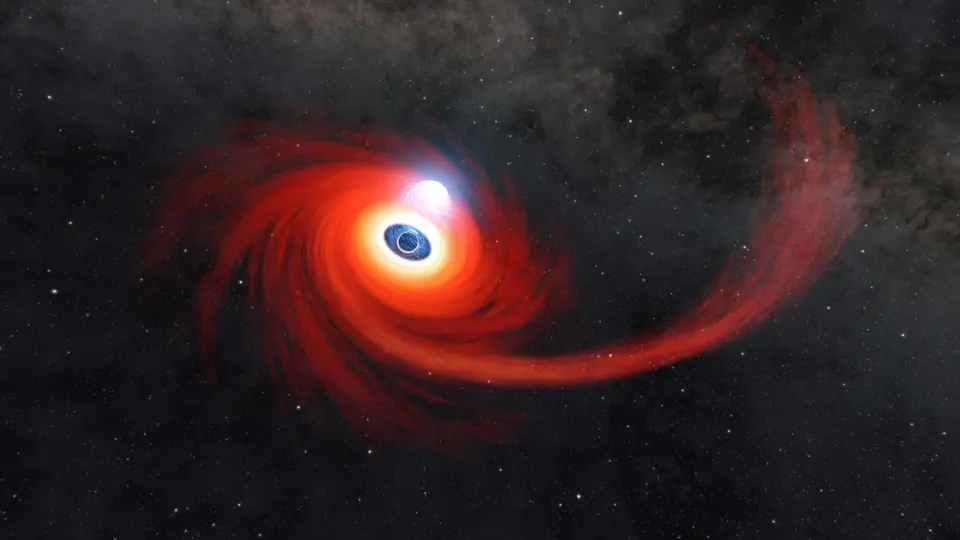
Astronomers using the James Webb Space Telescope’s Mirage/MoM survey discovered MoM-BH*-1, the farthest known naked black-hole-star. Its accretion-powered glow lights a surrounding gas cloud, and its proximity to a young, high-redshift galaxy suggests such objects could masquerade as faint galaxies in JWST observations. This finding supports the idea that black-hole stars may be key engines in the early universe and could illuminate why the JWST images show the mysterious little red dots; the team estimates MoM-BH*-1 could eventually merge with its host galaxy in about 100 million years, potentially shedding light on the birth of quasars.
Topics:top-newsscience#black-hole-star#early-universe#jwst#little-red-dots#mirage-mom-survey#science
- Farthest 'black hole star' ever found could help solve the James Webb Space Telescope's little red dot mystery Space
- Astronomers discover a new kind of cosmic object – a black hole ‘star’ The Guardian
- A gas-enshrouded and gas-reddened black hole at cosmic dawn Nature
- ‘Black hole stars’ could solve a mystery of the early universe The Times
- Astronomers discover a brand-new type of astrophysical object: A black hole star MIT News
Want the full story? Read the original reporting
Read on Space