
Nikon re-evaluates microscopy prize after AI allegations
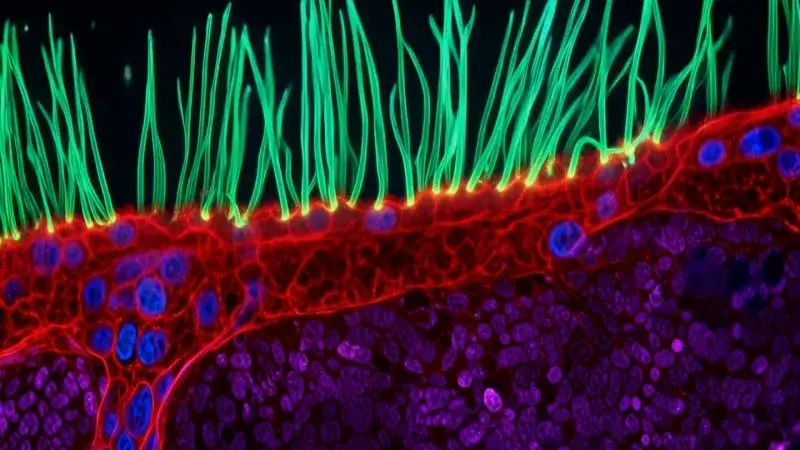
Nikon is re-reviewing the winning entry of its 16th annual Small World In Motion competition after scientists alleged the footage was manipulated using artificial intelligence. The winning video, submitted by Dr. Ning Xu, depicts cilia movement in a child with a rare genetic disorder. While Nikon initially awarded the prize in September, critics have since raised concerns about biological anomalies and the presence of AI watermarks. Nikon states it is examining technical documentation provided by Xu, who claims AI was used only for post-processing colorization, not for generating the biological structures or their motion. The controversy highlights tensions between scientific accuracy and artistic visualization in microscopy contests.
Key points
- Nikon announced it is 'carefully re-reviewing' the information provided by Dr. Ning Xu, the winner of the 2026 Small World In Motion competition, following public criticism regarding the use of AI.
- The winning video, which depicts the abnormal beating of airway cilia in a child with primary ciliary dyskinesia, was initially announced as the winner in September 2026.
- Critics, including Edward Phelps of the University of Florida, noted that some biological structures in the video do not behave as expected, with some appearing to 'pop in and out of existence.'
- Ian Donovan, a PhD student at UT Southwestern Medical Center, identified an embedded SynthID watermark in the source image, which indicates synthetic or AI-generated content.
- Dr. Xu responded on LinkedIn, stating that AI was not used to generate the experimental movie or the cilia themselves, but was applied to reconstructed grayscale data to distinguish and color structures with similar morphology.
- Nikon stated that Xu is 'respectfully complying' and has provided detailed technical documentation outlining the microscopy equipment, imaging methods, and processing techniques used.
Background
The Nikon Small World competition is a prestigious annual event that showcases scientific photography and video taken using microscopes. The 2026 edition marked the 16th annual Small World In Motion competition. Previous coverage from our archive indicates that the controversy began on October 1, 2026, when scientists flagged biological errors and AI watermarks in the winning entry. The broader context involves increasing scrutiny of AI usage in scientific imaging and the distinction between using AI for visualization versus generating scientific claims.
How outlets are covering it
CNN and BBC both report that Nikon is re-reviewing the winning entry following criticism over AI usage. CNN emphasizes the technical documentation provided by Xu and his distinction between using AI for visualization versus generating scientific claims. BBC highlights the concerns of former competition judges and the specific rules prohibiting generative AI. Both outlets note that Nikon is currently standing by its procedures but has promised an update. The sources agree that the controversy centers on whether the use of AI for post-processing colorization violates the spirit or letter of the competition's rules, particularly given the biological anomalies noted by critics.
Why it matters
This incident raises significant questions about the integrity of scientific competitions and the role of AI in scientific visualization. It highlights the need for clear guidelines on the use of AI in scientific imaging and the potential for AI to introduce errors or misrepresentations in scientific data. The controversy also underscores the tension between artistic visualization and scientific accuracy in microscopy, and the importance of transparency in the use of AI tools in scientific research.
What to watch
Nikon has promised an update soon regarding the investigation into the winning entry. Dr. Xu has stated that a more detailed description of the optical system and quantitative analysis of the ciliary motion are currently being prepared for publication. The outcome of the investigation will likely influence future rules and guidelines for the use of AI in scientific competitions and imaging.
- Winner of Nikon microscopy photo contest faces criticism over AI usage CNN
- Tiny image sparks big backlash in Nikon photo contest BBC
- Nikon ‘Re-Reviewing’ Winner of Small World in Motion Contest After AI Accusation PetaPixel
- Nikon Contest Winner Doubted: 'Not Consistent With Nature' Newser
- Allegations of AI Use in Nikon Competition Spark Controversy the-scientist.com
Want the full story? Read the original reporting
Read on CNN