
Nikon Suspends Microscopy Prize Amid AI Controversy
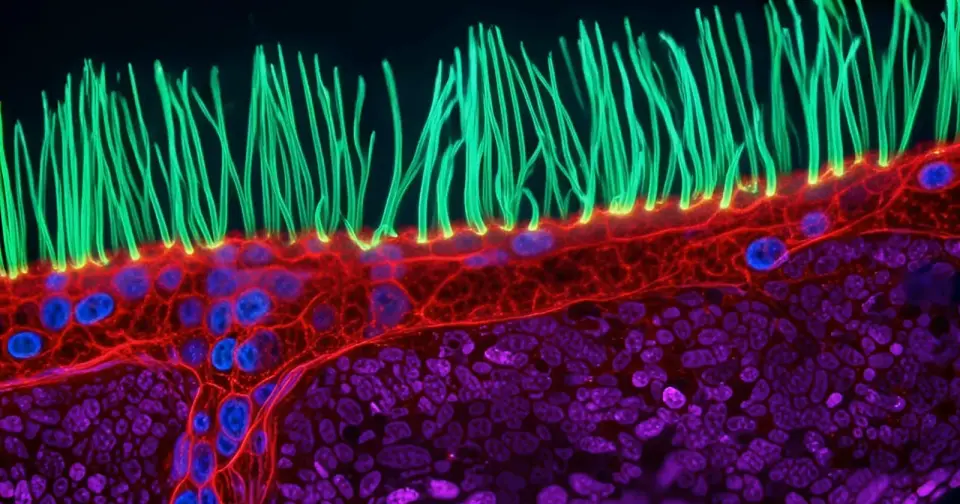
Nikon is re-evaluating the 2026 Small World in Motion winner after scientists accused Dr. Ning Xu of using AI to generate impossible biological structures in his winning video. While Xu claims AI was only used for post-processing colorization, critics point to a SynthID watermark and physical anomalies in the footage. Nikon has requested technical documentation from Xu, who has since deleted his LinkedIn profile.
Key points
- Nikon is 'carefully re-reviewing' the winning entry of the 16th annual Small World in Motion competition, which was awarded to Dr. Ning Xu in September 2026.
- The winning video depicts the movement of cilia in a child with primary ciliary dyskinesia, a rare genetic disorder, but critics argue the footage contains biologically impossible movements and structures.
- Ian Donovan, a PhD student at UT Southwestern, claims the video contains a Google SynthID watermark indicating AI generation, while Edward Phelps of the University of Florida notes that purple structures appear and disappear unnaturally.
- Dr. Xu, a research fellow at the National University of Singapore, stated that AI was used only to colorize grayscale data for visual appeal, not to generate the biological motion or structures, but his LinkedIn profile has since been deleted.
- Nikon confirmed that Xu is 'respectfully complying' with the review by providing detailed technical documentation of his imaging methods and equipment, with an update expected for the community.
Background
The Nikon Small World in Motion competition, which began accepting moving images in 2011, celebrates the artistry and complexity of the microscopic world. Previous archive coverage from October 1, 2026, noted that the controversy highlights tensions between scientific accuracy and artistic visualization in microscopy contests, with some outlets referring to it as the 15th annual contest while others cite the 16th.
How outlets are covering it
PetaPixel and USA Today emphasize the scientific community's outrage over the potential use of AI to 'hallucinate' biological structures, with USA Today quoting a researcher who called the entry a 'misuse of AI.' CNN focuses on the procedural aspect, noting that Nikon is reviewing the technical documentation provided by Xu, who argued that using AI for visualization is distinct from making scientific claims. All sources agree that the presence of a SynthID watermark and biological anomalies are central to the dispute, though PetaPixel notes that Xu's responses on LinkedIn have since disappeared.
Why it matters
This incident raises significant questions about the integrity of scientific competitions and the boundaries of AI in scientific visualization. If the winning entry is disqualified, it could set a precedent for how AI-assisted post-processing is viewed in scientific contexts, potentially impacting future entries and the credibility of microscopy contests.
What to watch
Nikon is expected to update the public on the outcome of its re-review, potentially disqualifying Xu or confirming the validity of his entry. Scientists are urging Xu to release the raw grayscale video to resolve the dispute, though his current silence and deleted social media presence may hinder this process.
- Nikon ‘Re-Reviewing’ Winner of Small World in Motion Contest After AI Accusation PetaPixel
- Winner of Nikon microscopy photo contest faces criticism over AI usage CNN
- Nikon re-reviews video contest winner after complaints about AI use usatoday.com
- Allegations of AI Use in Nikon Competition Spark Controversy the-scientist.com
- AI row looms large over microscopic prize winner The Times
Want the full story? Read the original reporting
Read on PetaPixel