
October 2026 Sky Guide: Saturn Opposition, Orionids, and Lunar Alignments
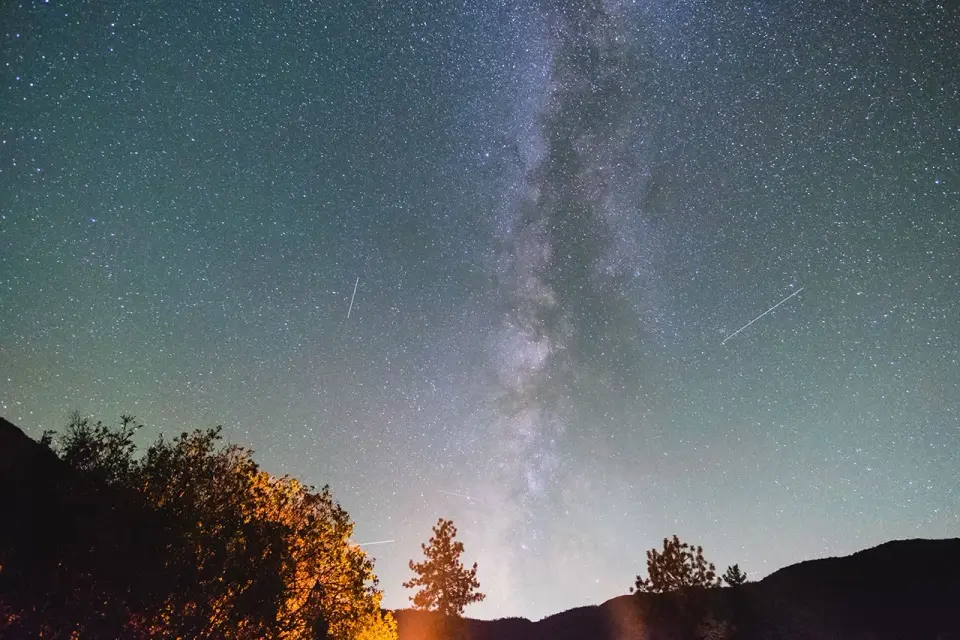
October 2026 offers prime viewing opportunities for Saturn at opposition on October 4, the Orionid meteor shower peak on October 21-22, and the Moon passing near the Pleiades on October 27-28. A thin crescent Moon will occult Jupiter on October 6, while the Hunter's Moon reaches full illumination on October 26. Skywatchers should note that a waxing gibbous Moon may interfere with meteor viewing, requiring early morning observation after moonset.
Key points
- Saturn reaches opposition on October 4, making it visible all night and offering the best annual view of its rings.
- The Orionid meteor shower peaks on the night of October 21 into the morning of October 22, with debris originating from Halley's Comet.
- A thin crescent Moon will occult Jupiter on October 6, disappearing from view between 4:20 a.m. and 5:24 a.m. EDT.
- The Moon will pass close to the Pleiades star cluster, known as the Seven Sisters, on the night of October 27 into October 28.
- The Hunter's Moon reaches full illumination at 12:12 a.m. on October 26, providing optimal conditions for lunar photography.
Background
This month's sky events follow the deep partial lunar eclipse observed in late August 2026, which saw up to 96.2% of the Moon enter Earth's umbra. The Hunter's Moon, traditionally associated with autumn hunting practices, reaches peak illumination on October 26, continuing the lunar cycle that began with the Sturgeon Moon in August.
How outlets are covering it
NASA Science emphasizes the scientific significance of Saturn's opposition and the recent discovery of a ten-sided atmospheric wave at Saturn's south pole via Hubble Space Telescope observations. WTOP News focuses on practical viewing tips, highlighting the Jupiter occultation on October 6 and the visibility of the Andromeda Galaxy with binoculars. Both sources agree on the timing of the Orionid meteor shower but differ on moonlight interference; NASA notes a waxing gibbous Moon may wash out fainter meteors, while WTOP states the shower will not be hampered by moonlight, suggesting different viewing windows. WTOP also details the zodiacal light visibility for two weeks starting October 8, a feature not mentioned by NASA.
Why it matters
These celestial events provide optimal opportunities for amateur astronomers to observe planetary details, meteor activity, and lunar alignments. Saturn's opposition offers the best annual chance to view its rings, while the Orionid meteor shower, linked to Halley's Comet, provides a predictable meteor display. The Jupiter occultation and Pleiades conjunction offer unique photographic opportunities, and the Hunter's Moon serves as a key marker for autumn skywatching traditions.
What to watch
Skywatchers should prepare for the Orionid meteor shower peak on October 21-22, planning to observe after moonset for better visibility. The Hunter's Moon on October 26 will offer optimal conditions for lunar photography, while the Jupiter occultation on October 6 requires early morning viewing. Future months will continue to feature planetary alignments and meteor showers, with Saturn remaining visible throughout the month.
- What’s Up: October 2026 Skywatching Tips from NASA NASA Science (.gov)
- October’s Night Sky Will Bring 3 Meteor Showers, Peak Saturn, Northern Lights, and a Final Milky Way Show Travel + Leisure
- Saturn Flaunts its Rings at Opposition the Night of October 3–4 Sky & Telescope
- New Mexico Star Gazing: Astronomical events to look out for in October KRQE
- Eyes to the Skies: October features fall constellations, Andromeda galaxy and crescent moon WTOP News
Want the full story? Read the original reporting
Read on NASA Science (.gov)