
Astronauts Complete Five-Year ISS Power Upgrade After Resolving Electrical Glitch
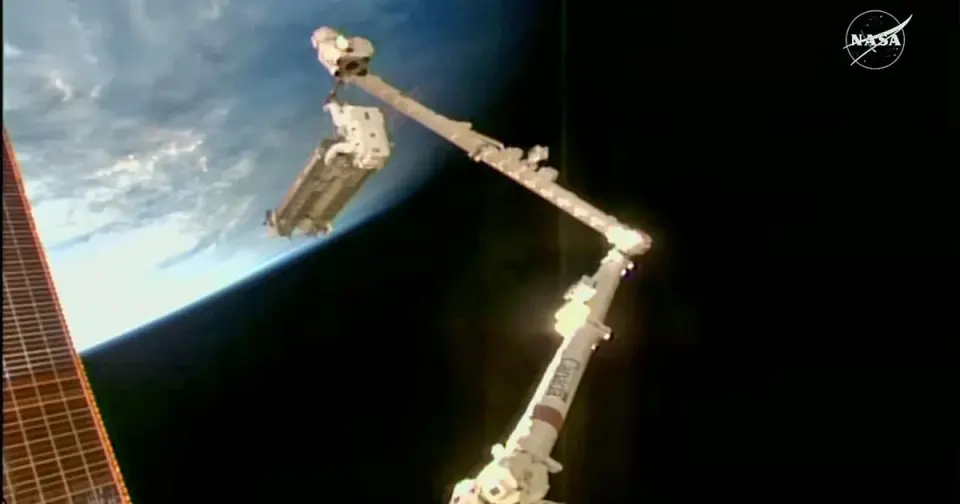
NASA astronaut Anil Menon and Canadian astronaut Joshua Kutryk completed the International Space Station's power upgrade on November 5 by installing the eighth and final roll-out solar array. The six-hour spacewalk concluded a five-year project that boosts the station's power output by 30 percent to 215 kilowatts, ensuring operations continue through its 2030 deorbit. The installation faced a temporary halt when ground controllers detected lower-than-expected electrical current, requiring the crew to wait for orbital darkness to inspect and reseat connectors before deploying the array.
Key points
- The eighth and final International Space Station Roll-Out Solar Array (iROSA) was installed on November 5, 2026, completing a five-year power upgrade project.
- The upgrade increases the station's total power output from 160 kilowatts to 215 kilowatts, a 30 percent increase, to compensate for the degradation of original solar arrays.
- NASA astronaut Anil Menon and Canadian Space Agency astronaut Joshua Kutryk conducted the 286th spacewalk in support of the station, lasting six hours and 59 minutes.
- The installation faced a temporary halt when ground controllers detected lower-than-expected electrical current, requiring the crew to wait for orbital darkness to inspect and reseat connectors before deploying the array.
- The new arrays are smaller but more efficient, featuring state-of-the-art solar cells, and will support the station through its planned retirement and deorbiting in 2030.
Background
The power upgrade project began in 2021 when the first iROSA was installed, with subsequent arrays added over the following years. The final two arrays were delivered to the station aboard a SpaceX Cargo Dragon capsule in October 2026. The original solar arrays, delivered by space shuttles between 2000 and 2009, were designed to last 15 years and have experienced age-related degradation. The iROSAs are mounted in front of the old wings, partly shading them while the wings' exposed portions continue to produce power.
How outlets are covering it
CBS News and Space emphasize the successful completion of the upgrade and the astronauts' quotes about the arrays' efficiency and power boost. NASA and Spaceflight Now provide detailed technical accounts of the spacewalk, including the temporary halt due to lower-than-expected electrical current and the subsequent inspection and reseating of connectors. All sources agree on the final power output of 215 kilowatts and the 30 percent increase, but differ in their emphasis on the technical challenges and the astronauts' reflections on the mission.
Why it matters
The completion of the power upgrade ensures the International Space Station can continue operations through its planned retirement and deorbiting in 2030, supporting life support systems, computers, research, and visiting vehicles. The upgrade also demonstrates the effectiveness of the iROSA technology, which is smaller but more efficient than the original arrays, and provides a model for future power upgrades in space.
What to watch
NASA's next planned U.S. spacewalks are targeted for early January to upgrade the Alpha Magnetic Spectrometer, a cosmic-ray detector mounted on the station's truss. The station's power upgrade is complete, and the focus will shift to other maintenance and research activities.
- Spacewalkers install final add-on solar array, completing space station power upgrade CBS News
- Spacewalk Cleanup, Biomedical Science, and Maintenance Wrap Up Week NASA (.gov)
- 'We got it done!' Spacewalking astronauts finish installing next-gen ISS solar arrays Space
- Spacewalkers complete five-year effort to upgrade space station power supply Spaceflight Now
- NASA's 101st ISS spacewalk aims to boost station power by 30% USA Today
Want the full story? Read the original reporting
Read on CBS News