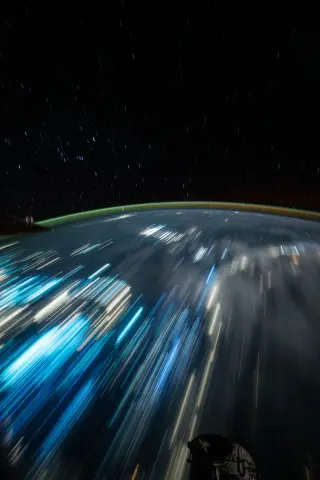
Astronauts aboard the International Space Station filmed Fourth of July fireworks over Los Angeles, and NASA shared video showing the bright bursts lighting up the city and visible from space.
Astronauts aboard the International Space Station observed July 4 fireworks from about 260 miles up as the ISS orbited overhead over the United States; NASA shared footage of fireworks over Los Angeles from space, and the article notes NASA’s Artemis II mission photos and the ISS’s ongoing role in microgravity research.
Astronaut Don Pettit described seeing “luminous dancing fairies” in the ISS, a retinal flash caused by galactic cosmic rays that pierce the craft and the eye. Apollo crews reported similar flashes, and the ALTEA detectors on the ISS linked heavy-ion particles to these events, explained by direct ionization or Cherenkov radiation. Although brief and seemingly harmless, these particles pose long-term brain and eye health risks for deep-space missions, influencing radiation-mitigation strategies for Artemis and future journeys to the Moon and Mars.
NASA has upgraded its Cold Atom Lab on the International Space Station to further study Bose-Einstein condensates in microgravity, enabling larger quantum states to be probed for longer times and advancing quantum technologies by leveraging ultracold atoms to measure time, gravity, and motion with unparalleled precision.
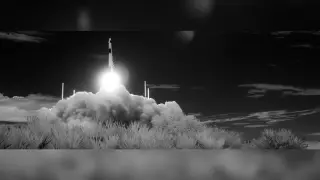
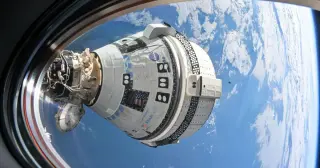
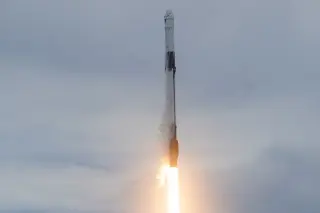
NASA awarded SpaceX up to $843 million to develop the U.S. Deorbit Vehicle, a heavily upgraded Dragon designed to dock with the ISS, burn for hours to push the 430-ton lab from its orbit, and guide it to a controlled reentry that ends with debris sinking in the remote South Pacific near Point Nemo around 2030. The mission is single-use and NASA will own and operate it; preserving or boosting the ISS to a higher orbit is considered impractical given its size, age, and complexity. The plan accompanies a broader shift toward private stations while ensuring U.S. presence in orbit, and involves launch, ground support, and international coordination.
Researchers simulated releasing a four-gram origami paper plane from the ISS (~400 km up) to study its descent, using wind-tunnel tests to supplement the model. In the vacuum-like upper atmosphere it stays nose-first and orientation-stable for days as it spirals downward. After about four days at around 120 km altitude the descent becomes chaotic and the craft tumbles, even with a small aluminum tail. The study is not a real spaceflight but a simulation-plus-wind-tunnel investigation of how a simple paper aircraft behaves during reentry, revealing surprising stability only up to a point.
NASA plans to deorbit the International Space Station by 2031 and steer debris toward Point Nemo in the remote Pacific to minimize risk to people, but Ocean Foundation researchers warn this raises serious concerns for ocean health and highlights gaps in international law, including environmental-protection obligations for debris in areas beyond national jurisdiction. A GAO report also notes a potential gap in continuous human presence in low Earth orbit, underscoring the need for a full environmental impact assessment and transparency about materials that would reach the seafloor under UNCLOS/BBNJ provisions.
Sergei Krikalev’s combined 803 days in six ISS missions yield roughly 0.02 seconds of relativistic time dilation compared with Earth time, via the dominant special-relativity effect of orbital velocity (with a smaller counteracting general-relativity pull from gravity). The net result is a tiny aging difference, not true time travel, but it serves as a standard teaching example of how motion affects time. The figure remains a well-cited physics fact, though later cosmonauts have accumulated more time in space and each have their own, slightly larger cumulative dilations.
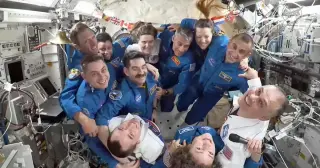
In June 2026, NASA ordered Crew-12 to prepare for an emergency return after a long-running air leak in the Russian PrK transfer tunnel raised alarm bells. Roscosmos proposed drastic fixes—drilling the hull and, later, even sawing a load-bearing bracket in space—triggering NASA to threaten evacuation. The crew ultimately stayed on board as Roscosmos backed off, and Russia decided to decommission the PrK tunnel, ending its pressurized use. The incident underscores the frail NASA–Roscosmos partnership on the aging ISS, even as the station’s life is provisionally extended to 2032 and future U.S. stations may rely more on private players while Russia intends to keep its half of the orbiting lab.
Point Nemo, the South Pacific's oceanic pole of inaccessibility, lies about 2,688 km from the nearest land, making it the most remote ocean spot; when the ISS passes overhead at ~400 km, the station's crew are often the closest humans to Nemo, and the area also serves as a disposal zone for deorbiting spacecraft, including Mir in 2001 and the planned 2030 end-of-life for the ISS.
A leak-suspected section of the PrK tunnel linking the Zvezda module to the ISS prompted NASA and Roscosmos into a tense dispute over repair methods. NASA ordered Crew-12 and Chris Williams to shelter inside the Dragon spacecraft as a precaution after reports that Roscosmos planned to saw a load-bearing bracket and drill into the wall. NASA’s hard stance appears to have pressured Roscosmos to back down, and the PrK module will be de-pressurized and decommissioned, potentially narrowing docking options and underscoring fragility in international space cooperation.
NASA astronauts sheltered in the Dragon after Russia floated drastic repair options, including drilling and a saw, to fix a long-running air leak in the PrK module; after the precautionary move, Roscosmos stood down, with the PrK planned to be de‑pressurized and sealed, potentially limiting its dock and fueling ongoing debate over how to mitigate similar risks.
A tense incident unfolded aboard the International Space Station after Russia reportedly threatened to drill and saw into the station’s hull, prompting NASA astronauts to take shelter as a precaution. No injuries or hull damage were reported, and crews remain safe while authorities monitor the situation, highlighting ongoing geopolitical strains and the fragility of space cooperation.
After years of persistent air leaks in the ISS’ PrK vestibule that connects to Russia’s Zvezda module, NASA and Roscosmos debated fixes, with a risky saw-cut repair postponed. Moscow now appears poised to decommission the PrK module by sealing its hatch, potentially ending the leak saga but limiting docking access and cargo transfer to the station.
NASA upgraded the Space Station’s Cold Atom Lab with a redesigned magnetic trap and new gas-source hardware, enabling larger Bose-Einstein condensates and longer microgravity experiments to study ultracold quantum gases and advance space-based quantum technologies.