
SCO Summit in Bishkek Tests Multipolar Ambitions Amid Global Conflicts
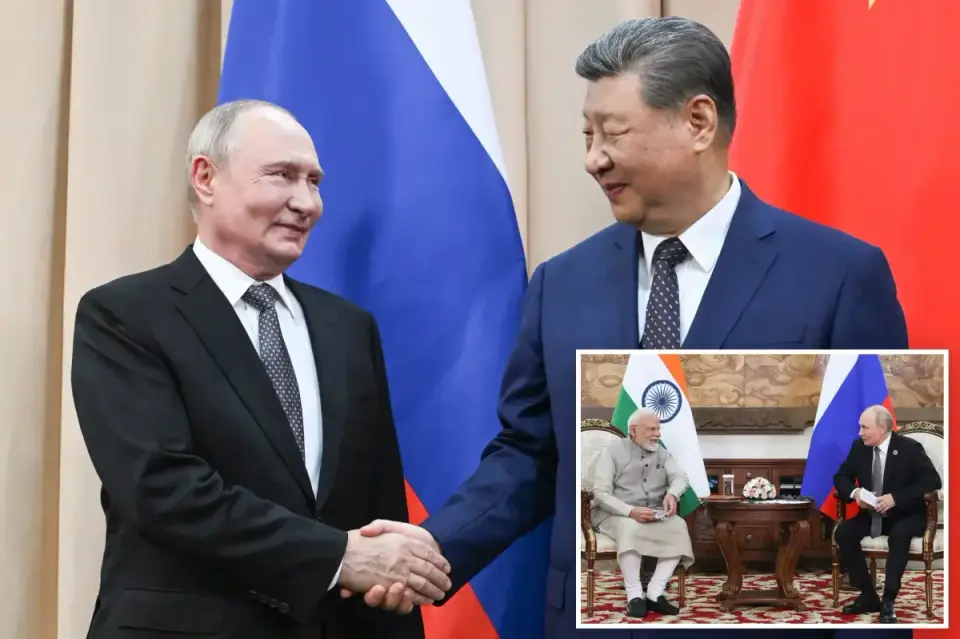
Leaders of the Shanghai Cooperation Organization (SCO) gathered in Bishkek, Kyrgyzstan, for a two-day summit marking the group’s 25th anniversary. Chinese President Xi Jinping, Russian President Vladimir Putin, and Indian Prime Minister Narendra Modi attended, alongside Iranian President Masoud Pezeshkian and other heads of state. The meeting focuses on security, trade corridors, and financial cooperation, particularly the SCO Development Bank, amid ongoing wars in Ukraine and Iran. While Beijing and Moscow view the forum as a counterweight to US influence, New Delhi treats it as a platform for strategic autonomy. Analysts note that while the SCO lacks internal cohesion, it serves as a venue for Global South nations to hedge against Western dominance, though substantive policy alignment remains limited.
Key points
- The SCO summit in Bishkek, Kyrgyzstan, marks the organization’s 25th anniversary, bringing together 10 member states including China, Russia, India, and Iran.
- Key agenda items include the establishment of the SCO Development Bank, the International North-South Transport Corridor, and the Northern Sea Route for trade connectivity.
- Putin and Xi Jinping held bilateral talks, with Moscow affirming its readiness to make the visa-free regime with China permanent.
- Iranian President Masoud Pezeshkian is expected to meet with Putin, strengthening ties between the two nations amid their respective conflicts with the West.
- India’s participation is viewed as a strategic move to maintain autonomy and access Central Asia, rather than joining a unified anti-Western bloc.
- The summit addresses the impact of the US-Israel war on Iran and the Russia-Ukraine conflict on global energy and financial markets.
Background
The SCO was founded in 2001 by China, Russia, and four Central Asian states, expanding to include India, Pakistan, Iran, and Belarus in recent years. It now represents 43% of the world’s population and 23% of the global economy. Previous summits, such as the 2025 Tianjin meeting, laid the groundwork for a multipolar world order and financial cooperation. Recent diplomatic efforts, including Xi’s visits to Egypt and India, have aimed to broaden China’s global outreach and strengthen ties with Global South nations. The current summit follows a period of heightened tensions, including the US-Israel war on Iran and the ongoing Russia-Ukraine conflict, which have disrupted global supply chains and energy markets.
How outlets are covering it
The New York Post emphasizes the SCO as a counterweight to US global influence, highlighting the unity of China, Russia, and India against Western dominance. In contrast, Al Jazeera notes that the SCO is not a unified political or military bloc, with members having significant disagreements and distinct interests. Al Jazeera also points out that India’s participation is more about strategic signaling and hedging than substantive outcomes, while the New York Post focuses on the broader geopolitical implications of the summit. Both sources agree that the summit is significant for demonstrating the SCO’s growing influence and the desire for a multipolar world order, but they differ in their assessment of the group’s internal cohesion and the practical outcomes of the meeting.
Why it matters
The SCO summit highlights the shifting dynamics of global power, as non-Western nations seek to establish alternative frameworks for security, trade, and financial cooperation. The meeting underscores the impact of ongoing conflicts on global energy and financial markets, and the potential for the SCO to influence international policy. For the US, the summit serves as a reminder that countries like India will continue to practice strategic autonomy, balancing relationships with both Western and non-Western powers. The outcomes of the summit could shape the future of global trade routes, financial institutions, and geopolitical alliances, particularly in the context of US unilateral foreign policy and its impact on the Global South.
What to watch
The SCO is expected to discuss the establishment of the SCO Development Bank, the SCO Development Fund, and the SCO Investment Fund, as well as new trade and transport corridors. Bilateral talks between Putin and Pezeshkian, and between Putin and Erdogan, are expected to address the Ukraine conflict and regional security issues. The summit may also see progress on the International North-South Transport Corridor and the Northern Sea Route, which could ease global trade amid the blockade of the Strait of Hormuz. Future meetings will likely focus on deepening economic integration and financial cooperation, while addressing the challenges posed by ongoing conflicts and US foreign policy.
- Putin, Modi and Xi Jinping unite for anti-US global influence summit New York Post
- India's Modi tells Russia's Putin that the war in Ukraine must end for humanity's sake Reuters
- Leaders of China, Russia, India among world leaders meeting at summit to counter U.S. influence PBS
- Xi, Modi and Putin attend SCO summit: What’s on the agenda? Al Jazeera
- Putin and Xi rally allies at Kyrgyzstan summit to counter US influence France 24
Want the full story? Read the original reporting
Read on New York Post