
Coroner's inquest concludes Iron Age bog woman was ritually beheaded
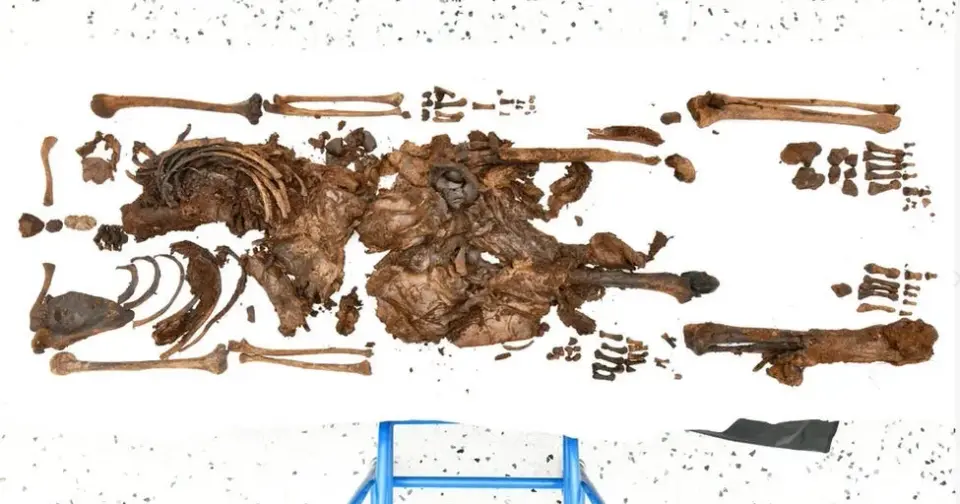
A coroner's investigation at the Ulster Museum determined that the 'Ballymacombs More Woman,' an Iron Age female whose remains were found in a Northern Ireland bog in 2023, was deliberately decapitated between the ages of 15 and 22. The inquiry, described as the first of its kind for ancient remains, concluded her death likely resulted from a ritualized sacrifice or killing, though the exact motive remains unknown.
Key points
- The remains, discovered in October 2023 by peat workers near Bellaghy, County Londonderry, were initially misidentified as male before being confirmed as female.
- Forensic analysis, including micro-CT scanning and 3D imaging, revealed cut marks on the neck indicating intentional decapitation from behind with a bladed weapon.
- The woman's death is believed to be part of a wider tradition of ritualized killing documented in other Iron Age bog bodies across northwestern Europe.
- The investigation was chaired by Coroner Joe McCrisken and involved specialists from Irish, UK, and Danish universities, though it was not a formal legal inquest.
- Local residents have named the woman 'Aine,' after a mythical goddess, and plan to honor her through a museum exhibition that will not display her physical remains.
Background
The discovery of the Ballymacombs More Woman in 2023 marked a significant archaeological find in Northern Ireland, as female bog bodies are exceptionally rare. The investigation built upon earlier findings of male bog bodies in the region, such as the Clonycavan Man, which provided insights into Iron Age societies. The use of a coroner's framework for an ancient death was unprecedented, aiming to restore understanding of the individual's life and death. The archive notes that similar ritual practices have been documented in other parts of Europe, including Denmark and the Republic of Ireland.
How outlets are covering it
CBS News and The Guardian emphasized the scientific rigor of the investigation, highlighting the use of advanced imaging techniques and the involvement of international experts. The BBC focused on the emotional and cultural significance of the find for local communities, noting the naming of the woman as 'Aine' and the community's desire to honor her story. People.com highlighted the rarity of the find and the museum's plan to create an exhibition that tells her story through creative means rather than displaying her remains. All sources agreed on the conclusion of ritualized killing but differed in emphasis, with some focusing on the scientific process and others on the cultural and emotional impact.
Why it matters
The investigation provides rare insight into Iron Age practices in Northern Ireland, particularly regarding the treatment of women and the role of ritualized killing. It also highlights the importance of forensic science in understanding ancient deaths and the ethical considerations surrounding the display of human remains in museums. The find challenges previous assumptions about the gender of bog bodies and offers a new perspective on the social and cultural dynamics of the Iron Age.
What to watch
The Ulster Museum plans to create an exhibition about the Ballymacombs More Woman, using illustrations and poetry to tell her story without displaying her physical remains. Further research may continue to explore the exact circumstances of her death and her role in Iron Age society. The investigation may also lead to new questions about the presence and care of human remains in museum collections, as noted by Hannah Crowdy, head of curatorial at National Museums NI.
- 2,000-year-old Northern Ireland bog woman was beheaded in possible ritual killing, researchers say CBS News
- Body found in Derry bog decapitated more than 2,000 years ago, coroner finds The Guardian
- Ulster Museum: Coroner investigates death of Iron Age woman found in bog BBC
- Iron Age Remains Found in a Bog Suggest 'Ritualized Killing' Newser
- Woman Who Died Over 2,000 Years Ago Was Decapitated in a Bog People.com
Want the full story? Read the original reporting
Read on CBS News