
Nepal Tunnel Rescue Stalls as Debris Blocks Access to Trapped Workers
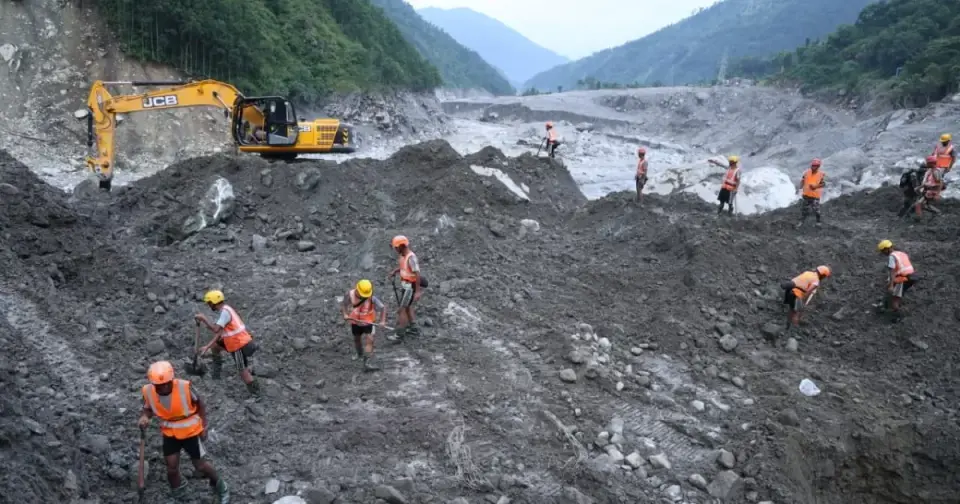
Rescue efforts in Nepal have stalled as debris blocks access to hydropower tunnels where hundreds of workers remain trapped. Five days after a glacial collapse triggered catastrophic floods, over 900 people have died and nearly 5,000 are missing across Nepal and Tibet. International teams from China and India are assisting, but weather and terrain continue to hinder operations.
Key points
- A glacial collapse near Langtang Lirung on August 26 triggered floods that swept through Nepal's Rasuwa, Nuwakot, and Dhading districts.
- Over 900 people are dead and nearly 5,000 are missing across Nepal and Tibet, with 933 workers unaccounted for at hydropower projects.
- Rescue teams are drilling into tunnels at the Trishuli 3A and 3B projects, but debris and rising waters have halted progress.
- China and India have sent rescue teams and aid, including tunnel experts and forensic teams, to assist Nepal.
- A barrier lake formed by the floods has overflowed, posing additional risks to rescue workers and displaced survivors.
Background
This disaster follows a series of severe weather events in the Himalayan region. Earlier in 2026, a tunnel blast at a hydropower project in India's Sikkim state killed 12 workers, highlighting the risks associated with infrastructure in fragile geological zones. The current crisis is significantly larger in scale, with the glacial collapse described as a 'liquid concrete' torrent that wiped out entire villages.
How outlets are covering it
Al Jazeera and CNN emphasize the technical challenges of the rescue, noting that debris and weather have halted operations. The Guardian highlights a stark contrast in information transparency, with Tibetan advocacy groups claiming China is concealing the scale of the disaster, while Chinese authorities deny censorship and assert transparency. CNN also notes the logistical strain, with nearly 200 unidentified bodies buried in Nepal due to a lack of DNA testing equipment.
Why it matters
The disaster underscores the growing risks of climate change in the Himalayas, where glacial collapses are becoming more frequent and deadly. The response also highlights the complexities of international cooperation in disaster relief, particularly in regions with sensitive political dynamics, such as the Nepal-Tibet border.
What to watch
Rescue teams will continue to attempt to clear debris from the tunnels, though progress remains slow. Authorities are monitoring the barrier lake for further overflow, which could trigger secondary disasters. International aid is expected to continue as the death toll and missing count are updated.
- Nepal tunnel traps hinder flood rescue: How many are dead or missing? Al Jazeera
- Before Nepal’s Floods, Hindu Pilgrims Sought the Divine at Mount Kailash The New York Times
- Nepal's hesitance to accept foreign help for flood relief under scrutiny NPR
- Live updates: Sharp rise in number of people missing in Nepal as floods death toll exceeds 900 CNN
- China is concealing scale of flood disaster, say Tibet campaigners The Guardian
Want the full story? Read the original reporting
Read on Al Jazeera