
Nepal-Tibet Floods: China Halts Rescue as Barrier Lake Overflows, Toll Rises to 475
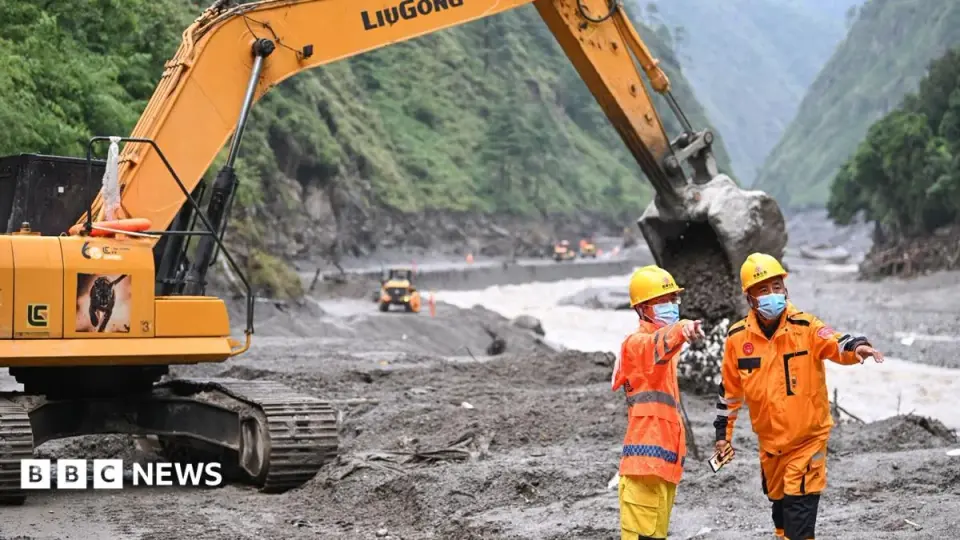
A massive flash flood on the Nepal-Tibet border has killed at least 475 people and left hundreds missing. China suspended rescue operations in Tibet after a barrier lake formed by the landslide began overflowing, raising fears of a secondary flood. Nepal’s army has rescued 900 people, but 537 foreign nationals remain unaccounted for. Satellite analysis links the disaster to climate-driven glacial instability.
Key points
- China suspended rescue efforts in Tibet after a barrier lake, holding over 2 million cubic meters of water, began overflowing near Gyirong port.
- Nepal Police confirmed 475 deaths in the Rasuwa district as of Friday morning, with 537 foreign nationals still missing.
- The Nepali government released a list of missing tourists, including 178 Indians, 65 Americans, and 33 Britons.
- Nepal’s army reported rescuing 900 people, all injured, from the worst-hit areas of Rasuwa and Nuwakot districts.
- Satellite imagery shows the flood destroyed villages and widened river channels, with experts linking the event to glacial melting caused by climate change.
Background
The disaster began on Wednesday with a glacial collapse and debris flow, not an earthquake, as confirmed by the USGS. Earlier reports indicated at least 160 deaths and over 1,300 missing. The flood damaged 80 bridges and 40km of roads, severely impacting Nepal’s economy and trade routes with China. International aid, including £5m from the UK, has been pledged.
How outlets are covering it
BBC News emphasizes the immediate operational crisis, highlighting China’s suspension of rescue efforts due to the barrier lake overflow and the human toll among foreign tourists. AP News focuses on the scientific and long-term implications, citing satellite images that show the scale of destruction and linking the event to climate change-driven glacial instability. While BBC reports on the immediate suspension and resumption of rescue operations, AP provides context on the geological causes and the potential for future similar events.
Why it matters
The disaster highlights the increasing frequency and severity of glacial outburst floods in the Himalayas due to climate change. It also underscores the vulnerability of border regions to natural disasters and the challenges of cross-border rescue operations. The economic impact on Nepal, including damaged infrastructure and disrupted trade, could have long-term consequences for the country’s recovery and stability.
What to watch
Rescue operations in Tibet have resumed as water levels dropped slightly, but monitoring continues. Nepal’s army is intensifying rescue efforts in coordination with stakeholders. Families of the missing are awaiting news, and international aid is being coordinated. Experts warn that the area remains at risk for further flooding.
- Nepal-Tibet floods: Death toll rises to 469 in Nepal amid fears of second flood BBC
- Nepal declines foreign rescue help, South Korea says it is 'negotiating' Reuters
- Darent Valley Hospital nurse missing after Nepal-Tibet floods BBC
- ‘They All Died, and I Lived’: Survivors of Nepal Flood Left in Stunned Disbelief The New York Times
- Satellite images show bedrock and glacier collapsed on Nepal-China border, then rivers flooded AP News
Want the full story? Read the original reporting
Read on BBC