
Egyptian Villager’s Garden Dig Uncovers Two Colossal Ramesses II Statues
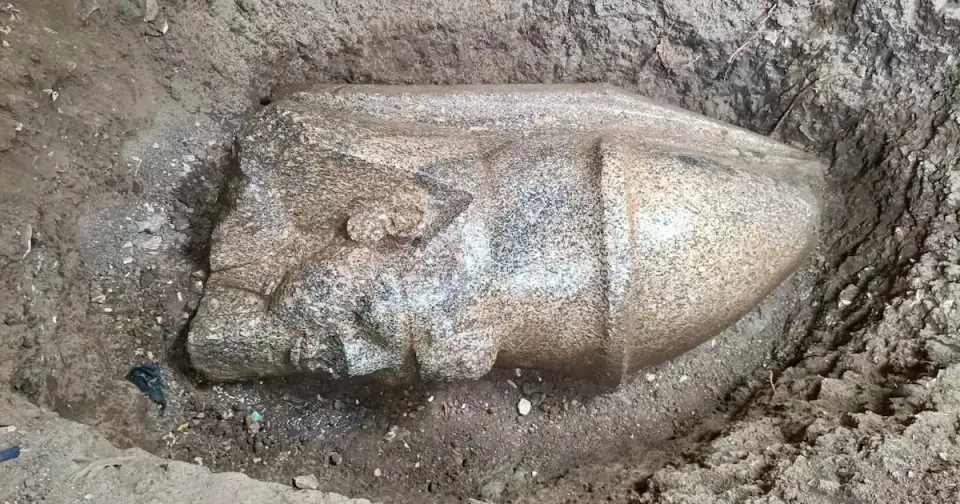
A local resident in Behbeit El-Hagar, Egypt, reported a carved stone block found while working on his land, prompting a rescue excavation by the Supreme Council of Antiquities. The dig revealed the remains of two massive royal statues, likely depicting Pharaoh Ramesses II, along with an inscribed pink granite block. The discovery highlights the significance of citizen reporting in preserving Egypt's archaeological heritage.
Key points
- A villager in Behbeit El-Hagar, Gharbia Governorate, discovered a carved stone block while working on his property and reported it to local antiquities authorities.
- Rescue excavations by the Supreme Council of Antiquities uncovered the remains of two colossal statues, one estimated to have stood 8.5 meters tall, and a pink granite block with hieroglyphic inscriptions.
- The first statue features a 1.60-meter head of Ramesses II wearing the double crown, while the second statue, measuring 2.40 meters, is believed to also depict the pharaoh.
- The pink granite block bears royal titles 'Nesu Bity' and 'Sa Ra,' confirming the connection to Ramesses II.
- The discovery raises questions about the statues' placement in a site known for a later temple dedicated to Isis, prompting further archaeological studies.
Background
This discovery follows a pattern of significant archaeological finds in Egypt, such as the recent uncovering of a 10,000-year-old mastodon molar in California, which underscores the ongoing importance of citizen and professional reporting in preserving historical artifacts. Behbeit El-Hagar is a well-known archaeological site in the Nile Delta, previously recognized for its Late Period and Ptolemaic temple dedicated to the goddess Isis.
How outlets are covering it
The Daily Beast emphasizes the 'priceless' nature of the 3,000-year-old discovery, focusing on the serendipity of the find. Archaeology News Online Magazine and Gizmodo provide detailed technical descriptions of the statues and the inscriptions, highlighting the collaborative effort between local authorities and the Supreme Council of Antiquities. HeritageDaily focuses on the broader archaeological significance, noting the need for further studies to understand the relationship between the statues and the site's history. All sources agree on the importance of the villager's prompt reporting in safeguarding the artifacts.
Why it matters
The discovery of two colossal Ramesses II statues in Behbeit El-Hagar adds a new chapter to the understanding of ancient Egyptian royal monuments and their placement in the Nile Delta. It underscores the critical role of public participation in archaeological preservation and the potential for new insights into the historical and religious significance of the site.
What to watch
The Supreme Council of Antiquities plans to continue excavations and studies at the site to uncover more pieces and clarify the relationship between the statues and the broader archaeological context of Behbeit El-Hagar.
- Homeowner Makes Priceless 3,000-Year-Old Discovery in Garden The Daily Beast
- Giant Ramesses II statues found in Behbeit El-Hagar after a villager reports a carved stone block Archaeology News Online Magazine
- An Egyptian Villager Stumbled Upon an Inscribed Stone. It Led to a Colossal Head of Ramses II Gizmodo
- Archaeologists uncover colossal statues of Ramses II in Egypt HeritageDaily
- Massive 28-foot statue of biblical pharaoh who enslaved Israelites unearthed — by accident New York Post
Want the full story? Read the original reporting
Read on The Daily Beast