
Adversary Network Tightens as US Alliances Fracture in Middle East Conflict
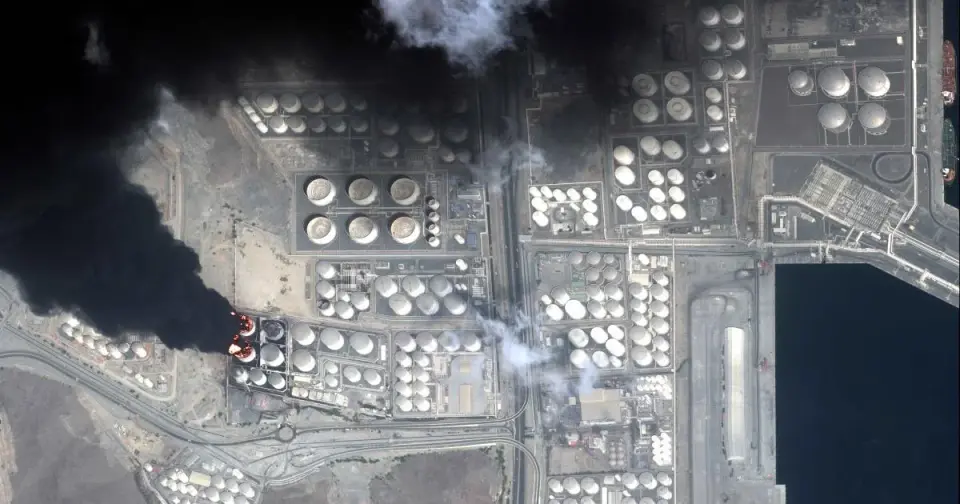
Russia and China are providing Iran with critical satellite intelligence, advanced drone technology, and diplomatic cover to sustain its war against the United States, creating a more cohesive 'axis of upheaval.' While Washington’s traditional allies have grown reluctant to support the campaign, Moscow and Beijing are leveraging the conflict to gain sanctions relief and strategic advantages in the Indo-Pacific, despite public denials of direct involvement.
Key points
- On July 17, an Iranian missile struck Muwaffaq Salti Air Base in Jordan, killing three US soldiers; US officials later confirmed China provided high-resolution satellite imagery for the targeting.
- Russia supplied Iran with spy satellite data prior to the March 27 attack on Prince Sultan Air Base in Saudi Arabia, which wounded 12 US personnel, and is helping develop supersonic cruise missiles.
- The US-Russia agreement to ease sanctions in exchange for diesel fuel exports highlights the intersection of the Ukraine and Iran wars, with Moscow trading support for Tehran to weaken US pressure on Kyiv.
- China and Russia are calibrating their aid to avoid direct conflict with the US or damaging relations with Arab Gulf states, while Iran uses this support to claim it is not isolated.
- US allies have shown reluctance to support the campaign, with some denying military access or resisting calls to secure the Strait of Hormuz, weakening Washington’s traditional network.
Background
In 2024, analysts first described Russia, China, Iran, and North Korea as an 'axis of upheaval' bound by opposition to US dominance. The 2022 invasion of Ukraine accelerated this cooperation, with Iran supplying drones and North Korea providing ammunition. Recent US actions, including the capture of Venezuelan leader Nicolás Maduro and the killing of Iranian Supreme Leader Ali Khamenei, have reinforced axis members' fears of US regime-change interventions, strengthening their resolve to cooperate.
How outlets are covering it
Foreign Affairs argues that the US is squandering its alliance network through transactional policies and friction with partners, while the adversary axis is effectively networking its capabilities. The Jerusalem Post emphasizes that Russia is exploiting US distraction in the Middle East to gain sanctions relief and advance its multipolar world strategy. The Soufan Center notes that while Russia and China publicly downplay their support, their assistance has materially complicated US operations, though experts debate whether this aid is sufficient to deter US escalation. The Russian Council for International Affairs frames the situation as a US policy of force that inadvertently enhances the Russian-Iranian strategic partnership.
Why it matters
The consolidation of the adversary network threatens to neutralize US military advantages by providing Iran with the intelligence and technology needed to sustain prolonged conflict. Simultaneously, the erosion of US alliance cohesion risks leaving Washington isolated in a multi-domain struggle, potentially allowing Russia and China to achieve strategic gains in both the Middle East and the Indo-Pacific without direct confrontation.
What to watch
Washington must decide whether to reverse policies that alienate allies or continue its current transactional approach. Russia and China will likely continue to calibrate their support for Iran to maximize leverage in Ukraine and Taiwan while avoiding direct conflict. Iran may attempt to transfer advanced Russian and Chinese technology to the Houthis in Yemen to further disrupt regional energy infrastructure.
- The Axis of Upheaval Goes to War Foreign Affairs
- Russia-Iran relationship demonstrates Kremlin's Middle East strategy The Jerusalem Post
- U.S. Policy of Force as a Factor of Enhancing the Russian-Iranian Strategic Partnership Российский совет по международным делам
- Great Power Competition Fuels Iran’s War Effort The Soufan Center
- Russia and China Bolster Iran’s War Effort as Strategic Rivalry With US Deepens Sri Lanka Guardian
Want the full story? Read the original reporting
Read on Foreign Affairs