
Researcher Claims Great Pyramid Encodes Astronomical Data in Its Geometry
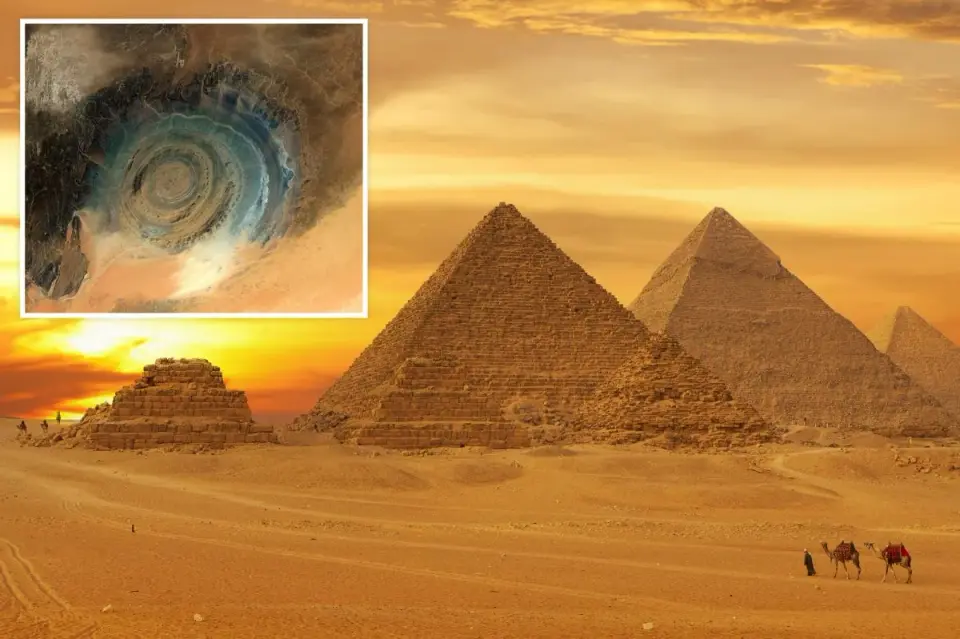
Independent researcher Sefy Levy argues that the Great Pyramid of Giza was not merely a tomb for Pharaoh Khufu but a permanent archive of mathematical and astronomical knowledge. Levy claims the pyramid’s dimensions, when analyzed using ancient Egyptian fractions, align with cycles of the moon, planets, and constants like pi and the golden ratio. He suggests the structure was built to preserve this data for eternity, potentially honoring the mythical Benben mound rather than serving as a royal burial site.
Key points
- Sefy Levy, an independent researcher, published a non-peer-reviewed paper in the journal SSRN proposing that the Great Pyramid contains a hidden numeric code.
- Levy asserts that dividing the pyramid’s height, base, and slope by fractions used by ancient scribes yields numbers matching astronomical cycles, such as the 27.55-day lunar perigee interval and the 70-day disappearance of Sirius.
- The calculations also reportedly align with the movements of Saturn, Jupiter, Venus, and Mars, as well as mathematical constants like pi and the golden ratio.
- To test for coincidence, Levy analyzed 100,000 computer-generated models of Old Kingdom-style pyramids, finding that only 2.4 percent matched these specific patterns, which he interprets as evidence of intentional design.
- Levy posits that the pyramid was built to honor Benben, the primordial mound in Heliopolitan mythology, rather than to serve as a funerary monument for Khufu.
- He links the Benben concept to the Eye of the Sahara in Mauritania, suggesting that ancestors of the ancient Egyptians migrated from this region to the Nile after a drought, building the pyramid as a tribute to their ancestral land.
Background
Recent archaeological discoveries have continued to refine our understanding of ancient Egyptian structures and practices. In September 2026, a Spanish-Egyptian team uncovered a well-preserved mastaba at Saqqara dating to the late Fifth Dynasty, offering insights into necropolis organization and daily life. While these findings focus on conventional funerary and administrative aspects, Levy’s theory represents a divergent, speculative approach that challenges standard interpretations of the Great Pyramid’s purpose. Unlike the Saqqara discovery, which relies on physical artifacts and inscriptions, Levy’s argument is based on geometric and numerical correlations that have not been validated by the broader academic community.
Why it matters
Levy’s theory challenges the conventional understanding of the Great Pyramid as a royal tomb, suggesting instead that it served as a permanent repository of scientific knowledge. If validated, this would imply that ancient Egyptian builders possessed a sophisticated understanding of astronomy and mathematics that they encoded into architectural dimensions. However, the lack of peer review and the speculative nature of the Benben connection to Mauritania mean that this remains a fringe hypothesis within Egyptology, highlighting ongoing debates about the symbolic and functional purposes of ancient monuments.
What to watch
The theory will likely remain controversial unless it gains traction through peer-reviewed publication or independent verification by mainstream Egyptologists. Further scrutiny of the statistical methods used in the 100,000-model comparison and the historical plausibility of the Benben-Mauritania migration will determine if the hypothesis moves from speculative fringe to academic discourse.
- Archaeologist claims secret ‘code’ hidden in Great Pyramid may reveal ancient wonder’s true purpose New York Post
- Aliens built pyramids is debatable. But a hidden Egyptian code inside Great Pyramid of Giza's measurements The Economic Times
- Mathematical 'code' found in Great Pyramid may unlock new secret Metro.co.uk
Want the full story? Read the original reporting
Read on New York Post