
Peru archaeologists uncover lavish 1,500-year-old tomb of elite Moche toddler
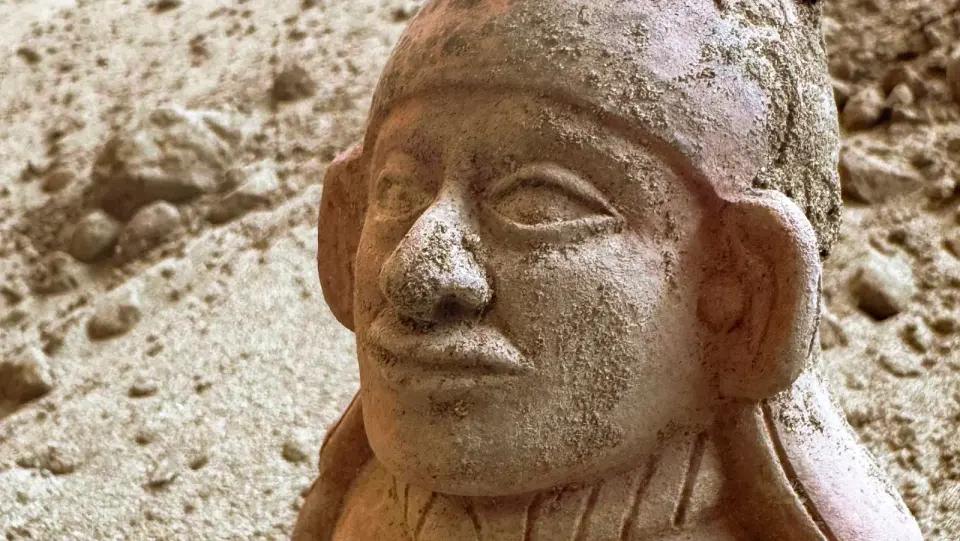
Archaeologists in northern Peru have discovered a 1,500-year-old burial of a toddler from the Moche culture, featuring 32 ceramic objects and copper artifacts. The grave, located at the Huacas de Moche site, is the first known lavish child burial at the location, suggesting the child held elite status. The inclusion of vessels depicting human sacrifice and a bird deity challenges existing theories about Moche funerary practices for children.
Key points
- A 1,500-year-old tomb dating to the sixth or seventh century was found at the Uhle Platform in the Huacas de Moche archaeological site in northern Peru.
- The burial contained the remains of a toddler, likely no older than two years, along with 32 ceramic objects and two copper items, including a mask-like disk and a half-moon object.
- The grave is the first known instance of a lavish child burial at the site, which previously yielded over 80 burials, indicating the child belonged to an elite class.
- Ceramic vessels depicted 'ritual of combat' scenes, showing defeated warriors with ropes around their necks, a theme typically associated with adult human sacrifice.
- A sculpture of a human-bird deity holding a shield and goblet was also found, adding to debates about the Moche pantheon and whether it consists of many gods or transforming versions of few.
- The artifacts are currently undergoing conservation at the Santiago Uceda Castillo Museum in Peru.
Background
This discovery adds to recent archaeological findings in Peru regarding pre-Inca and Inca ritual practices. In October 2026, researchers at the Tambo Viejo site revealed that Inca rituals involved burying decorated llamas and guinea pigs alive, contradicting Spanish colonial accounts. Additionally, in September 2026, a rare Ice Age mastodon molar was discovered in San Mateo Creek, highlighting the ongoing value of archaeological and paleontological discoveries in understanding ancient human and environmental history.
Why it matters
The discovery of a lavish child burial with adult ritual imagery, such as human sacrifice, challenges previous assumptions about Moche funerary practices. It suggests that elite children may have been integrated into complex adult rituals, expanding our understanding of social hierarchy and religious practices in pre-Inca Peru. The presence of a human-bird deity also contributes to ongoing debates about the nature of the Moche pantheon.
What to watch
Researchers will investigate whether the human-bird deity is a known Moche god or a new addition to the pantheon. The artifacts will undergo conservation treatment at the Santiago Uceda Castillo Museum, and further analysis may provide insights into the child's status and the specific rituals associated with the burial.
Want the full story? Read the original reporting
Read on Live Science