
Czech Public Media Crisis: Babiš’s Overnight Funding Shift Sparks Mass Protests and Strikes
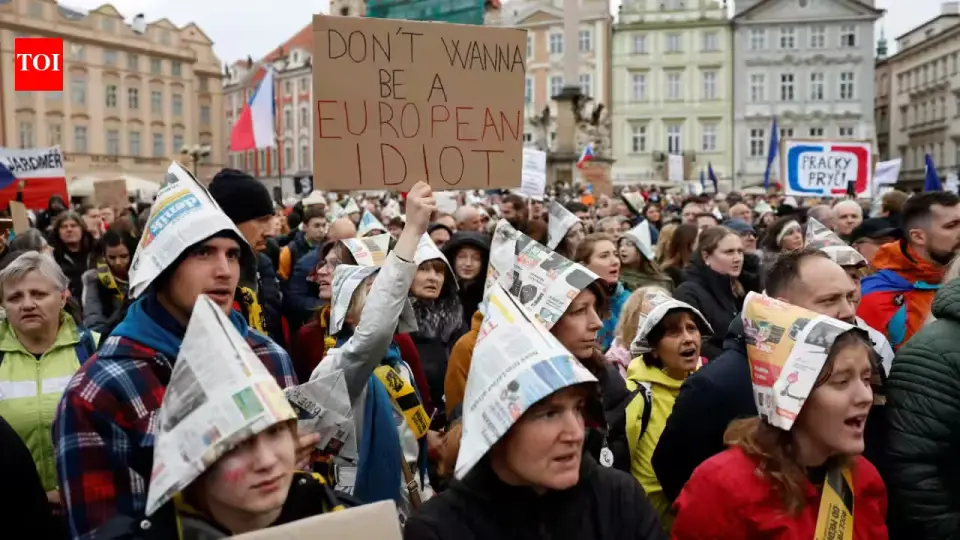
Thousands of Czechs protested in Prague on October 25 against Prime Minister Andrej Babiš’s government plan to replace public media license fees with state budget allocations. The legislation, fast-tracked in an overnight parliamentary vote at 4:36 a.m., would cut funding for Czech Television and Radio by 15%. Critics warn this move threatens media independence, mirroring authoritarian trends in Hungary and Slovakia, while the government claims it improves transparency. Public media staff have announced a strike for November 3, and a larger rally is scheduled for November 15.
Key points
- The Czech lower house approved a bill to abolish household and business license fees for public media, replacing them with direct state budget funding, in a rushed overnight vote on Saturday.
- The reform, backed by Prime Minister Andrej Babiš’s coalition, would reduce funding for Czech Television and Czech Radio by approximately 15%, potentially starting next year.
- Thousands of demonstrators gathered in Prague’s Old Town Square on Sunday, chanting slogans like 'We’ve had enough' and '4:36' to reference the time of the parliamentary vote.
- Public media employees have announced a full-day strike for November 3, supported by labor unions, university rectors, and churches, with a larger rally planned for November 15 at Letna Park.
- The opposition plans to challenge the legislation’s procedural fairness in the Constitutional Court and the European Commission, arguing the government bypassed adequate public scrutiny.
Background
This development follows a pattern of political tension in Czech media, where Babiš’s coalition has previously faced criticism for attacks on mainstream outlets. The current dispute echoes earlier concerns about media independence in Central and Eastern Europe, particularly following reforms in Hungary under Viktor Orbán and Slovakia under Robert Fico. Czech President Petr Pavel has noted that the country’s public and private media systems previously functioned well, making the current changes a significant departure from established norms.
How outlets are covering it
The Times of India and AP News emphasize the procedural irregularity of the 4:36 a.m. vote, highlighting how the government curtailed debate and surprised the opposition. Radio Prague International notes that the opposition intends to challenge the bill’s passage in the Constitutional Court and European Commission, framing it as a legal battle over democratic process. Al Jazeera focuses on the broader geopolitical context, noting that Babiš’s coalition includes far-right parties with agendas opposing EU policies and Ukraine support. While Babiš frames the change as a transparency measure, critics across all outlets, including international bodies like Reporters Without Borders, argue it creates a mechanism for political control over broadcasters. The Times of India also highlights historical parallels, with protesters invoking the Nazi and Communist eras of state control over Czech television.
Why it matters
The outcome of this legislative process will determine the financial independence of Czech public broadcasters, which remain among the most trusted news sources in the country. If the bill passes, it could set a precedent for state control over media in the EU, undermining press freedom and democratic norms. The upcoming strike and rally signal sustained public resistance, potentially influencing the final parliamentary votes and international scrutiny of the Czech government’s adherence to democratic standards.
What to watch
The bill must still pass through committee stages and the upper house of parliament. Public media staff will begin a strike on November 3, and a major rally is scheduled for November 15 at Letna Park, two days before the anniversary of the 1989 Velvet Revolution. The opposition’s legal challenges in the Constitutional Court and European Commission may also delay or block the legislation’s implementation.
- 'Had enough': Thousands protest in Prague against Czech government's public media funding overhaul The Times of India
- Thousands protest Czech government's public media overhaul after rushed vote Reuters
- Thousands protest in Prague as government advances public media funding overhaul AP News
- Thousands protest in Prague against plans to abolish public media fees Radio Prague International
- Thousands protest in Prague against public media funding reforms Al Jazeera
Want the full story? Read the original reporting
Read on The Times of India