
Vulci Excavation Reveals Elite Etruscan Tomb with Rare Female Footwear
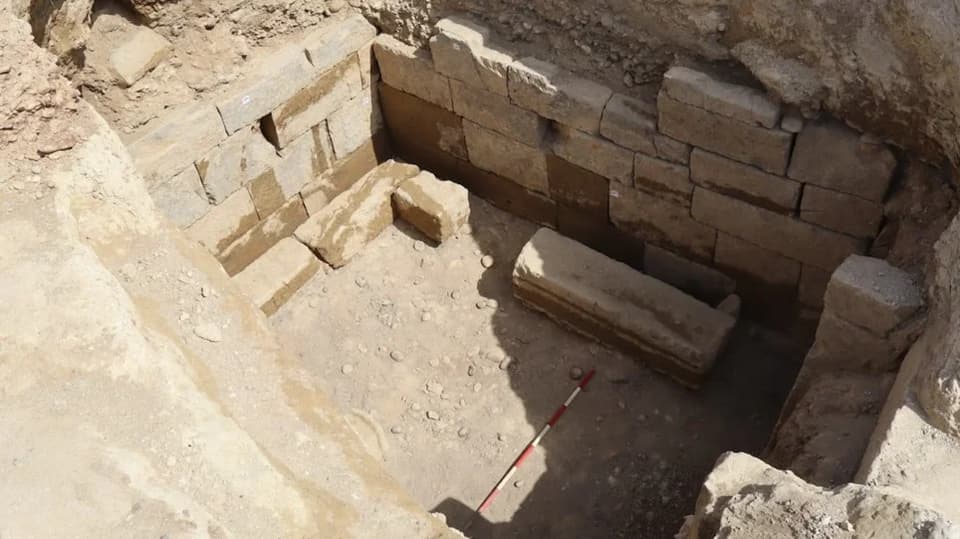
Archaeologists have uncovered a monumental 2,700-year-old Etruscan tomb at Vulci, Italy, containing rare grave goods including a woman's shoe, gold, and imported Greek pottery. The discovery, part of the Ritorno a Vulci project, offers new insights into elite burial practices and Mediterranean trade networks.
Key points
- The 'Tomb of the Stone Chamber' was excavated in 2026 at the Polledrara necropolis in Vulci, dating to the late seventh century B.C.
- Despite 20th-century looting, collapsed roofs preserved artifacts, including a rare pair of women's shoes, weapons, and a bronze tripod.
- The tomb contains imported goods from Athens, Corinth, and possibly Naucratis or Rhodes, indicating extensive Mediterranean trade connections.
- The discovery aids in reinterpreting the famous 1839 'Tomb of Isis' found nearby by Lucien Bonaparte.
- The Ritorno a Vulci project, involving Sapienza University, the French School at Rome, and the British Museum, plans further excavation in 2027.
Background
Recent archaeological interest in ancient Rome has highlighted the impact of environmental factors on historical visibility, such as the exposure of Nero's bridge ruins due to drought in August 2026. Additionally, the opening of a new museum at Trajan's Baths in September 2026 showcased 1st-century AD frescoes and mosaics, underscoring ongoing efforts to preserve and interpret ancient Roman and Etruscan heritage in the region.
How outlets are covering it
Live Science emphasizes the tomb's status as a burial of 'very highest rank' due to the presence of weapons and gold, citing British Museum archaeologist Christian Mazet. Archaeology Magazine highlights the Mediterranean trade connections, noting imported ceramics from Athens and Corinth and a lamp possibly from Egypt or Rhodes. Archaeology News Online focuses on the preservation of the tomb despite looting and the specific details of the banquet set, including Polledrara Ware. Arkeonews stresses the rarity of the woman's shoe and the potential to reinterpret the 1839 Tomb of Isis discovery, while noting that the identity of the buried individuals remains unconfirmed.
Why it matters
This discovery provides critical evidence of the wealth, social hierarchy, and international trade networks of the Etruscan elite in the late seventh century B.C. The preservation of artifacts in their original positions offers a rare opportunity to study funerary rituals and material culture without the distortion caused by previous looting or 19th-century excavations.
What to watch
Archaeologists plan to resume excavation at Vulci in 2027 to further study the tomb and its surrounding enclosure. Researchers will also continue to analyze the artifacts to better understand the burial rites and trade connections of the Etruscan aristocracy, potentially shedding new light on the famous Tomb of Isis.
- Archaeologists discover 'tomb of the very highest rank' in 2,700-year-old Etruscan cemetery Live Science
- News - Artifacts in Etruscan Tomb Reflect Mediterranean Trade Archaeology Magazine
- Archaeologists uncover monumental Etruscan tomb filled with rare treasures at ancient Vulci Archaeology News Online Magazine
- Gold and a Rare Woman’s Shoe Survive in a Looted 2,600-Year-Old Etruscan Tomb Arkeonews
- In 1889, archaeologists went looking for a 2,700-year-old tomb. 137 years later, its monumental burial cha The Economic Times
Want the full story? Read the original reporting
Read on Live Science